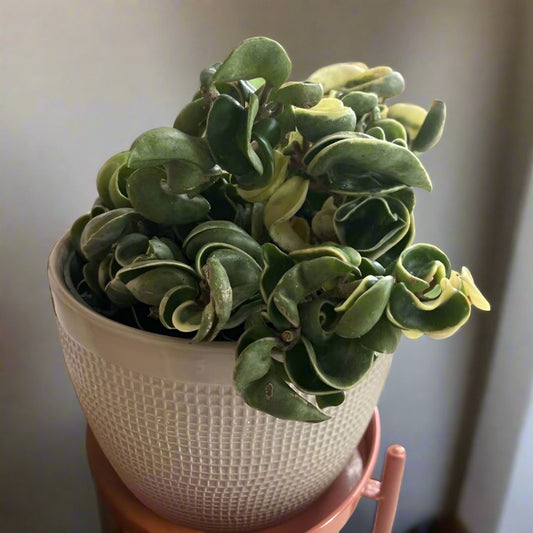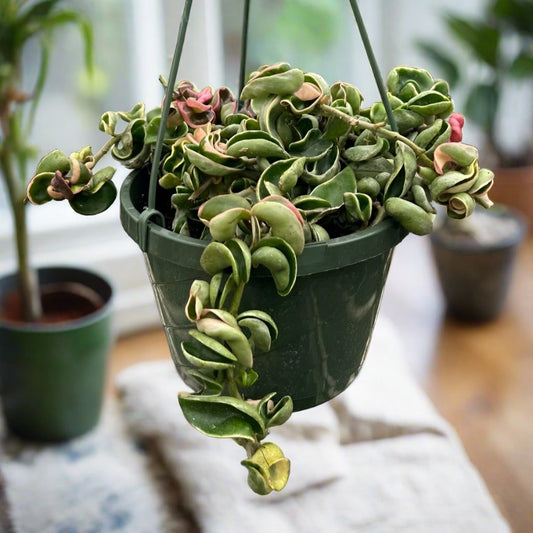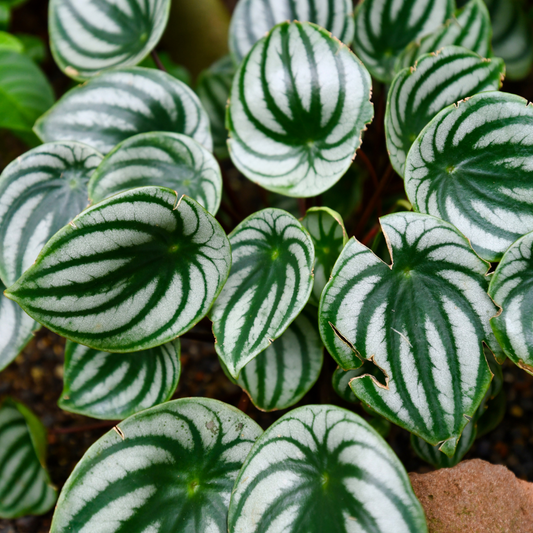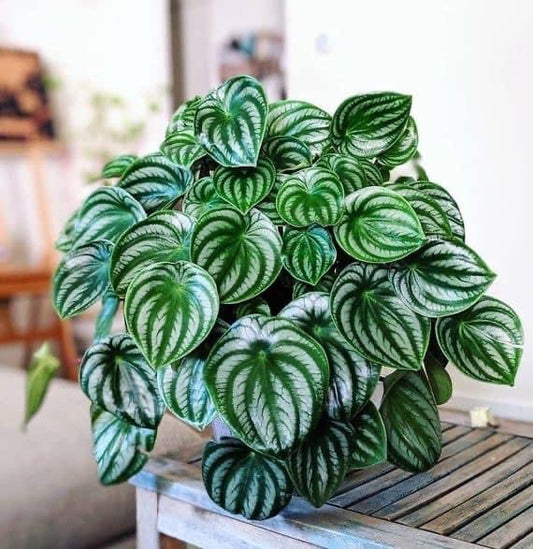
The leaf is the hook. Each one is smaller than a thumbnail, round, dark green, and etched with a pale network of veins that reads exactly like a turtle shell. You see it once and you want it. What most people miss, until they own one, is that the shell is not the whole story. The turtle is also the pace.

A plant that has been in the record since 1879
This is not a plant that appeared on social feeds in 2020. Peperomia prostrata was first published in 1879, in the Gardeners' Chronicle, which means it has been in cultivation for roughly 147 years. It was a Victorian nurseryman's plant, formally described in the horticultural press of its day, and it has spent the long decades since quietly passing from one windowsill to the next.
Its home is Ecuador, where Kew's Plants of the World Online records it as an epiphyte of the wet tropical biome. In the wild it clings to trees and rocks in the humid understory, threading thin stems across bark. That one fact explains almost everything about how it behaves in a living room: shallow roots, a taste for filtered light, and a general refusal to be rushed.
It belongs to the Piperaceae, the pepper family, which puts it in the same family as black pepper. The wider lineage it sits in is an ancient one that also gives us avocado, bay laurel, cinnamon, magnolia and nutmeg. A houseplant with that kind of pedigree deserves better than a quick glance.
The turtle is not just the pattern, it is the pace
Here is the part we love most. String of Turtles is slow. It is tagged as a slow grower by NC State Extension, and at maturity the whole plant reaches only about 12 inches, with leaves under an inch across. It will never take over a shelf, swallow a window, or demand a bigger pot every season. The symbol on the leaf is the symbol of patience and longevity, and the plant genuinely lives that way.
The veining rewards the same attitude. The shell pattern stays crisp in bright, indirect light and fades toward dull, bare vines in dim rooms. Direct sun bleaches it just as surely. Peperomias are understory plants whose leaves are built to gather soft, filtered light, so an east window or a bright spot back from a south one is the sweet spot. You earn the pattern by giving it the right place and then leaving it alone. It is slow joy, which is exactly the phrase used by the 2026 Garden Trends Report from Garden Media Group when it named collectible houseplants a leading trend.
What it actually needs, in short
This is a spotlight, not a manual, so here is the short version. It is semi-succulent, so let the top inch of soil dry before watering and err toward too dry rather than too wet, because root rot is the main way it fails. Use a shallow pot rather than a deep one, since the roots are shallow and it is happy slightly snug. A free-draining, fine mix suits it, along with average to above-average humidity and steady room temperatures. Keep it away from cold drafts and from leaves touching chilly window glass, which can make leaves drop within a day or two.
Propagation: the roots are as fine as thread
String of Turtles is easy to multiply and unforgiving to hurry. A stem cutting of four to six inches, cut just below a node, with the lowest leaves stripped and the cut end left to callous for half an hour or so, is the most reliable route in soil. In water you can expect tiny white roots at around two to four weeks. A community favourite is vine layering: lay a strand across damp, gritty mix in a small pot, cover it loosely, and leave it alone.
The detail that matters most is the roots themselves. They are thread-fine and snap with rough handling, so the usual trick of leaving a cutting in water for months and then plunging it into soil can lose exactly the roots you waited for. Move it early, keep humidity up while it settles, and resist the urge to check on it every day.

Pet safety: the ASPCA lists it as non-toxic
For households with cats and dogs, this is one of the most reassuring trailing plants you can bring home. The ASPCA lists it, under the common name Trailing Peperomia, as non-toxic to both cats and dogs. (Their page prints the species name with a small typo, "prostata", but it is the same plant.) NC State Extension agrees. We checked it by botanical name, which is the only reliable way to check any plant.
A fair note for completeness: non-toxic does not mean a snack. A cat that eats a lot of any plant can still end up with an upset stomach, so a hanging pot or a high shelf is still a kind choice. If you are building a whole pet-friendly collection, our pet-friendly plants are a good place to keep browsing, and our complete guide to pet-safe houseplants goes deeper.
Styling a plant that stays small on purpose
Because it stops at about a foot, String of Turtles is a styling gift. The stems are red to burgundy, a detail almost nobody mentions, and they look wonderful against warm wood, terracotta and brass. A few ideas that work well:
- The shelf edge. Set it at the lip of a bookshelf and let the vines spill an inch or two over the edge. It trails and spreads without ever turning aggressive. Our trailing and hanging plants are a natural companion set.
- The upright pairing. Put it beside something tall and structural, such as a ZZ plant, so the fine trailing leaves soften a strong vertical.
- The glass vessel. Its love of humidity makes it a candidate for a closed or semi-closed terrarium, where a quirk becomes a feature.
- The small spot. Desks, side tables and bathroom windowsills suit a plant that will never outgrow them. See the full desk and small space plants edit.
If your shelf is already trailing-heavy, our look at how a trailing plant shelf looks six months later shows how this kind of planting settles in over time.
A gift that multiplies
Few plants make a better heirloom gift. It is compact, so it suits a recipient with no spare room. It is non-toxic for cats and dogs, so you can give it into a pet household without a conversation about toxicity. And because it roots so readily from a stem, a gift becomes a pass-it-on plant: the recipient can share a cutting with a friend, or you can give a cutting from your own pot and keep the original. Plants that move between people this way tend to carry the story with them.
It is a thoughtful pick for a housewarming, a thank-you, a new-job desk, or a first plant for someone who prefers a slower hobby. Browse more ideas in our perfect plant gifts collection. And if you are curious about a different trailing collector's favourite, our post on String of Pearls tells a very different story.

Why it is worth the wait
Collectors have noticed. Homes and Gardens included String of Turtles among six collectible houseplants in a 2025 feature, in a moment when plant collecting is described as tapping the same joy as gaming: progress, achievement, and a quiet sense of control. We think the plant earns that attention for a quieter reason. In a world of fast things, it is a small, steady, patient living thing that asks you to slow down enough to see a pattern form.
Ours ship greenhouse-direct, and every order is covered by our 30-Day Guarantee, so you can start your slow joy with confidence. When you are ready, meet the String of Turtles or wander through our full range of live houseplants at plantswagshop.com.
String of Turtles questions, answered
Is String of Turtles toxic to cats?
No. The ASPCA lists Trailing Peperomia, which is String of Turtles, as non-toxic to both cats and dogs. As with any plant, a cat that eats a large amount of leaves can still get an upset stomach, so keep it up high if your cat is a nibbler.
Why is my String of Turtles losing leaves?
The usual culprits are cold. Brief exposure below about 50 degrees Fahrenheit, a cold draft, or leaves touching a chilly window pane can make leaves detach within a day or two. Move it to a steady spot away from glass and drafts.
Why is my String of Turtles leggy with bare vines?
Almost always insufficient light. The shell veining stays sharp and the vines stay full in bright, indirect light, while dim rooms produce sparse growth and bare stems. Move it closer to an east window or a bright spot, but out of direct sun.
Why is my String of Turtles growing so slowly?
Because it is meant to. String of Turtles is a genuinely slow grower that stays around 12 inches at maturity. Steady light, a shallow pot and patience are the answer, not extra fertilizer or a bigger pot.