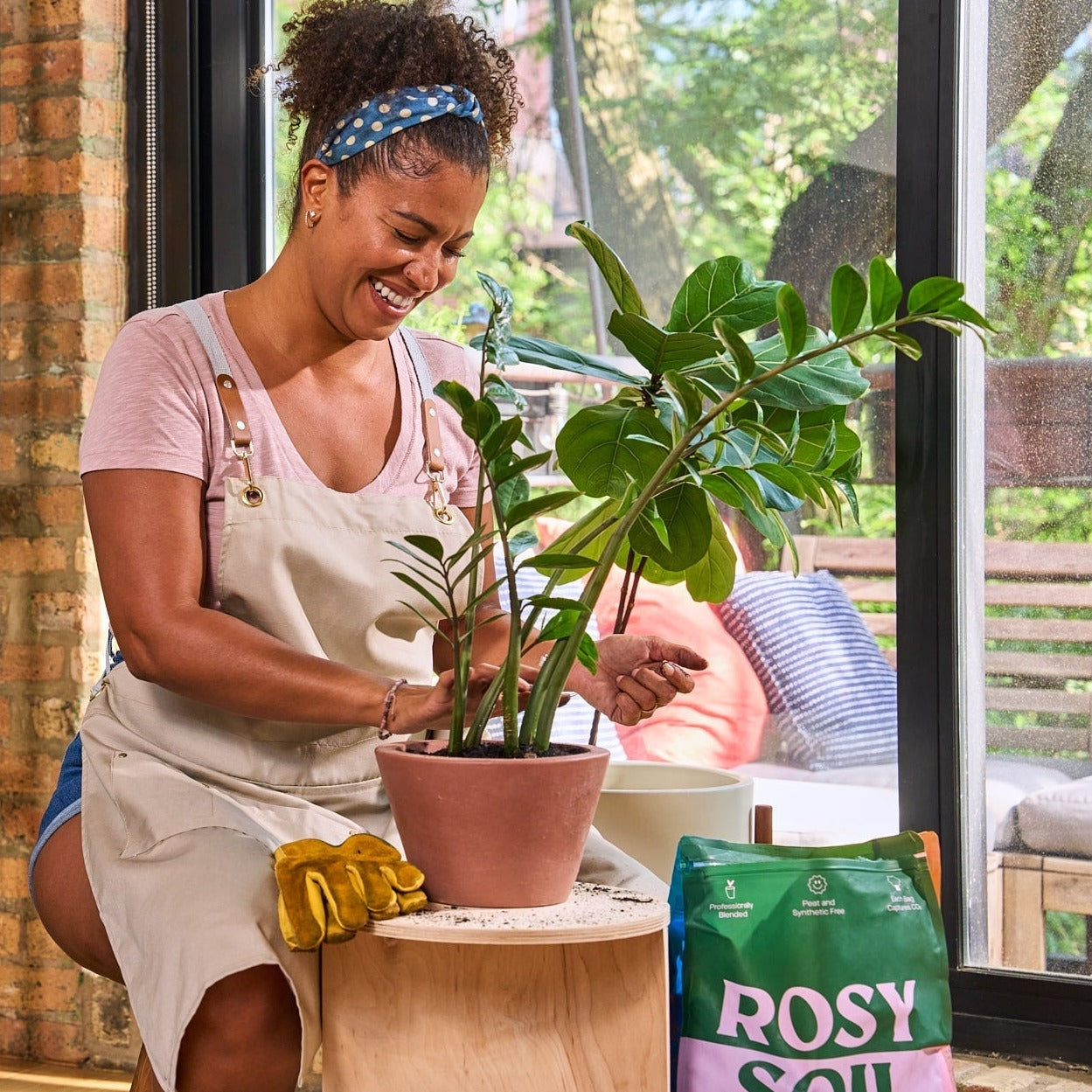

Nothing about your routine has changed. Same watering can, same day of the week, same amount. And yet the soil is still damp when you go to water again, a bottom leaf has gone yellow, and the plant looks tired in a way it did not look in July.
Your routine did not change. The room did. A watering schedule that was exactly right eight weeks ago is now the most likely thing standing between your plant and a good autumn.
The advice everyone gives you is half an instruction
Search for fall plant care and you get the same sentence everywhere: water less in fall. It is directionally correct, and it leaves out the part that matters.
Water less what? Less often, or less water?
Most people hear volume. They keep the Sunday morning habit and simply pour less. Half a cup instead of a full soak. A splash instead of watering until it runs out the bottom. That produces the worst possible result. A shallow pour wets the top inch and never reaches the lower third of the root ball, so the plant ends up waterlogged where the surface roots sit and drought stressed where the anchor roots live. Fungus gnats at the top, shrivelling at the bottom, same plant, same week.
The correct autumn change is one variable. Frequency goes down. Volume stays exactly where it was. You still water until it drains from the bottom. You just do it noticeably less often.
Mechanism one: the pot is drying more slowly
Two things pull water out of a pot. Evaporation from the soil surface, and transpiration through the leaves. Both are driven by light and temperature, and both fall off through September.
The sun sits lower, the day is shorter, and the light reaching a windowsill drops well before the weather does. Indoor temperatures ease down a few degrees before anybody turns a furnace on. The plant is photosynthesising less, so it moves less water from root to leaf to air, while the soil surface loses less to evaporation.
Same pot, same room, same plant, and the soil now holds water roughly thirty to fifty percent longer than it did at the height of summer. If your July interval was seven days, late September is closer to ten or eleven, and nothing has gone wrong.
If your room has gone noticeably darker rather than just cooler, that is a larger and separate adjustment. We covered that side of it in our guide to houseplants that genuinely thrive in dark apartments.
Mechanism two: the roots are breathing more slowly
This is the half almost nobody writes about, and it is what turns a slow-drying pot into a dead plant.
Roots are not passive straws. They respire, consuming oxygen to release the energy they need to pull water and nutrients out of the soil. That oxygen comes from the air gaps between soil particles. When a pot is saturated those gaps are full of water instead of air, and root respiration runs on a countdown.
Root respiration also slows as soil temperature falls. A cooler root zone is a less metabolically active root zone, which sounds harmless and is not. Slower roots draw water out of the soil more slowly, which extends the saturation the plant is already struggling with.

Why the two together are the risk
Here is the sentence worth keeping. The danger in autumn is not the amount of water. It is the duration of saturation.
A pot that stays wet for four days in July is fine. Roots are warm and active, and the wet window closes before it becomes a problem. The same pot staying wet for nine days in October is a different situation, because the roots working through that window are doing so at reduced speed with less oxygen available for longer.
The wet window got longer at exactly the moment the plant got worse at surviving it. That is why the fix is frequency and not volume. A full soak that then drains completely gives you a short, deep, well-oxygenated wet window followed by a long dry one. Repeated shallow pours give you a permanently damp upper layer that never fully dries and never properly wets the roots that need it.
The five step September reset
- Stop watering on a day. Start watering on a reading. The calendar was always a proxy for the soil. In a stable summer room the proxy holds. In a shifting autumn room it does not.
- Keep the volume identical. Water slowly until it runs freely from the drainage holes.
- Empty the saucer within thirty minutes. A pot sitting in standing water in October has no dry window at all.
- Check deeper than you used to. The top inch now dries while three inches down is still wet, so a shallow finger test will tell you to water when you should not. Go two knuckles into a six inch pot, or learn the weight of the pot when it is properly dry and lift it instead.
- Settle placement before you recalibrate. Moving a plant changes its light and therefore its drying rate immediately. Our pre-trip plant routine covers the placement side in detail, and the same logic applies when nobody is going anywhere.
How long your pot should now take to dry
These are dry-down ranges, not watering schedules. Find your pot, note the shift, and use the last column to confirm rather than assume.
| Pot size and type | Summer dry-down | Sept to Oct dry-down | How to check |
|---|---|---|---|
| 4 inch nursery plastic | 5 to 7 days | 9 to 12 days | Finger, 1 inch deep |
| 6 inch nursery plastic | 7 to 10 days | 12 to 16 days | Finger, 2 inches deep |
| 4 inch terracotta | 3 to 5 days | 6 to 8 days | Weight of the pot |
| 6 inch terracotta | 5 to 7 days | 8 to 11 days | Weight of the pot |
| Any pot in a cachepot or without drainage | Already slow | Dangerously slow | Lift the nursery pot out and feel the base |
Terracotta shifts less than plastic because it keeps breathing through the pot wall regardless of season. If you have a plant that has always struggled with wet feet, autumn is the argument for terracotta.

Three things you should not change
The volume. Said three times now because it is the mistake we see most.
The drainage. This is not the season to move a plant into a pretty pot with no hole in it. If a decorative cover is what you want, keep the nursery pot inside it and lift it out to water and drain.
The pot size. Do not repot in autumn unless the plant is genuinely root bound and suffering. Fresh mix holds far more water than settled mix, and a plant just moved into a larger pot is carrying a volume of wet soil its roots cannot yet occupy. Our late summer reset guide covers what should have been done in August, and it is worth reading now so next year is easier.
Signs you overcorrected in either direction
Too much, too often: soil still damp at the surface a week after watering, yellowing that starts on the lowest leaves and works up, fungus gnats, a faintly sour smell at the soil line, and new growth that stalls rather than slows.
Too little, or too shallow: crisp brown leaf edges, leaves that go limp and do not recover after watering, soil pulled away from the sides of the pot, and water that runs straight down the gap and out the bottom in seconds without wetting anything. That last one is the shallow-pour signature, and the fix is a slow rewet or a fifteen minute bottom soak, not more frequent splashes.
While you find the new rhythm it helps to have a few plants that forgive a wrong guess. Our easy care collection is built around that tolerance, and several of the same plants turn up in our best sellers for the same reason. Everything ships greenhouse-direct rather than sitting under retail lighting for a month, and every plant is covered by our 30-Day Guarantee. If the real change in your home is light rather than temperature, start with the low light collection instead, or browse all our live plants and match by room.
Frequently asked questions
How often should I water houseplants in the fall?
There is no universal interval. Expect your summer interval to stretch by roughly thirty to fifty percent, so a plant watered every seven days in July is closer to every ten or eleven by mid autumn. Confirm with the soil, checking two inches down in a six inch pot.
Should I water houseplants less in September?
Less often, yes. Less water per watering, no. Reduce the frequency and keep watering until liquid runs from the drainage holes. Reducing the volume instead leaves the lower root ball dry while keeping the surface permanently damp.
Why is my plant soil staying wet for so long?
Lower light and cooler temperatures mean less evaporation and less transpiration, so water leaves the pot more slowly. At the same time cooler soil slows root respiration, so the roots draw water more slowly. It only becomes a problem if you keep watering on the summer schedule.
Can you overwater a plant in cool weather?
More easily than in warm weather. Roots need oxygen from the air gaps in the soil, and a saturated pot has none. In autumn the wet window is longer and the roots are less able to cope with it, so the same amount of water carries more risk.
Do I stop fertilising houseplants in the fall?
Taper rather than stop abruptly, and stop entirely once growth has clearly slowed. A plant that is not producing new leaves cannot use the nutrients, and unused salts accumulate in soil that is now staying wet longer.
Is it bad to repot a houseplant in autumn?
Usually yes. Fresh potting mix holds significantly more water than settled mix, and a larger pot holds a volume of wet soil the existing root system cannot occupy or dry out. Unless the plant is severely root bound, wait for spring.
Should I move my plants before or after I change my watering?
Move first, then recalibrate. Relocating a plant changes its drying rate immediately, so any interval worked out beforehand will be wrong within a week. Settle the placement, then spend two or three cycles learning the new rhythm.