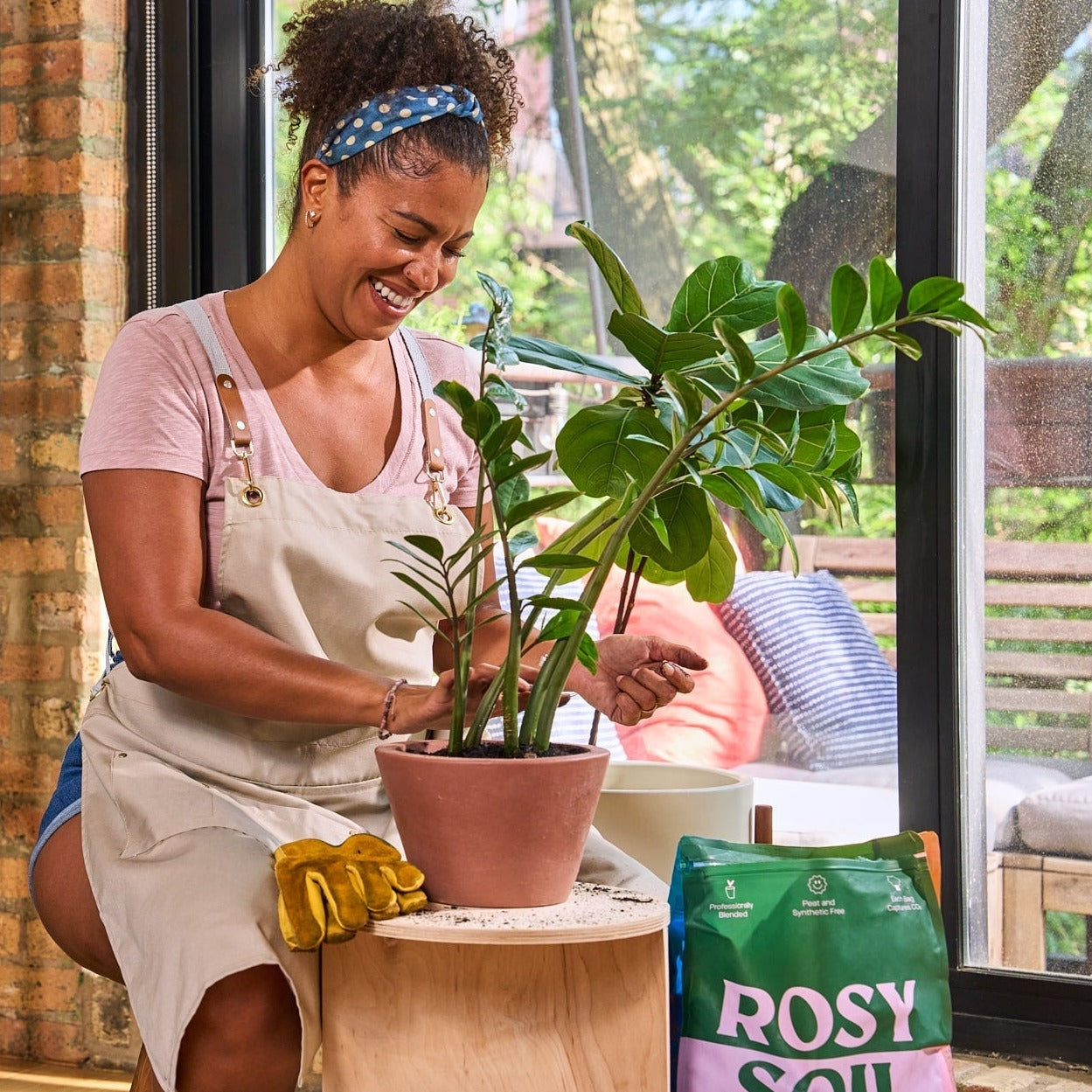
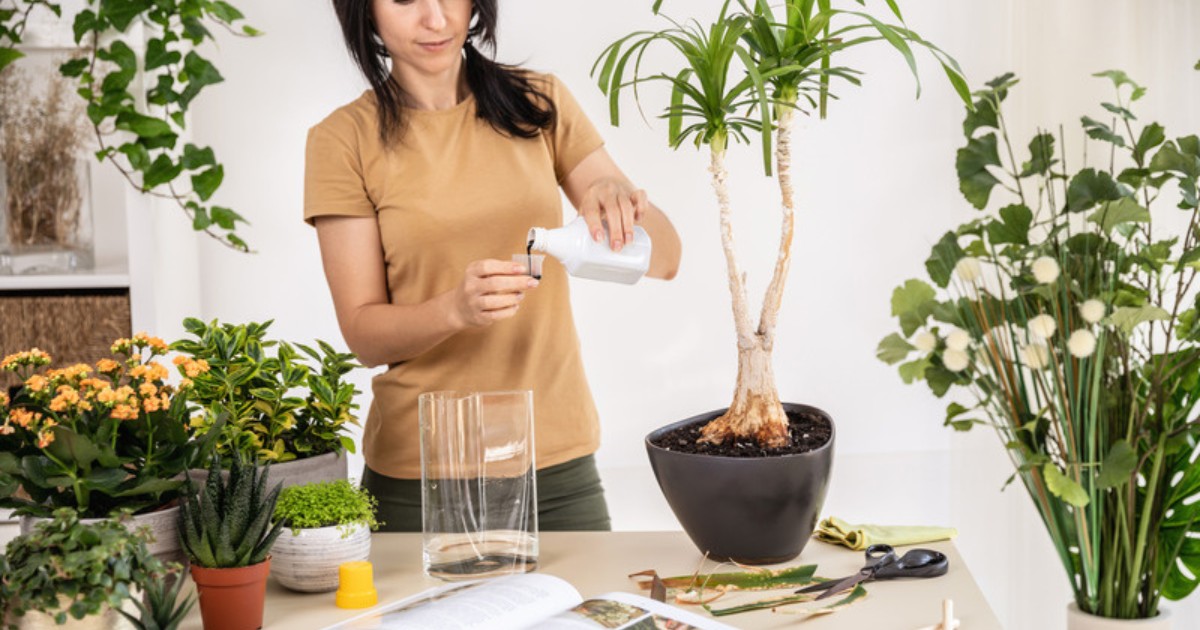
Right now, in the middle of summer, your houseplants are growing faster than they will at any other point in the year. New leaves, new vines, new roots pushing into every corner of the pot. All of that growth runs on nutrients, and the potting mix your plant came in only holds so much. Sooner or later, the pantry runs empty.
So you reach for the fertilizer, and this is exactly where most plant parents get into trouble. Not because they forget to feed, but because they feed too much. Here is the truth we wish someone had told us years ago: more fertilizer does not mean faster growth. It usually means burned roots, crispy leaf edges, and a plant that stalls out right in the middle of its best growing season. Let's fix that.
The Myth That Damages More Roots Than Any Pest
Fertilizer is not really plant food. Plants make their own food through photosynthesis. What fertilizer provides is the mineral nutrition that fuels the process, closer to a multivitamin than a meal. And just like vitamins, the right dose helps while a double dose hurts.
When you overfeed, unused mineral salts build up in the soil. Those salts pull moisture away from the roots and can chemically burn them, which shows up above the soil line as brown, crispy leaf margins, a white crust on the soil surface or the rim of the pot, and growth that slows down instead of speeding up. If you are seeing yellowing leaves and are not sure whether feeding is the culprit, our guide to why plant leaves turn yellow walks through all seven common causes.
Why Overfeeding Happens (And Why It Is So Common)
The single most common cause is treating fertilizer like medicine. A plant looks slow or sad, so we feed it, and when it does not perk up, we feed it again. But a struggling plant is almost never hungry. It is usually dealing with a light, water, or root problem, and fertilizing a stressed plant only adds to the stress.
A close second: label doses are written for ideal outdoor conditions, not for a pothos on a bookshelf. Indoor plants grow more slowly and need less than the bottle suggests. Add in the habit of feeding on a year-round schedule, including the winter months when most houseplants are resting and barely using nutrients at all, and you have a recipe for salt buildup.
How to Feed the Right Way: 5 Simple Steps
- Feed during the growing season only. Spring through early fall is when your plants can actually use the nutrients. A monthly feeding with a liquid fertilizer suits most collections, while a slow-release formula keeps working for three to four months from a single application. When growth slows in late fall, stop.
- Learn the three numbers on the label. That N-P-K ratio tells you what you are feeding for. Nitrogen (N) drives lush leafy growth, phosphorus (P) supports roots and flowers, and potassium (K) builds overall resilience. For foliage houseplants, a balanced formula or one slightly higher in nitrogen is the sweet spot.
- Dilute more than the label says. Half strength is our house rule for indoor plants. You can always feed again next month, but you cannot easily undo a heavy dose.
- Water first, feed second. Never fertilize bone-dry soil. Moist roots absorb nutrients evenly, while dry roots take a concentrated hit right where they are most vulnerable.
- Let new arrivals settle in. A plant that just shipped to your door or moved into a new pot needs four to six weeks to acclimate before its first feeding. Freshly repotted soil already carries nutrients, and travel is stressful enough. The same rule applies after any major repot. If a repot is on your to-do list, here is how to repot a plant without killing it.
Feeding Is Three Things, Not One
Here is the part most fertilizer guides skip: the food itself is only one third of the equation. Nutrients only help if the soil biology can deliver them to the roots, and new growth only sticks around if pests are not eating it as fast as it appears. Think of it as food, living soil, and protection working together.
Start with living soil. Healthy soil is full of beneficial microbes that break nutrients down into forms roots can actually absorb. Potting mix that has been in the same container for a year or two goes biologically quiet, which is why feeding sometimes seems to do nothing. Organic Soil & Root Boost reintroduces that living biology, so every feeding you do afterward actually lands.

Then the food itself. A gentle organic formula is far more forgiving than synthetic crystals, since organic nutrients release slowly and are much harder to overdose. Our go-to protein-infused Organic Plant Food is restocking soon, and in the meantime the Soil & Root Boost above pulls double duty by feeding the microbes that feed your plant.
Finally, protect the new growth. All that tender summer growth you just fueled is exactly what spider mites, fungus gnats, and thrips want most. Midsummer is peak pest season, and a well-fed plant can become a well-fed buffet. Organic Bio Insecticide suppresses soil-dwelling pests before they establish, so your fertilizer feeds the plant instead of the bugs. If you have battled leaf spot or mildew before, Organic Bio Fungicide covers the disease side, and Organic Bio Protectant layers on a natural defense and growth booster.

Pro Tips, and When to Worry
If you suspect you have overdone it, do not panic and do not reach for more products. Flush the soil: take the plant to a sink or tub and run room-temperature water through the pot for several minutes, letting it drain freely. This dissolves and carries away built-up salts. Scrape off any white crust on the soil surface. In severe cases, when roots look brown and mushy rather than firm and pale, repot into fresh mix entirely.
Then wait. Skip feeding for at least a month and let the plant recover. Damaged leaves will not heal, but new growth coming in clean and green is your sign that the roots are back in business.
One more pro tip: keep a simple note on your phone with the date you feed. Overfeeding is almost always an accounting error, two feedings in a month because nobody remembers the first one.
And if your collection is ready for a new member to practice your newly calibrated feeding routine on, every plant in our live plants collection ships greenhouse-direct and is covered by a 30-Day Guarantee, so you can focus on the care and leave the arrival worries to us. Prefer something forgiving while you get the hang of it? The easy-care collection is full of plants that shrug off an imperfect feeding schedule.
Fertilizing FAQ
How often should I fertilize houseplants in summer?
Once a month with a liquid fertilizer at half strength suits most houseplants during the summer growing season. If you use a slow-release formula, one application lasts three to four months, so a single summer dose is usually plenty.
Should I fertilize a plant that just arrived in the mail?
No. Wait four to six weeks. Shipping is stressful, and new plants come in soil that already contains nutrients. Let the plant acclimate to your light and watering routine first, then begin a gentle feeding schedule.
What are the signs of overfertilizing?
Look for a white salt crust on the soil surface or pot rim, brown and crispy leaf margins, yellowing lower leaves, and growth that has stalled despite good light and water. Wilting right after a feeding is another strong clue.
How do I fix an overfertilized plant?
Flush the pot with room-temperature water for several minutes so the built-up salts drain out, remove any visible crust from the soil surface, and hold off on feeding for at least a month. If the roots are brown and mushy, repot into fresh soil.
Should I fertilize houseplants in winter?
Skip it. Most houseplants rest in winter and use very few nutrients, so winter feeding mostly builds up salts in the soil. Resume your schedule in spring when you see new growth appear.