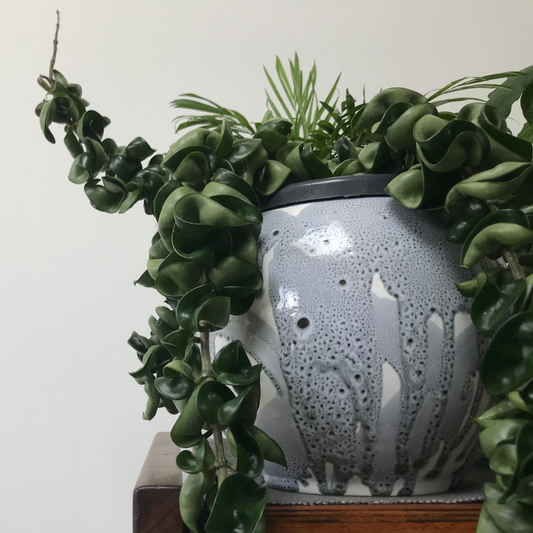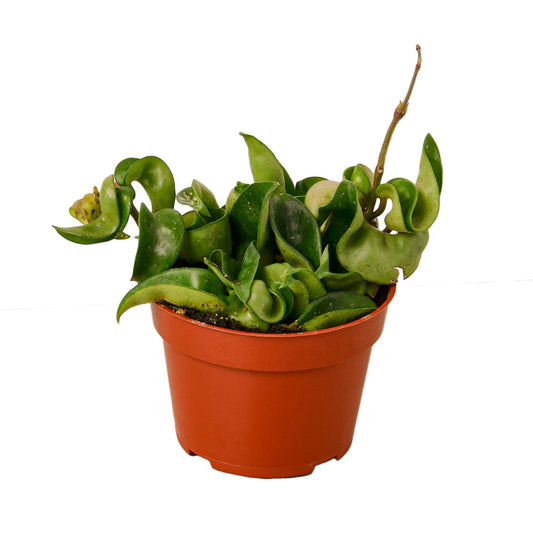

The Hoya Rope Plant is one of the most distinctive plants you can grow indoors — and one of the most misunderstood. Those tightly curled, waxy leaves that spiral into thick, cascading ropes look like they'd need complicated care, but the truth is the opposite. Get the watering right, give it enough light, and a Hoya carnosa compacta will reward you with decades of growth, the occasional cluster of star-shaped flowers, and — in the variegated form — leaves that shift from cream to blush pink depending on the season.
We've shipped thousands of Hoya rope plants greenhouse-direct, and we hear the same questions every time: Why are the leaves wrinkled? How do I get it to flower? Will the variegation fade? This guide answers all of them. Whether you're bringing home your first rope hoya or adding a variegated specimen to an existing collection, here's everything you need to know.
Shop the Hoya Rope Plant Variegated Rare → Rated 5 stars. Ships greenhouse-direct with our 30-Day Guarantee.

Hoya Rope Plant Quick Care Overview
| Care Factor | What It Needs |
|---|---|
| Light | Bright indirect light, 4–6 hours daily. Variegated forms need more light to maintain cream/pink coloration. |
| Water | Allow soil to dry completely between waterings. Water thoroughly, then wait. Never let it sit in standing water. |
| Humidity | 40–60% relative humidity. Tolerates average household humidity well. |
| Temperature | 60–85°F (15–29°C). Protect from drafts and temperatures below 50°F. |
| Soil | Well-draining mix. Cactus/succulent blend with added perlite works well. |
| Fertilizer | Balanced liquid fertilizer monthly during spring and summer. Skip in fall/winter. |
| Repotting | Every 3–4 years, or only when roots escape drainage holes. Prefers being slightly root-bound. |
| Pet Safety | ✅ Non-toxic to cats and dogs (ASPCA confirmed) |
What Is the Hoya Rope Plant?
Hoya carnosa 'Compacta' — commonly called the Hindu rope plant, Krinkle Kurl, or rope hoya — is a vining succulent-like epiphyte native to East Asia and Australia. Unlike the flat-leafed classic Hoya carnosa, the Compacta variety produces leaves that are tightly curled inward, clustering along thick, rope-like stems that hang and trail dramatically as the plant matures. It's the kind of plant that stops people mid-conversation.
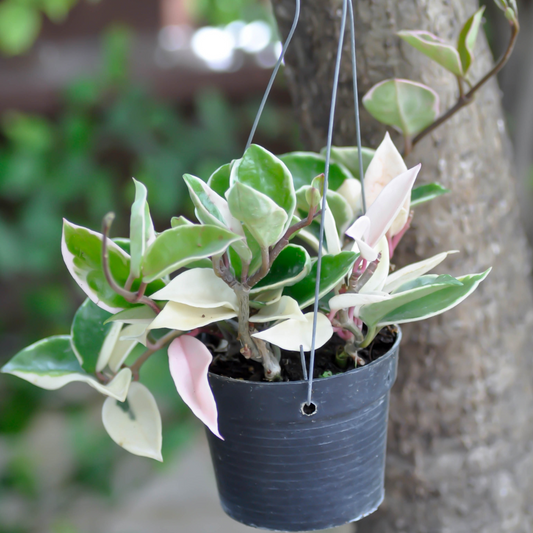
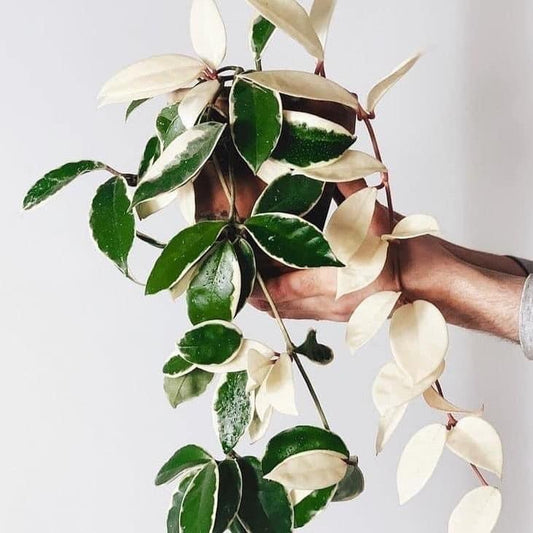
The variegated form, Hoya carnosa 'Compacta Variegata', adds cream, white, or pink edging to each curled leaf — colors that intensify in bright light and can fade toward green in low-light conditions. Both varieties are slow growers, long-lived (we've seen heirloom specimens passed between generations), and rewarding beyond measure once you understand how they operate.
A key thing to understand about Hoya rope plants: they're succulent-adjacent. They store water in their thick, waxy leaves. This means their biggest enemy isn't drought — it's overwatering. Master this one thing and you've already won half the battle.
Hoya Rope Plant Light Requirements
The Hoya rope plant needs bright indirect light for 4–6 hours daily to thrive. A spot near an east- or south-facing window, filtered through a sheer curtain, is ideal. Direct afternoon sun through glass can bleach the leaves and cause sunburn — a brief morning sun exposure is generally fine.
For the variegated Compacta, light is especially critical. The cream and pink pigmentation in the leaves is not chlorophyll — it doesn't photosynthesize. That means the plant needs more light than its all-green counterpart to produce enough energy from the remaining green portions. In low light, variegated rope hoyas will push out new growth that reverts to solid green as the plant compensates. You'll see the distinction clearly in new leaves: bright light = cream-edged growth; dim light = increasingly solid green.
If you've noticed your plant losing variegation over time, moving it to a brighter spot usually brings it back within a few growth cycles. You cannot reverse existing green leaves, but new growth will reflect the improved conditions.
How to Water a Hindu Rope Plant
Watering is where most people go wrong with Hoya rope plants. The curled leaves store moisture efficiently, which means the plant can go surprisingly long between waterings — and hates having wet feet for extended periods.
The method that works: water thoroughly, then wait until the soil is completely dry before watering again. In practice, this might mean watering every 2–3 weeks in summer and once every 4–6 weeks in winter. Seasonal light levels, pot size, and your home's humidity all affect the timeline, so rather than following a fixed schedule, check the soil. If there's any moisture in the top inch or two, wait.
Signs you've overwatered: yellowing leaves, mushy stems near the soil, a foul smell from the pot, or leaves that look bloated then suddenly drop. Signs you've underwatered: deeply wrinkled, shriveled leaves that feel papery. Both are fixable — underwatering recovers faster.
One common mistake: leaving the plant in a saucer of standing water. Root rot is the primary cause of Hoya rope plant death, and it develops quickly in soggy conditions. Always empty the saucer 30 minutes after watering.
Humidity and Temperature
Hoya rope plants are more forgiving on humidity than many tropicals. They prefer 40–60% relative humidity but handle typical household conditions well, especially in summer. In dry winter climates or heavily air-conditioned homes, leaves may develop crispy tips if humidity drops below 30% for extended periods.
Skip misting. The curled leaves trap moisture and create conditions ideal for fungal growth — any water sitting inside the curls doesn't evaporate efficiently. If you want to boost humidity, a small humidifier or a pebble tray with water beneath the pot is safer and more effective.
Temperature-wise, keep your rope hoya between 60–85°F (15–29°C). It can handle brief cooler temperatures but should never sit near an air conditioning vent, cold drafts, or below 50°F for sustained periods. Consistent temperature is more important than any specific number — sudden swings stress the plant and can trigger leaf drop.

Soil and Potting for Hoya Rope Plants
Drainage is the top priority. Hoya rope plants thrive in a fast-draining, airy mix that doesn't hold moisture for long. A commercial cactus/succulent blend amended with 20–30% perlite works well. You can also use a chunky orchid bark mix, which mimics the epiphytic conditions the plant grows in naturally.
Avoid standard houseplant potting soil on its own — it holds too much water and can lead to the soggy-root conditions Hoyas detest. The goal is a mix that lets water pass through freely while still holding just enough moisture to hydrate the roots before draining.
One of the most counterintuitive things about Hoya rope plants: they bloom better when slightly root-bound. Repotting into a pot that's too large gives the roots too much space and often delays flowering by redirecting the plant's energy into root expansion. Only repot when you can see roots actively escaping through drainage holes — typically every 3–4 years. When you do repot, go up just one pot size (1–2 inches wider in diameter).
Fertilizing Your Hoya Rope Plant
Hoya rope plants are light feeders. During the active growing season — roughly March through September — fertilize monthly with a balanced liquid fertilizer diluted to half strength. A phosphorus-forward fertilizer (such as a bloom booster formula) applied in late spring can help encourage flowering.
Stop fertilizing entirely in fall and winter when growth slows. Feeding during dormancy can cause salt buildup in the soil and lead to brown leaf tips over time. If you see white crusty deposits on your soil surface, flush the pot thoroughly with plain water to clear accumulated salts.
The Variegated Hoya Rope Plant: What Makes It Different
The Hoya Rope Plant Variegated Rare is the same species as the standard Compacta, but the variegation gene creates a plant with cream-to-white leaf margins that can flush pink in high-light or cooler conditions — particularly in autumn and early winter. No two plants look quite the same, and no two growth periods produce identical coloring.
Three things to know about the variegated form specifically:
- It grows slower than the green form. With less chlorophyll available, the plant photosynthesizes less efficiently, so growth is naturally more gradual. Don't mistake this for a sick plant.
- It needs brighter light. As covered above, low light causes reversion toward solid green growth. Aim for a bright spot, especially during winter months when natural light decreases.
- It can revert — and recover. If you see solid green new growth, move the plant to a brighter spot. The next growth cycle should show variegation returning. Existing green leaves won't change back, but the plant will stop producing them once light levels improve.
We also carry the non-variegated Hoya Rope Plant for those who prefer the classic form. Both are equally dramatic, just in different ways. Browse our full Hoya collection to see what else we're growing right now.
How to Get Your Hoya Rope Plant to Flower
Flowering is the holy grail for Hoya rope plant collectors, and it's achievable once you understand what triggers it. Rope hoyas bloom in clusters of small, star-shaped flowers called umbels — waxy, slightly fragrant, and absolutely worth waiting for.
The three conditions that encourage blooming:
- Bright light. Plants that don't receive enough light rarely flower. This is the most common blooming blocker. If your plant has been in moderate or low light and hasn't flowered, move it to your brightest indirect-light spot first.
- A cool, dry period. In their natural habitat, Hoyas experience a cooler, drier period that triggers the flowering response. You can replicate this: reduce watering slightly and allow temperatures to drop a few degrees (60–65°F) in late fall and winter. Resume normal care in spring.
- Leave the peduncles alone. Hoya rope plants reuse the same flowering spurs (peduncles) year after year. Removing them — even accidentally — means waiting for the plant to grow new ones, which can take years. Never cut or disturb peduncles that aren't producing flowers yet.
Patience is part of the deal. Young plants typically need 3–5 years to bloom for the first time. Once established, a well-cared-for rope hoya will flower reliably in spring and sometimes again in late summer.
How to Propagate a Hoya Rope Plant
Hoya rope plants propagate readily from stem cuttings, though they root slowly compared to faster-growing houseplants. The process is forgiving — more of a waiting game than a technical challenge.
The method:
- Select a healthy stem with 2–3 nodes (the points where leaves attach). The cutting should be 4–6 inches long.
- Remove the leaves from the bottom node to expose it for rooting.
- Allow the cut end to callous for a few hours at room temperature.
- Place the cutting in a small pot of moist sphagnum moss or a 50/50 perlite/potting mix blend. Alternatively, root in water, though soil rooting typically produces stronger roots.
- Keep the cutting in bright indirect light and maintain light moisture in the medium. Don't overwater during this stage.
- Expect roots to develop in 6–10 weeks. You'll know rooting has occurred when the cutting begins producing new growth.
For variegated cuttings: propagation from variegated stems typically produces variegated offspring, but results aren't guaranteed. Cuttings taken from sections with strong variegation have the best chance of passing on the pattern.

Common Hoya Rope Plant Problems (And How to Fix Them)
| Symptom | Most Likely Cause | Fix |
|---|---|---|
| Wrinkled, shriveled leaves | Underwatering (most common) — or root rot preventing water uptake | Water thoroughly. If soil was dry, plant should recover within a day or two. If soil was wet, check roots for rot. |
| Yellowing leaves | Overwatering or root rot | Let soil dry out completely. Check drainage holes aren't blocked. If soft/mushy roots present, trim and repot into fresh dry mix. |
| Dropping leaves | Temperature shock, drafts, or sudden environmental change | Move away from vents, cold windows, and doorways. Avoid moving the plant frequently. |
| No new growth | Too little light, or normal winter dormancy | Move to brighter spot. Growth naturally slows in winter — resume fertilizing in spring. |
| Losing variegation (new green leaves) | Insufficient light | Move to brighter indirect light. New growth will show variegation once light improves. |
| Brown, crispy leaf tips | Low humidity or salt buildup in soil | Increase humidity. Flush soil with plain water to clear mineral deposits. |
| Pests (mealybugs, spider mites) | Mealybugs hide in the curls; spider mites in dry conditions | Spray with neem oil or insecticidal soap. Check inside the leaf curls carefully — mealybugs nest there. |
Shop the Hoya Rope Plant Variegated Rare
Rated 5 stars by our customers, the Hoya Rope Plant Variegated Rare ships directly from our greenhouse to your door — not from a warehouse, not from a shelf. Plants arrive fresh, well-rooted, and ready to settle into their new home. Every order comes with our 30-Day Guarantee: if your plant doesn't arrive in great condition, we'll make it right.
Want the classic form? The non-variegated Hoya Rope Plant is equally beautiful and typically available year-round. Or explore our full Hoya collection — from Krimson Queens to Obovatas, we grow and ship a wide range of species that rarely appear in local garden centers.
Looking for more care guides and growing tips? Our complete Hoya care guide covers the full genus, and our Hoya Rope Plant overview has additional context on the plant's unique growth habit and history.
Frequently Asked Questions
How do I care for a hoya rope plant?
Hoya rope plants need bright indirect light for 4–6 hours daily, well-draining soil that dries completely between waterings, and temperatures between 60–85°F. Avoid overwatering — this is the most common cause of decline. Feed monthly with diluted liquid fertilizer in spring and summer, and skip fertilizing in fall and winter. Repot only when roots escape drainage holes, as the plant prefers being slightly root-bound.
Why are my hoya rope plant leaves wrinkled?
Wrinkled leaves are almost always a sign of underwatering. The thick, waxy leaves store water and will visibly shrivel when the plant is thirsty. Water thoroughly and the leaves should plump back up within 24–48 hours. If the soil was wet when wrinkles appeared, root rot may be preventing water uptake — check the roots and repot into fresh dry mix if needed.
How do you water a Hindu rope plant?
Water thoroughly until water runs freely from the drainage holes, then wait until the soil is completely dry before watering again. In most homes this means watering every 2–3 weeks in summer and every 4–6 weeks in winter. Never let the plant sit in standing water, and always empty the saucer after watering to prevent root rot.
How much light does a Hindu rope plant need?
Bright indirect light for at least 4–6 hours daily. A spot near an east- or south-facing window works well. The variegated form needs even more light to maintain its cream and pink coloration — in low light, it will gradually produce solid green growth. Direct afternoon sun through glass can bleach the leaves, but brief morning sun is generally fine.
How do you propagate a hoya rope plant?
Take a 4–6 inch stem cutting with 2–3 nodes, allow it to callous for a few hours, then root it in moist sphagnum moss or a perlite/potting mix blend. Keep in bright indirect light and maintain light moisture. Roots typically develop in 6–10 weeks. Water propagation works too, though soil rooting often produces more robust root systems.
Why is my Hindu rope plant not flowering?
The three most common reasons are insufficient light, no cool/dry rest period, and removed peduncles (flower spurs). Move the plant to your brightest indirect-light spot, reduce watering slightly and allow a modest temperature drop in fall, and never cut the peduncles — the plant reuses them year after year. Patience helps too: first-time flowering typically occurs after 3–5 years.
Can hoya rope plants grow in low light?
They'll survive in lower light, but they won't thrive, grow well, or flower. For the variegated Compacta, low light will cause the plant to push out solid green growth as it compensates for reduced photosynthesis. If you have a low-light space, the non-variegated form is more forgiving, but both will perform significantly better with bright indirect light.
Is the hoya rope plant toxic to cats and dogs?
No — the Hoya rope plant is non-toxic to cats and dogs according to the ASPCA Animal Poison Control database. It's one of the best choices for pet-friendly homes that want a dramatic, collector-level plant without safety concerns. This applies to both the standard green form and the variegated Compacta Variegata.
Will my variegated hoya rope plant revert to green?
In low light, yes — the plant will produce increasingly green new growth as it tries to generate more chlorophyll for photosynthesis. Moving it to a brighter spot will not reverse existing green leaves, but new growth should show variegation returning within a few growth cycles. Variegation is stable in good light conditions.
How fast does a hoya rope plant grow?
Slowly. Hoya rope plants are among the slower-growing houseplants, gaining perhaps a few inches of new vine growth per year under good conditions. Variegated forms grow even more slowly than all-green ones. This slow growth is part of what makes established specimens so valuable — a large, mature rope hoya with long cascading vines represents years of consistent care.