
Late August is when the desk gets reset. New notebook, new chair height, a fresh promise to keep the surface clear. Then a plant arrives, and six weeks later it has annexed the corner, dropped a leaf into the keyboard and started leaning toward a window it cannot quite reach.
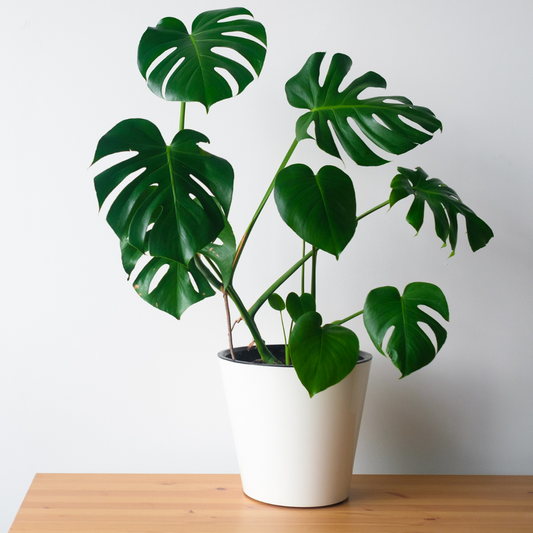
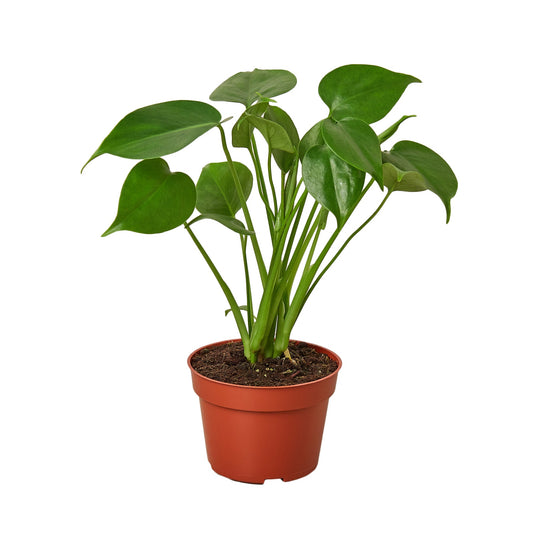
That is a size problem wearing a care problem's clothing. Most of the plants sold as "good for desks" are simply young versions of plants that get large. They behave for a season, then they do what they were always going to do.
There is an entire genus that never does this. Peperomias stay small on purpose, and that single fact makes them the right answer for desks, shelves, dorm rooms, rented apartments and homes with animals in them.
Why the genus works when other small plants do not
Peperomia is one of the largest groups in the pepper family, with well over a thousand species, and the ones grown indoors share a set of traits that are unusually convenient.
They are semi-succulent. The leaves are thick because they store water, which is why a forgotten Friday watering is not a crisis. If you have ever come home from a week away to a row of collapsed pots, this is the genus that forgives you, and it pairs well with the pre-trip routine we walked through earlier this month.
They are also slow, and slow is the feature. A peperomia bought at four inches is still a desk plant a year later. Their roots are shallow and they are genuinely happier in a small pot than a generous one, which means no annual repotting negotiation.
The old common name for the group is "radiator plant," and it is a useful one. It comes from their tolerance of the warm, bright, dry air that most tropical houseplants sulk in. That describes an office, a bookshelf above a heater, and roughly every apartment in February.
The last piece is safety. The ASPCA lists the peperomias most often grown indoors, including Peperomia argyreia and Peperomia caperata, as non toxic to both cats and dogs. That is rare for a genus this decorative, and it is why peperomias appear so often in our pet friendly houseplants collection. If animals are the deciding factor in what you bring home, our guide to pet safe indoor plants is the wider view.
What follows is not a catalogue. There are list posts out there with sixty varieties in them, which is a reference document, not a decision. These are six, each with a different reason to exist, and every one of them is in stock today.
Six peperomias worth starting with
Peperomia Watermelon
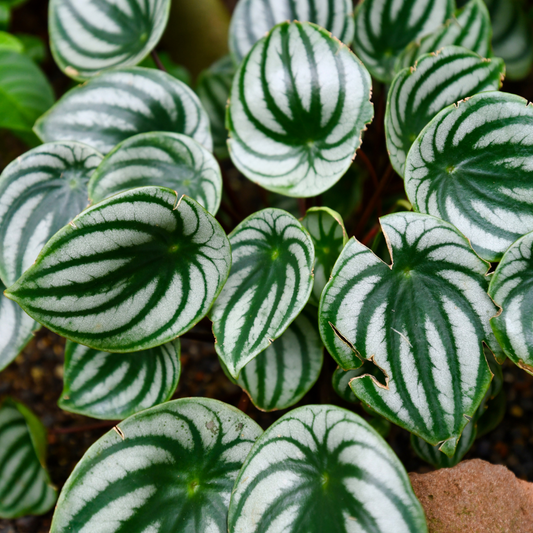
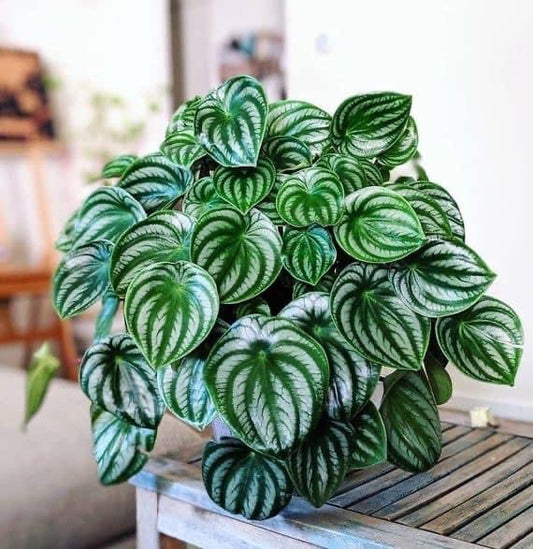
The one everybody recognizes, and for good reason: the silver and green banding is so precise it looks printed on. It is the plant people photograph and then ask about, it holds a tidy mound shape indefinitely, and it is the best looking thing you can put on a desk for the money. Starts at $22.99.
Shop this plant →

Peperomia Ginny
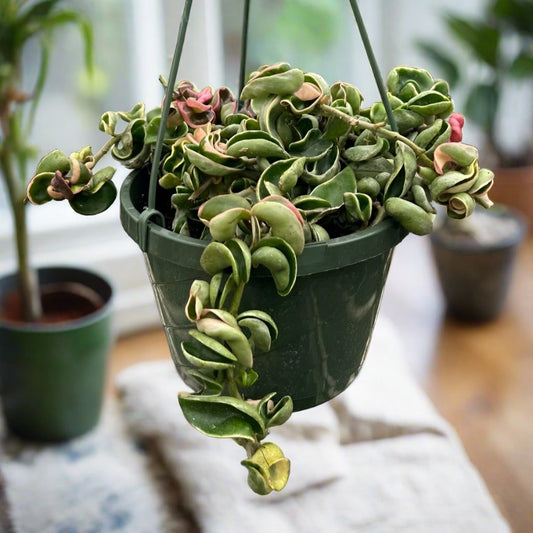
Three colors on a single leaf: green through the center, cream at the margin, and a pink blush where the two meet. It is also the cheapest honest way into the genus, and the three inch size is small enough that buying two feels like a rounding error rather than a decision. Starts at $9.99.
Shop this plant →
Peperomia Rosso
Deep corrugated green on the top surface, dramatic oxblood red underneath. It is the plant that rewards a second look, because you only get the red when you crouch or when it is placed high enough to see from below. Put it on a shelf above eye level and it changes character. Starts at $18.99 in the four inch, which is the size to buy right now.
Shop this plant →
Peperomia Quito
The one for the shelf that never gets good sun. Quito handles genuinely low light better than most of the genus, which makes it the answer for interior walls, north facing rooms and the corner of a desk that faces away from the window. It is also pet friendly. Starts at $16.99.
Shop this plant →
Peperomia Picollo Banda
Tight, architectural, and silver veined over near black leaves. This is the design object of the group, the one that looks deliberate next to books and a lamp rather than merely leafy. One honest note: unlike the other five here, it is not carried in our pet friendly range, so if a cat shares the desk, take one of the others instead. Starts at $19.99.
Shop this plant →

Peperomia Prostrata, String of Turtles
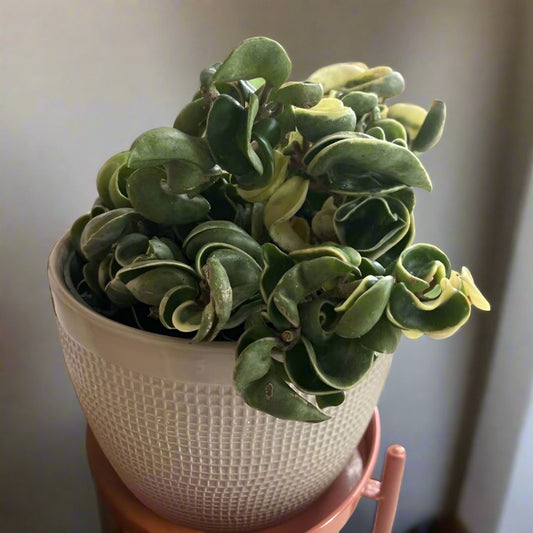
The plot twist. Almost nobody realizes this is a peperomia, because it trails rather than mounds, and each tiny round leaf carries a pattern like a tortoise shell. It is the slowest grower on this list and the most likely to stop a conversation. Starts at $40.99.
Shop this plant →
If two of these look like the same plant to you, that is worth trusting. Buy the one with the leaf shape you like and skip the one you are lukewarm on. Six peperomias on a shelf reads as a collection. Two peperomias and a lamp reads as a room.
How to order, and what to expect
Peperomias travel well, which is not true of every houseplant. The thick leaves that make them forgiving on your shelf also make them robust in a box, and because everything ships greenhouse-direct rather than sitting in a warehouse first, what arrives is a plant that was growing three days ago.
A few practical notes. Prices above are for the smallest size currently in stock, and sizes move quickly on this genus, so the four inch you see today may be the six inch by next week. Free shipping starts at $149, which on plants priced between $9.99 and $40.99 makes a multi plant order the sensible way to buy: three or four peperomias and a larger plant clears it comfortably. Every plant is covered by our 30-Day Guarantee, so an order placed on a hot week is not a gamble.
Give them a spot with bright indirect light, water when the top inch of soil is dry, and then leave them alone. That really is the whole thing. If you want the longer version, we have a full peperomia care guide that goes deeper on watering, light and propagation than a shopping list should.
Two of the genus, Rana Verde and Thailand, already earned their place in our roundup of desk plants that survive a real desk, which is worth reading if the workspace is the actual project here.
Start with one. Put it where you sit. The rest of the desk and small space collection is there when the shelf asks for company, and if you want the wider field first, browse easy care plants or all live plants.
Frequently asked questions
Are peperomias safe for cats and dogs?
The ASPCA lists the commonly grown indoor peperomias, including Peperomia argyreia and Peperomia caperata, as non toxic to cats and dogs. Not every cultivar sold under the peperomia name is individually listed, so check the specific plant rather than assuming the whole genus. Of the six above, five are carried in our pet friendly range and Picollo Banda is not.
How big do peperomias actually get?
Most of the popular indoor types top out somewhere between six and twelve inches tall and about as wide, and they take years to get there. The trailing types like String of Turtles will lengthen rather than widen. This is the practical difference between a peperomia and a young plant of a large species.
Which peperomia is best for a beginner?
Ginny, on price and forgiveness. At $9.99 for the three inch it is a low stakes first plant, and the semi succulent leaves mean an irregular watering habit will not immediately show. Watermelon is the better choice if you want the plant to be the decoration rather than a starting point.
Do peperomias need a lot of light?
Bright indirect light suits the whole genus, and the variegated types keep their contrast better with more of it. Quito is the exception worth knowing about, since it tolerates genuinely low light and is the one to pick for an interior wall or a north facing room.
Why are my peperomia's leaves dropping?
Almost always overwatering. The stored water in those thick leaves means they need far less than their appearance suggests, and soggy soil is the fastest way to lose one. Let the top inch dry out before watering again, and use a pot only slightly larger than the root ball.