You watered on schedule, the light is right, and your plant still looks tired. The leaves have gone dull and speckled, and there is a whisper of fine webbing where the leaf meets the stem. That is not bad luck. In summer, it is almost always spider mites, and July and August are their favorite months of the year.
Here is the reassuring part. Spider mites are one of the most beatable houseplant pests there is, as long as you catch them early. This guide walks you through exactly how to inspect, clean, and treat your plants so a few specks never turn into a full infestation.
Quick answer
Spider mites thrive in the hot, dry air of summer and can run through several generations in just a few weeks, so early detection is everything. To stay ahead of them as of 2026, we recommend three habits:
- Inspect weekly in summer. Check leaf undersides for webbing, stippling, and moving specks.
- Clean your plants routinely. Wiping and rinsing leaves physically removes mites before they multiply.
- Treat at the first sign. Neem oil plus an organic bio insecticide rotation stops an outbreak fast.
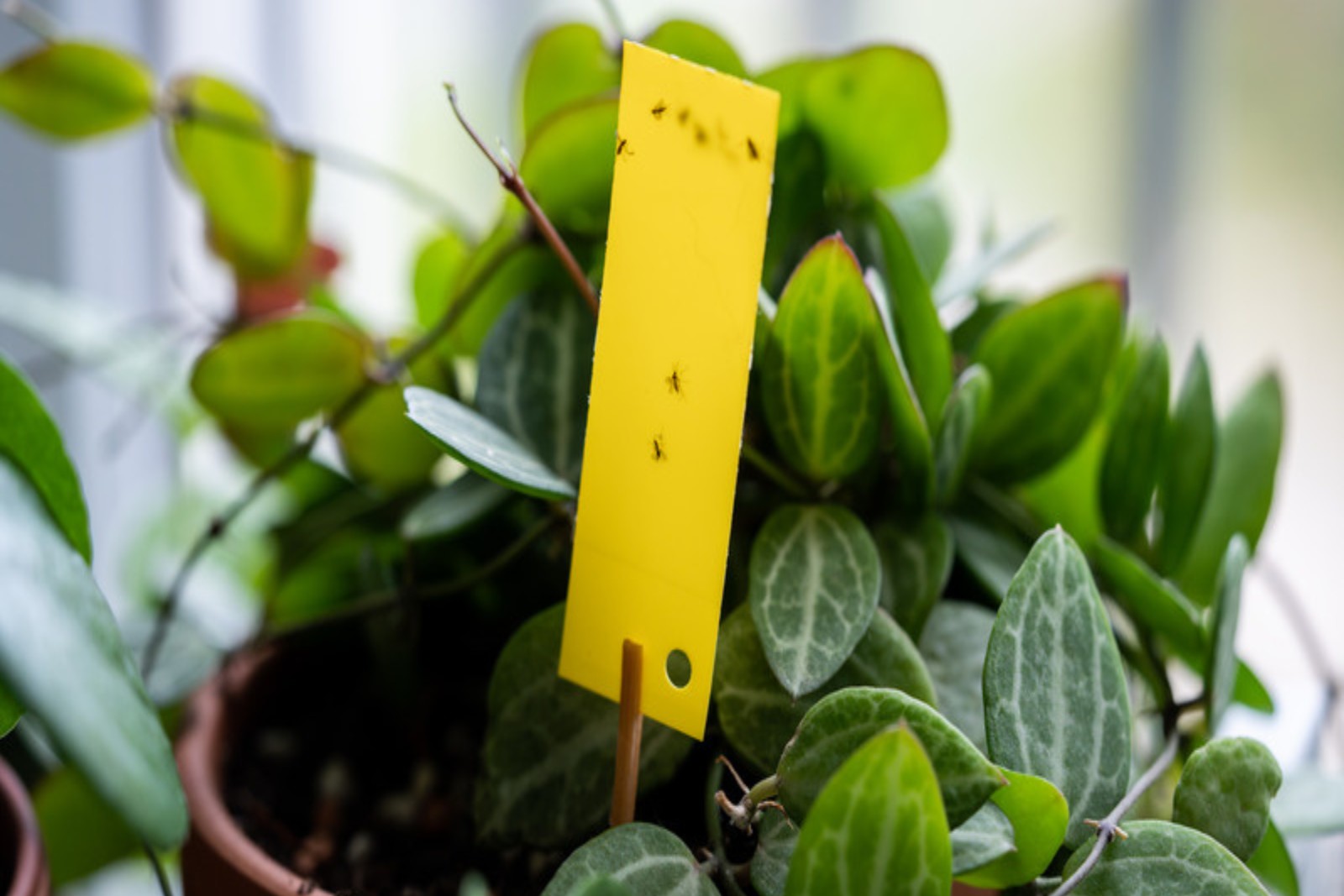
What are spider mites, and why do they explode in summer?
Spider mites (most often the two spotted spider mite, Tetranychus urticae) are tiny sap sucking arachnids, not insects, that pierce leaf cells and drain them one by one. Each bite leaves a pale dot, which is why an affected leaf looks stippled, faded, or dusty rather than dramatically damaged at first.
Summer is their season because they love exactly what July delivers: heat and dry air. Air conditioning strips humidity from your rooms, warm temperatures speed up their life cycle, and a single female can lay dozens of eggs in her short life. In hot, dry conditions a new generation can mature in about a week, which is how a plant that looked fine two weeks ago suddenly has webbing across its leaves.
One common myth deserves a direct correction. A little webbing is not harmless, and waiting is the one move that makes spider mites hard to beat. By the time webbing is easy to see, the population is already large. Check weekly in summer and act at the very first sign. Early detection is the whole game.
How do I check my houseplants for spider mites?
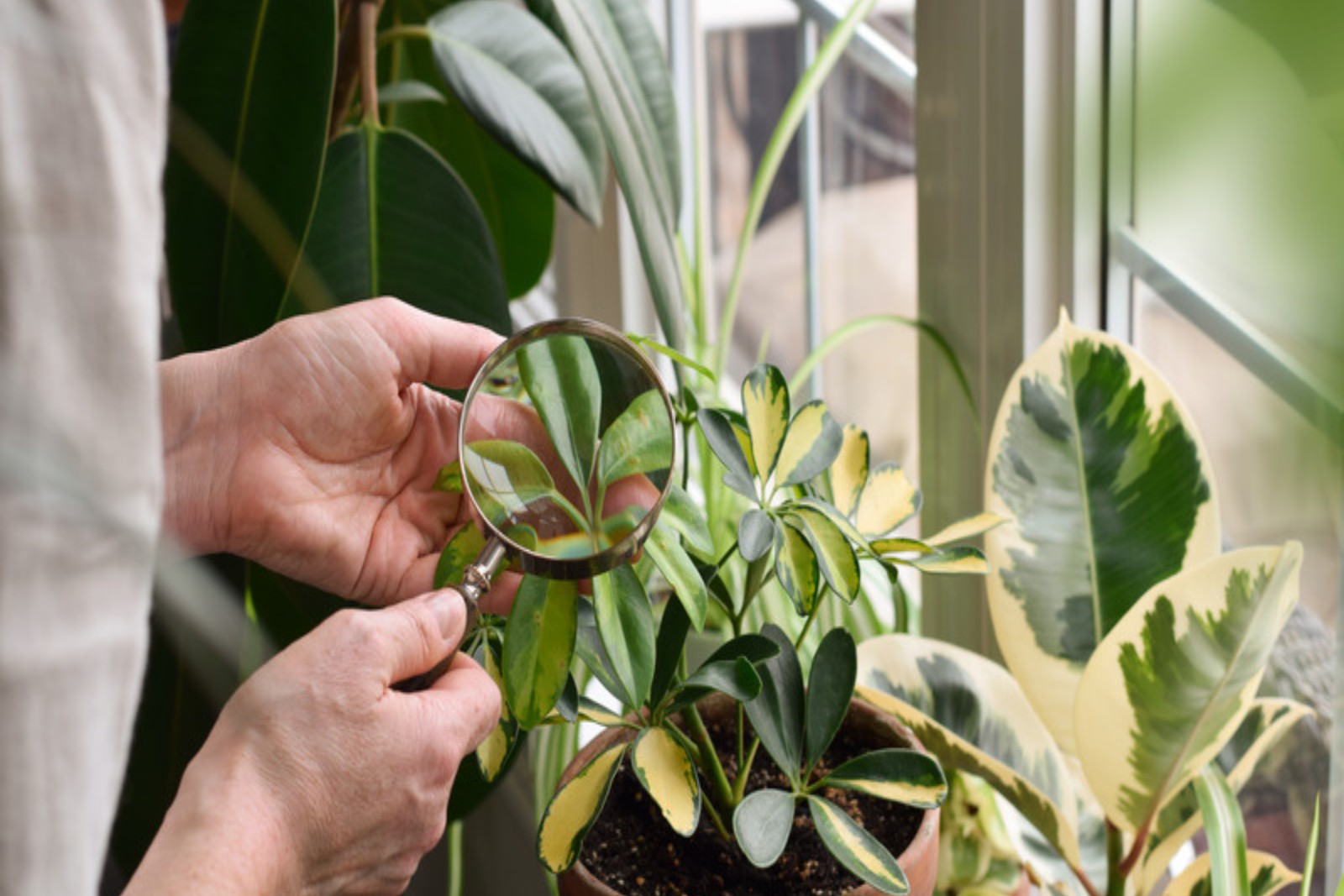
Inspect the undersides of leaves once a week in summer, because that is where spider mites feed and hide. A thorough check takes about two minutes per plant:
- Flip the leaves. Look at the undersides and the joints where leaves meet stems. Mites almost never sit in plain view on top.
- Look for the two signatures. Fine, silky webbing along stems and leaf edges, and pale stippling or speckling across the top of the leaf.
- Do the white paper tap test. Hold a sheet of white paper under a leaf and tap it a few times. If tiny specks land on the paper and start moving, you have mites.
- Confirm with a magnifier. A basic hand lens turns anonymous dust into obviously moving pests, so you treat the right problem.
- Quarantine every new arrival. Isolate new plants for a week and inspect them before they join the collection. Most infestations hitchhike in.
Stippled, fading leaves can also be mistaken for other stress. If the pattern on your plant looks more like whole leaves yellowing than pinprick speckles, run through this guide to yellowing leaves before you treat for pests.
How do I clean my plants to prevent spider mites?
Regular cleaning is the cheapest pest control there is, because it removes dust and knocks mites off before they establish. In our greenhouse, a routine wipe down catches more problems than any spray ever will. Build these four habits:
- Wipe both sides of the leaves with a soft, damp cloth every few weeks. Dust hides mites and blocks the light your plant needs.
- Give plants an occasional shower. A lukewarm rinse in the sink or shower physically washes pests off the plant before they can spread.
- Raise the humidity. Spider mites hate moist air. Group plants together, set pots on pebble trays, or run a small humidifier. Our Humidity 101 guide covers the easiest ways to get there.
- Keep plants strong. A well fed, unstressed plant resists pests far better than a struggling one. If you have not fed since spring, Fertilizing 101 shows how to do it without overdoing it.
How do I treat spider mites on indoor plants?
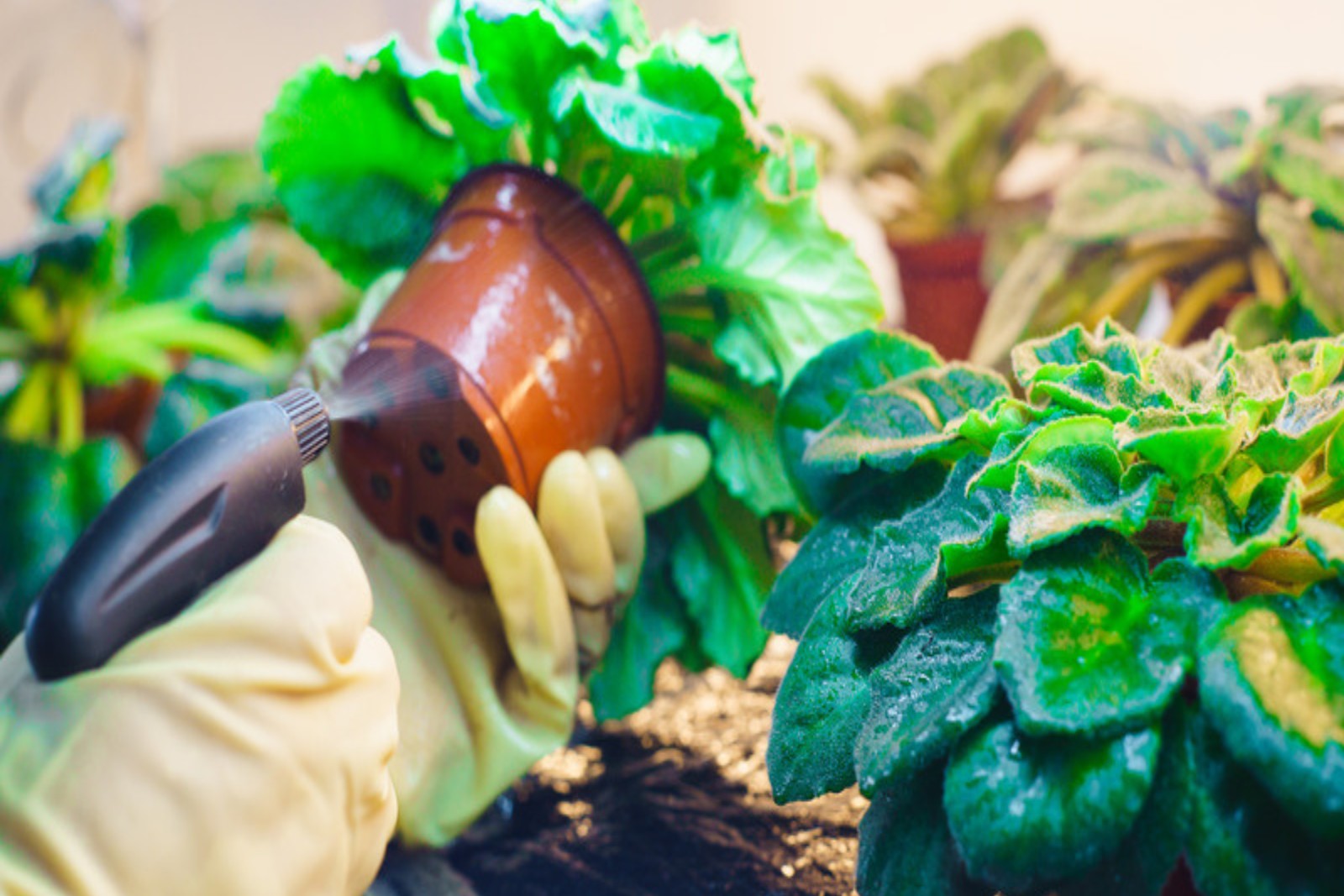
Treat spider mites by isolating the plant, washing it, then applying an organic treatment on repeat until new growth comes in clean. Here is the exact sequence we recommend:
- Isolate the plant. Move it away from its neighbors immediately. Spider mites travel on webbing, on touching leaves, and even on your hands.
- Rinse thoroughly. Shower the whole plant, especially leaf undersides, to knock the population down before you spray anything.
- Spray with neem oil. Mix about 1 tablespoon of neem oil into 10 ounces of water with a few drops of dish soap. Coat both sides of every leaf and repeat about twice a week. Neem smothers adults and disrupts eggs.
- Time your sprays. Spray in the early morning or evening, and never when temperatures are above roughly 80 to 90 degrees Fahrenheit or when the plant is badly stressed, because oil on hot leaves can scorch them.
- Rotate in a bio insecticide and keep protecting. After you have inspected and cleaned, an organic rotation is the plant safe way to finish the job and keep mites from rebounding.

Arber Organic Bio Insecticide
This is the treatment we reach for first. It uses beneficial bacteria to prevent insect and mite build up and suppress soil dwelling pests, it is organic, and it is made for indoor use, which makes it a perfect rotation partner for neem. It is ideal for anyone who wants an effective treatment without harsh chemicals around their home.

Arber Organic Bio Fungicide
Pest damage plus summer humidity is an open door for fungus, mold, mildew, and rot, which is why we pair treatment with protection. The Bio Fungicide guards recovering plants against those secondary infections using a natural formulation, so the comeback actually sticks.
Both treatments are gentle enough to use in homes with curious cats and dogs, though pets and pests agree on one thing: some plants are simply easier to live with. If you share your space with animals, our pet friendly collection is fully non toxic.
When should I worry, and when should I let a plant go?
Most spider mite infestations caught early are fully beatable within two to three weeks of consistent treatment. Keep treating weekly until you see clean new growth and the tap test comes back empty two weeks in a row.
If a plant is more webbing than leaf, cut your losses. Prune the worst foliage, and if the whole plant is collapsing, it is kinder to your collection to discard it than to keep a mite factory in the house. Replace it with something vigorous and easy going. Our easy care collection is full of resilient growers that shrug off beginner mistakes, and every plant we ship is inspected in the greenhouse, packed fresh, and covered by a 30 Day Guarantee, so a healthy restart is genuinely risk free.
Not sure what to restart with? This beginner guide matches plants to your light, schedule, and pets, or you can browse all plants and pick your next favorite.
Frequently asked questions
What causes spider mites on indoor plants?
Spider mites are caused by hot, dry conditions combined with an introduction point, usually a new plant, open window, or contaminated tools. Indoor heat and air conditioning lower humidity, and dry air lets spider mite populations reproduce rapidly, sometimes maturing a new generation in about a week during summer.
Does neem oil really work on spider mites?
Yes. Neem oil works on spider mites by smothering adults and disrupting their eggs. Mix about 1 tablespoon of neem oil with 10 ounces of water and a few drops of dish soap, spray both sides of every leaf, and repeat about twice weekly. Avoid spraying above 80 to 90 degrees Fahrenheit or on stressed plants.
How often should I treat a plant for spider mites?
Treat a mite affected plant about twice a week with neem oil or weekly with an organic bio insecticide, and continue for two to three weeks after the last sign of mites. Spider mite eggs hatch in waves, so stopping after one spray almost always leads to a rebound.
Do spider mites spread between houseplants?
Yes, spider mites spread easily between houseplants. They travel on touching leaves, drift on air currents from fans and vents, and hitchhike on hands and watering tools. Isolate any affected plant immediately and quarantine new arrivals for a week before placing them near your collection.