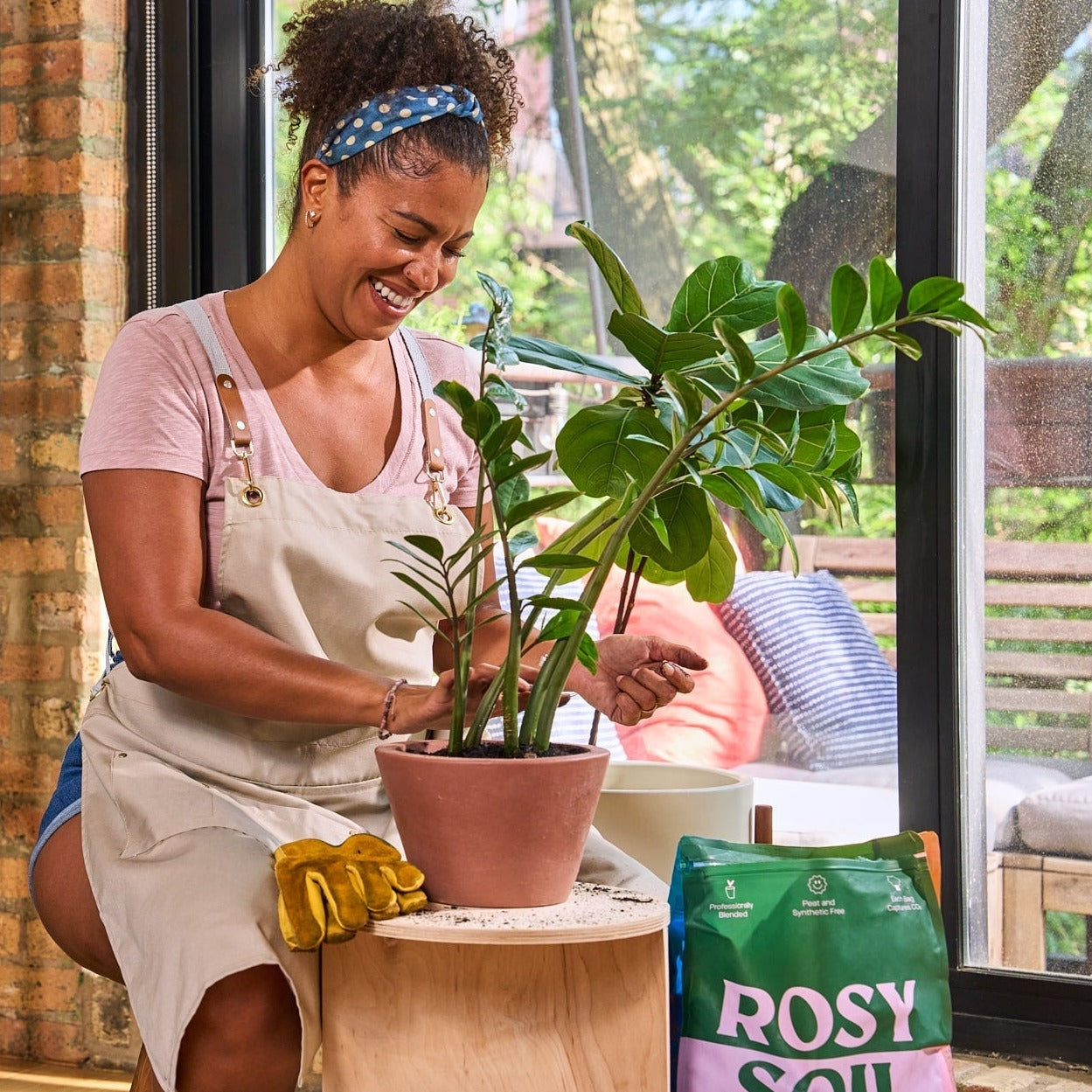
Your Plants Are Trying to Tell You Something
Crispy brown leaf tips. Edges that curl inward like the leaf is bracing itself. New growth that comes in small, then stalls out. If your tropical houseplants have looked a little defeated lately, the cause probably is not you, and it probably is not underwatering. Nine times out of ten, it is the air itself.
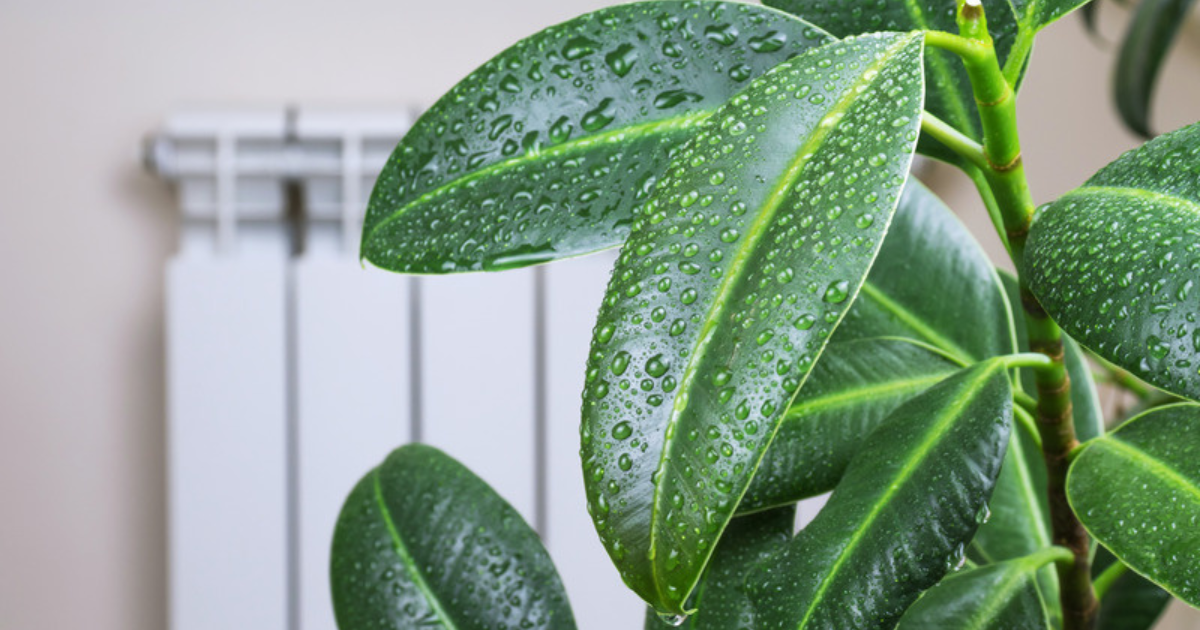
Tropical foliage plants send clear distress signals when the air around them gets too dry. The most common tells are brown, papery tips on otherwise healthy green leaves, curling or cupping edges, flower buds that drop before they open, and growth that slows to a crawl. It is easy to mistake these signs for a watering problem and reach for the watering can, which often makes things worse. If you want to rule out the other usual suspects first, our guide on why plant leaves turn yellow and our indoor plant troubleshooting guide walk through how to read the difference.
Why Your Home Is Drier Than the Rainforest
Most popular houseplants, including Calatheas, ferns, Marantas, Anthuriums, and philodendrons, come from tropical understories where humidity sits between 60 and 90 percent. The average home hovers around 30 to 50 percent, and once the heat or air conditioning kicks on, indoor humidity can dive into the low 20s. That gap is the real reason tropical leaves crisp up.
Plants lose water through tiny pores in their leaves in a process called transpiration. When the surrounding air is dry, that water evaporates faster than the roots can replace it, and the thinnest, farthest tissue, the leaf tips and edges, dries out first. Heat sources make it worse. A plant sitting above a radiator or next to a heating vent is essentially standing in a warm, moving draft that pulls moisture away all day long.
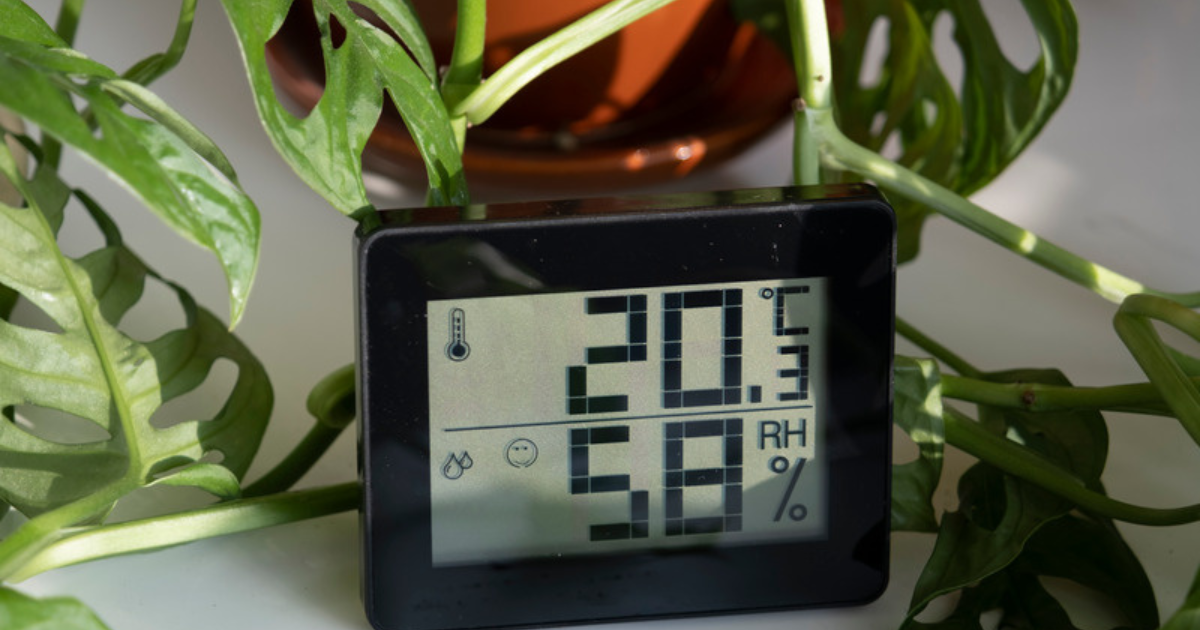
The fastest way to stop guessing is to measure. An inexpensive hygrometer tells you the actual humidity around your plants. For most tropical houseplants, aim for 50 to 60 percent. If your reading sits in the 30s or lower, those crispy tips finally make sense.
How to Actually Raise Humidity (Cheapest to Priciest)
You do not need a greenhouse to keep tropicals happy. Here is what genuinely works, ordered from free to worth-the-investment.
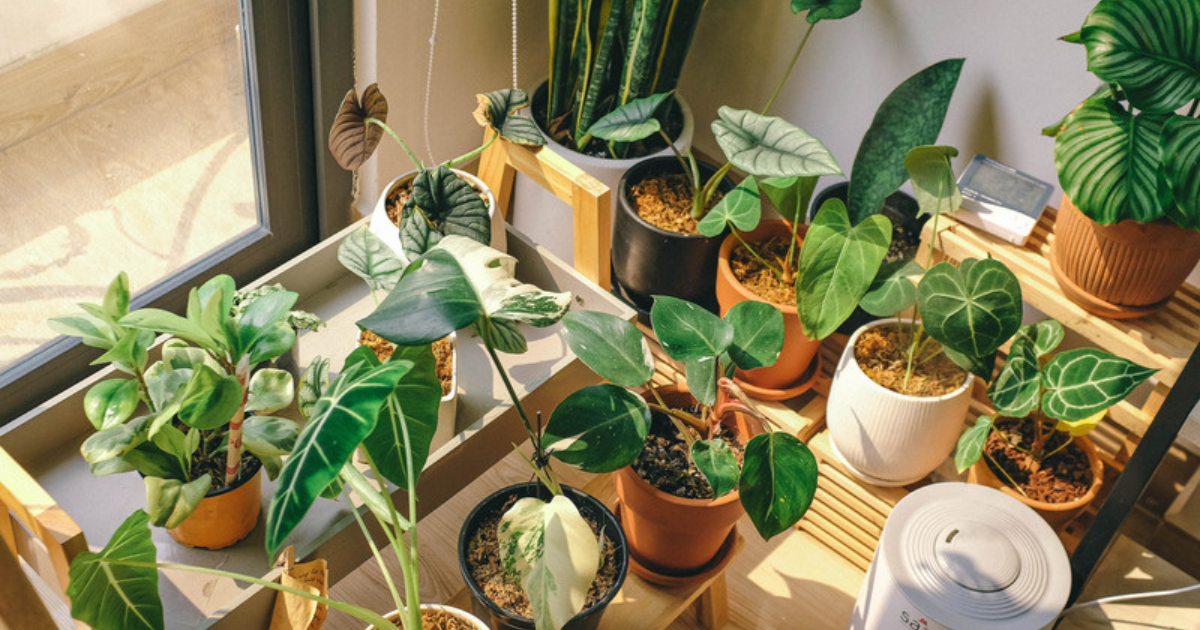
- Group your plants together. Free and surprisingly effective. Plants release moisture as they transpire, so clustering them creates a shared pocket of more humid air. The more plants in the huddle, the stronger the effect.
- Move humidity lovers to naturally damp rooms. Bathrooms and kitchens run more humid than the rest of the house thanks to showers and cooking. A bright bathroom is basically a spa day for a fern.
- Set up a pebble tray. Fill a shallow tray with pebbles and add water to just below the top of the stones, then rest the pot on top. As the water evaporates it lifts the humidity right around the plant. Keep the pot above the waterline so the roots never sit in water.
- Run a humidifier. This is the most reliable fix for serious tropicals and dry winters. A small cool-mist humidifier near your plant cluster holds a steady 50 to 60 percent with almost no effort. It is the single best upgrade for a struggling collection.
- Go enclosed for the divas. The fussiest plants thrive in a glass cabinet or terrarium, where humidity stays high on its own and never depends on your memory.
Watering habits still matter right alongside humidity. If you are not sure whether you are over or underdoing it, our guide to the signs of over and underwatering and our watering 101 walkthrough pair perfectly with this one.
The Misting Myth (Our Honest Take)
Here is where we go against a lot of popular plant advice. Misting your plants does not meaningfully raise humidity. A spray bottle gives the leaf surface a brief spike of moisture that evaporates within minutes, so the effect is gone almost as soon as you set the bottle down. Worse, water that lingers in leaf crevices and dense foliage can invite fungal spots and bacterial issues, especially on fuzzy or thin leaves.
If misting is your relaxing plant ritual, there is no harm in the occasional spritz. Just do not count on it to fix crispy tips. Lasting humidity comes from grouping, pebble trays, a humidifier, or a naturally damp room. Those methods change the air itself, not just the surface of the leaf.
Which Plants Crave Humidity, and Which Shrug It Off
Not every plant needs a tropical spa. Knowing which camp a plant falls into saves you a lot of heartache before you ever buy.
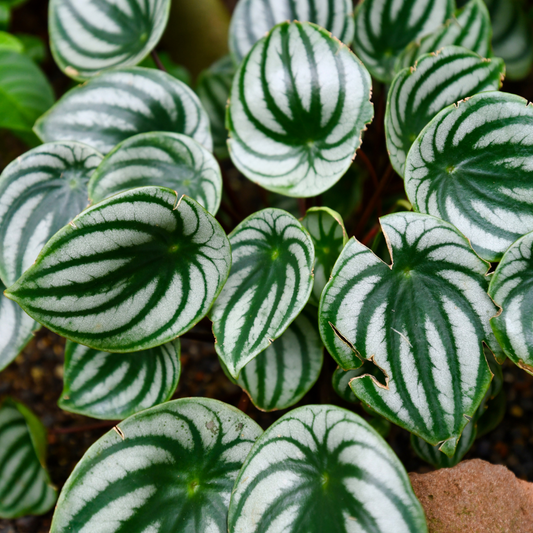
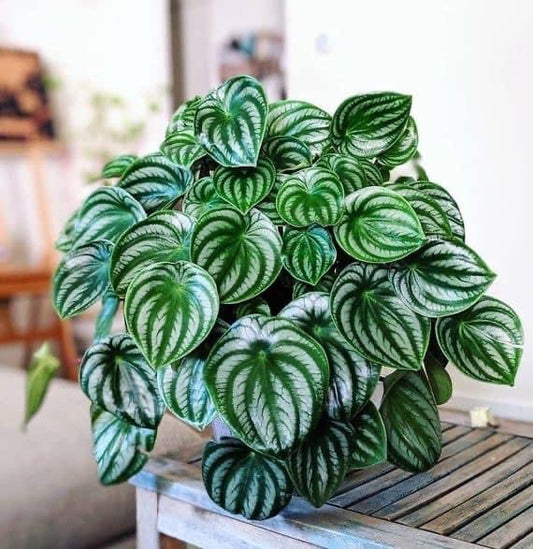
Humidity lovers that reward the effort include Calatheas, Marantas, and most ferns. The Calathea Orbifolia, with its dinner-plate leaves and silver pinstripes, is stunning but honest about its needs. The Blue Star Fern is one of the more forgiving ferns and a great first humidity plant. If you love the tropical look, browse the full live plant collection and give the thirstier ones a humidifier or a bright bathroom.
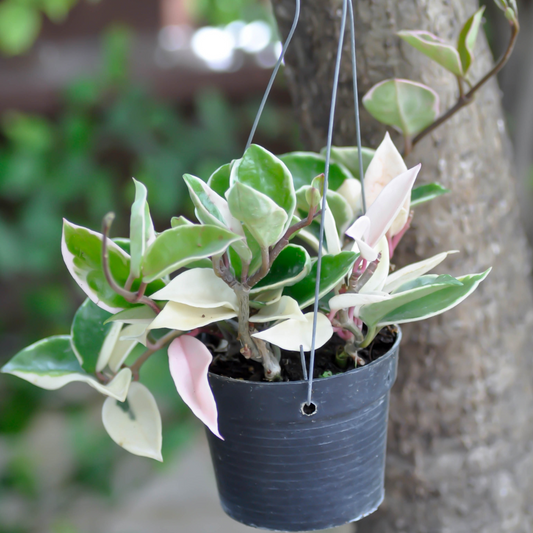
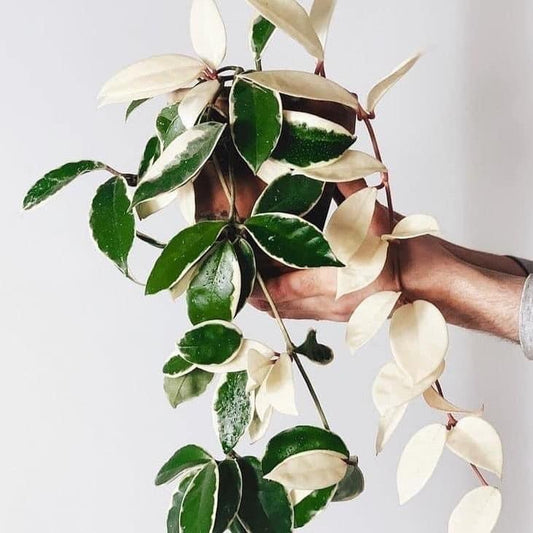
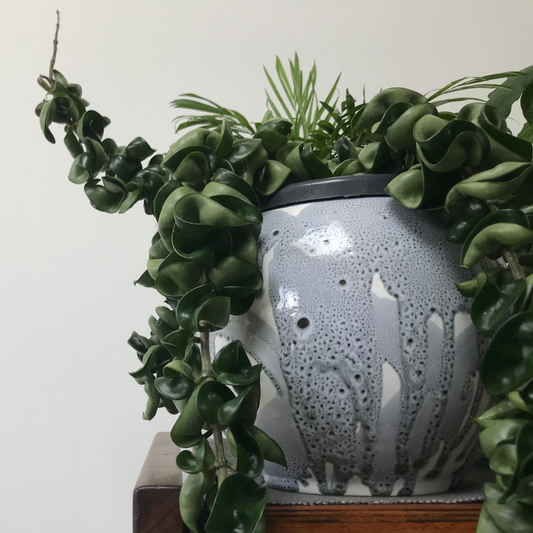
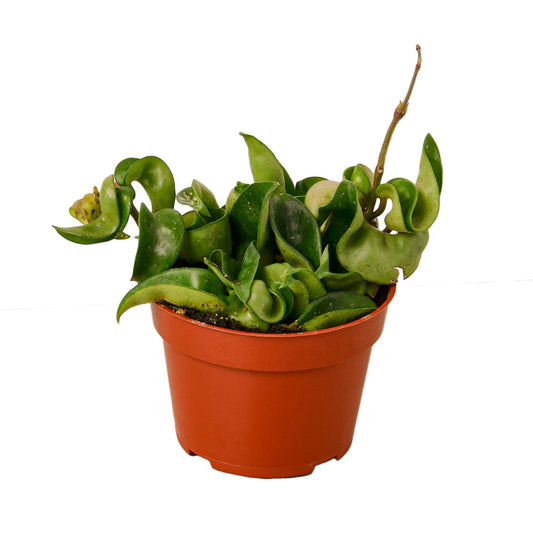
Low-humidity champs barely notice dry air. Hoyas, pothos, snake plants, and ZZ plants hold their own in an ordinary living room with no extra help at all. If your home runs dry and you would rather not fuss, start with our easy care plants or the trailing, waxy-leaved options in the Hoya collection. Low light too? The low-light collection is full of tough, humidity-tolerant picks. Sharing your space with pets? The pet-friendly collection keeps curious noses safe.
The Bottom Line
Crispy tips are not a life sentence. Measure your humidity, group your plants, add a humidifier if your home runs dry, and match new plants to the conditions you actually have. Every live plant ships greenhouse-direct so it arrives fresh and ready to settle in, and it is backed by a 30-Day Guarantee, so you can find your perfect humidity match with zero risk. Ready to build a collection that thrives in your space? Explore everything in bloom at plantswagshop.com.
Frequently Asked Questions
What humidity level do houseplants need?
Most tropical houseplants are happiest between 50 and 60 percent relative humidity. Hardier plants like pothos, snake plants, and Hoyas tolerate 30 to 40 percent without complaint. An inexpensive hygrometer takes the guesswork out of it.
Does misting actually increase humidity?
Not in any lasting way. Misting creates a brief spike of surface moisture that evaporates within minutes, and standing water on leaves can encourage fungal problems. Grouping plants, pebble trays, and a humidifier deliver the steady humidity that misting cannot.
How do I increase humidity without a humidifier?
Cluster your plants together, move humidity lovers into a bright bathroom or kitchen, and set pots on a pebble tray filled with water to just below the stones. Used together, these methods can lift local humidity by 10 to 20 percent.
What houseplants tolerate low humidity?
Hoyas, pothos, snake plants, ZZ plants, and most succulents shrug off dry air. They are ideal for homes that run heating or air conditioning for much of the year.
What humidity does a Calathea need?
Calatheas prefer 50 to 60 percent or higher and are quick to show brown edges when the air is too dry. A humidifier or a spot in a naturally humid room keeps them looking their best.