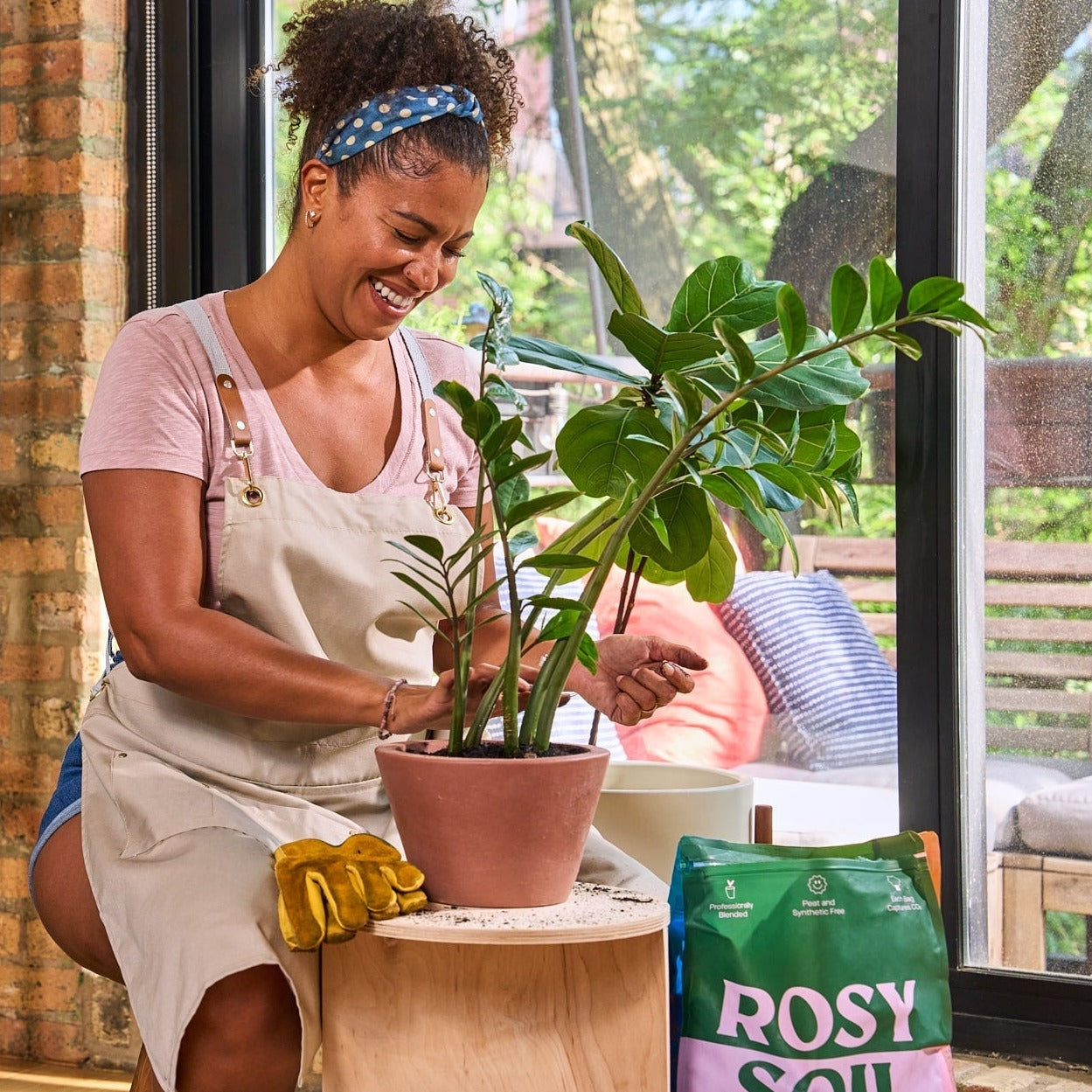
There is a corner in your home that has never known what to be. Too small for a chair, too visible to ignore, it collects a laundry basket one week and a dying idea the next. Picture it instead at golden hour: one tall plant reaching toward the ceiling, a patterned leaf catching the light at waist height, and a soft trail of variegated vines spilling toward the floor. That is not an accident of taste. It is a formula, and you can copy it this week.

Quick answer: The most reliable way to style plants indoors is the rule of three: group exactly three plants of different heights in one corner. As of 2026 it remains the formula interior designers reach for first, because it works in nearly any room.
- One tall anchor, one mid-height pattern, one small trailing plant form a visual triangle the eye reads as natural.
- Odd numbers feel organic; two plants read as static bookends.
- Quiet, matte planters in white, charcoal, or terracotta let the foliage lead.
What is the rule of three in plant styling?
The rule of three is a design principle that groups plants in odd numbers, most often three, so the arrangement forms a triangle the eye cannot split in half. A trio of different heights creates depth and movement, while an even pair reads as symmetrical and flat. Garden designers have used odd-number groupings in outdoor beds for decades. Indoors, the same principle turns one awkward corner into a deliberate green moment without cluttering the room.
The magic is in the variation, not the quantity. Three identical plants in identical pots still read as static. Three plants that differ in height, leaf size, and texture read as a tiny landscape. In our greenhouse we have found that the trios customers rave about months later almost always follow this height-texture-restraint pattern, whether they planned it or not.
How do you style three plants in one corner?
Style a corner by varying height, varying texture, and keeping the planters quiet. Here is the four-step formula:
- Vary the height. Choose one tall anchor (floor level, eventually 3 to 6 feet), one mid-height plant (on a stool, stand, or side table), and one small or trailing plant (shelf or plant stand edge). The three crowns should form a rough triangle, not a line.
- Vary the texture. Pair one broad, glossy leaf with one boldly patterned leaf and one fine or trailing leaf. Contrast is what makes each plant visible instead of merging into a green blob.
- Keep the planters quiet. Matte neutrals such as white, charcoal, black, or raw terracotta in clean geometric shapes let the plants lead. Save loud pots for rooms with fewer plants.
- Stay odd. If the corner grows, jump from three plants to five, never four. Odd groupings keep the arrangement feeling collected rather than arranged.
If your corner sits next to shelving, the same triangle logic scales up beautifully; our guide to building a stunning plant shelfie shows how.

Which three plants look good together?
The best plant trios pair a broad-leaf anchor, a patterned mid-height plant, and a fine-textured trailer. These three combinations are proven, and every plant in them ships greenhouse-direct to your door.
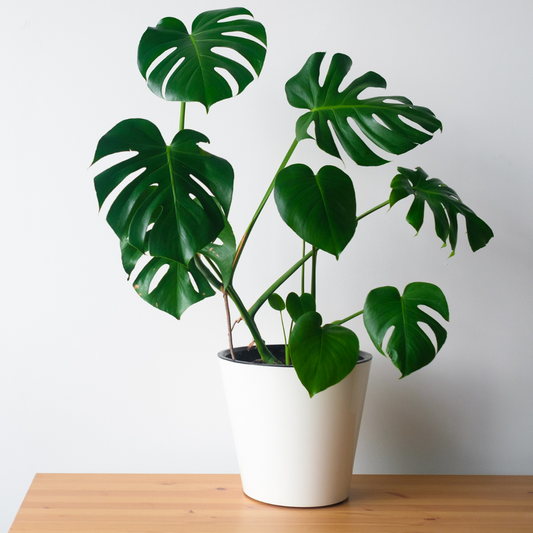
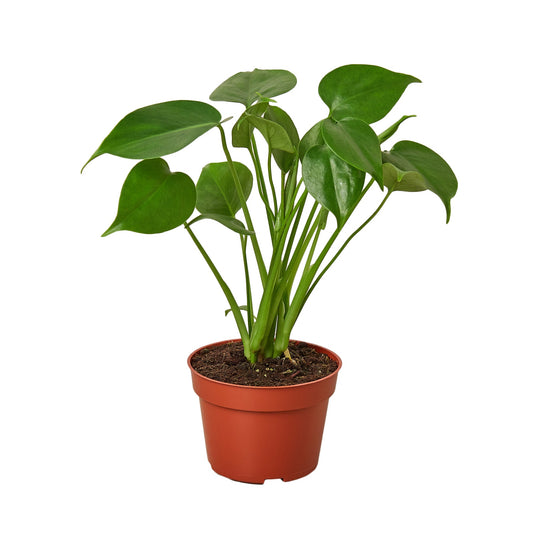
The Classic Trio. Monstera Deliciosa (Monstera deliciosa) is the anchor: split, glossy leaves that grow more dramatic every season in bright indirect light. Maranta Red Prayer (Maranta leuconeura) holds the middle with painted red veins and leaves that fold upward at night. Pothos N'Joy (Epipremnum aureum) finishes low with compact green and white variegation that trails over the pot edge. This is the trio we recommend first to anyone starting from zero; shop the anchor at Monstera Deliciosa.
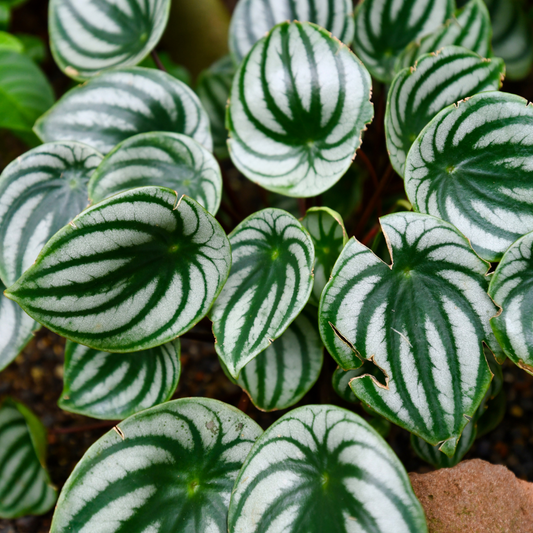
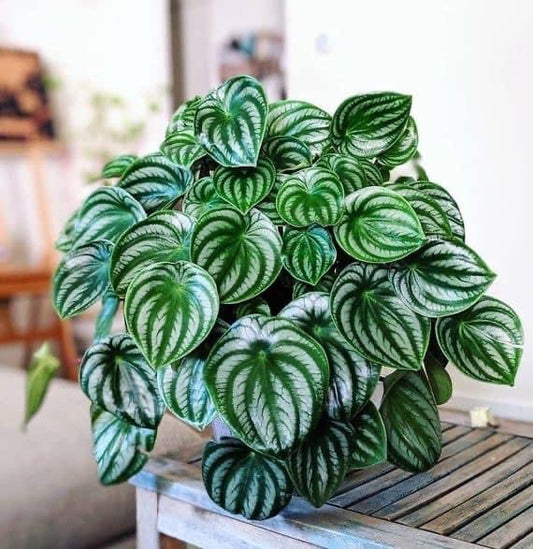
The Low-Light Corner Trio. Scindapsus pictus 'Exotica' brings large, silver-splashed satin leaves that shimmer even away from a window; it anchors the group visually from a stand or high shelf, and you can find it as Scindapsus pictus 'Exotica'. Peperomia Watermelon (Peperomia argyreia) adds round, striped leaves that mimic watermelon rind at mid height. A second Pothos N'Joy trails it out. All three tolerate the dimmer corners most homes actually have.
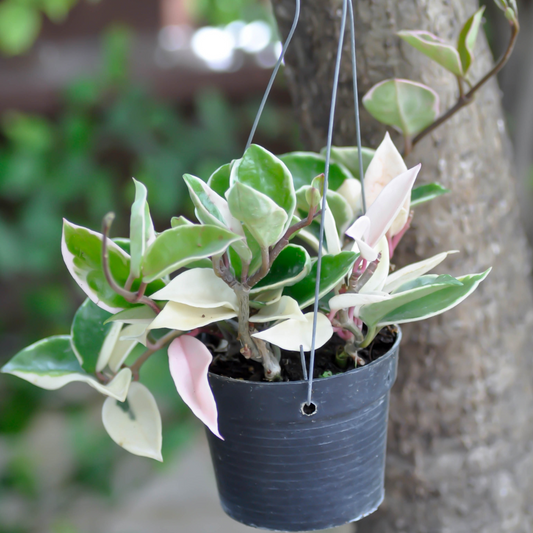
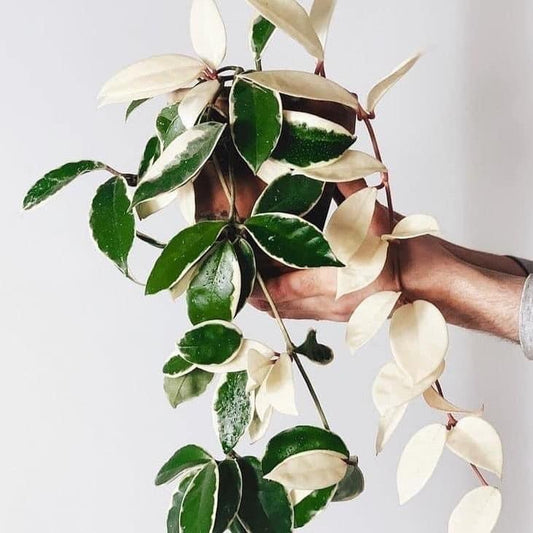
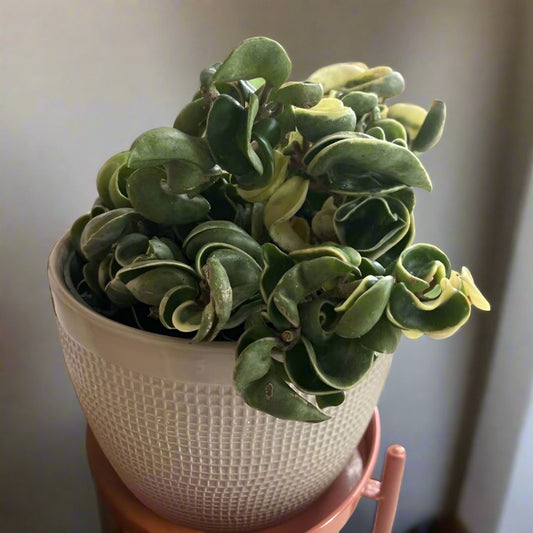
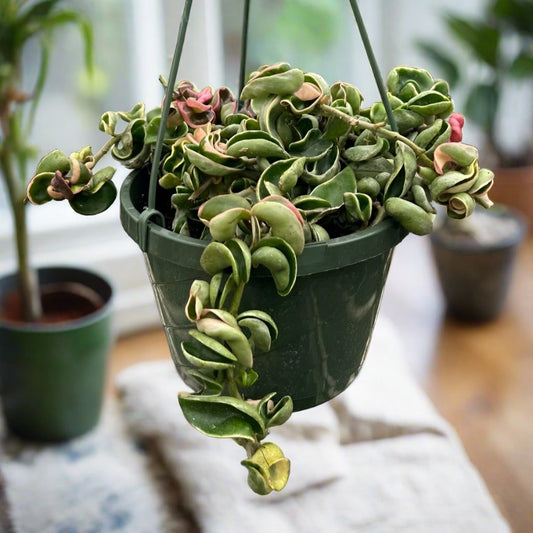
The Collector Shelf Trio. For the corner you want guests to ask about: Philodendron Pink Princess (Philodendron erubescens) leads with dark leaves splashed bubblegum pink. Hoya Carnosa Krimson Queen adds waxy cream-edged foliage that trails and, in time, blooms. Peperomia Watermelon grounds the group with pattern at the base. More compact statement plants live in our Desk and Small Space Plants collection.
| Trio | Anchor (tall) | Mid (pattern) | Trailer (fine) | Best for |
|---|---|---|---|---|
| Classic | Monstera Deliciosa | Maranta Red Prayer | Pothos N'Joy | First-time stylists, bright indirect light |
| Low-Light | Scindapsus 'Exotica' | Peperomia Watermelon | Pothos N'Joy | North-facing rooms, dim corners |
| Collector | Philodendron Pink Princess | Peperomia Watermelon | Hoya Krimson Queen | Shelf displays, conversation pieces |

How do you start if you only own one plant?
Start with the anchor, because the tall plant defines the triangle and the other two follow from it. Place your largest plant in the corner first, live with it for a week, and notice where your eye wants the next level. Then add the mid-height pattern plant on a stool or stand, and finish with a trailer whose vines soften the hard edges. Renters take note: nothing in this formula touches a wall, requires hanging hardware, or leaves a mark, which is why trailing plants from our Trailing and Hanging Plants collection do so much work in small spaces. If you would rather build a whole room than a corner, the Indoor Jungle Blueprint covers layering at room scale.
Every plant above arrives greenhouse-direct with heat packs in cold weather, and each order is backed by a 30-Day Guarantee, so an ambitious corner is a low-risk experiment. Ready to copy a trio exactly? Start with the full live plant collection and pick your three.
Frequently asked questions
Do all three plants in a corner need the same light?
Plants grouped in one corner should share the same general light needs, because they live within a few feet of each other. The Classic Trio wants bright indirect light near an east or south window. The Low-Light Trio tolerates dim corners and north-facing rooms. Mixing a sun lover with shade plants in one grouping leaves one of them struggling.
Are three-plant corners hard to maintain?
A three-plant corner takes about ten minutes of care per week. Pothos, Scindapsus, and Hoyas want water roughly every 7 to 10 days once the top inch of soil dries. Maranta and Peperomia prefer slightly more even moisture. Grouping plants together also raises local humidity, which tropical species appreciate, so the trio is often easier than three plants scattered across a home.
Which trio is safe for cats and dogs?
A fully pet-safe trio is Maranta Red Prayer, Peperomia Watermelon, and Hoya Carnosa Krimson Queen; all three are non-toxic to cats and dogs according to the ASPCA. Monstera, Pothos, Scindapsus, and Philodendron are toxic to pets if chewed, so pet households should build from the Pet-Friendly Plants collection instead.
Does the rule of three work outside a corner?
Yes. The rule of three works on bookshelves, sideboards, bathroom counters, and desks, anywhere a grouping is seen as one composition. Keep the same height triangle and texture contrast, scale the plant sizes to the surface, and stay with odd numbers as the display grows.