
Your Monstera looked happy in July. Now it leans toward the glass, the new leaves are smaller, and the soil stays wet for days. On Sunday the clocks fall back, and it is tempting to think that is what changes everything for your plants.
It is not. The clock moves, the sun does not. What your plants respond to is the slow shortening of days and the lower angle of the sun that has been underway since late June. The clock change only shifts when you notice the dim hours, with darker evenings. So the best time to adjust your plants is now, not the morning after the switch. Here is how we do it, using Monstera as our example.
The clock is not the problem, day length is
Plants turn light into energy. Every week since midsummer, they have had a little less of it: fewer hours of daylight, and light that arrives at a shallower angle and passes through more atmosphere and glass before it reaches a leaf. By the time we move the clocks, your plant has already been adjusting for months.
That is why a window that felt generous in summer can feel stingy now. The plant did not change. The light did. If you have already noticed slower growth, our post on why your plant stopped growing in autumn explains why that slowdown is a sign of a healthy plant, not a struggling one.
The midday shadow test: measure your light without a meter
You do not need a gadget to see how much light a spot gets. Try this on a sunny day around midday, and repeat it every few weeks through the dim months.
- Hold your hand about a foot above the spot where your plant sits, with a sheet of white paper beneath it.
- Look at the shadow your hand casts on the paper.
- A sharp, crisp outline means bright light. A soft, slightly fuzzy edge means medium light. A faint blur or barely visible shadow means low light.
Test it on a cloudy day too, since that is closer to what your plant lives with most weeks from now on. We are not giving you a lux number on purpose: your window, your glass and your neighborhood all change the result, and the shadow test compares your own spots against each other, which is what matters.
Find the plant that fits your light
If your shadow test says your rooms run dim, you are not stuck with struggling plants. Take the 1 minute plant quiz to match a plant to your light, your space and any pets at home.

Move your Monstera, and what else to change
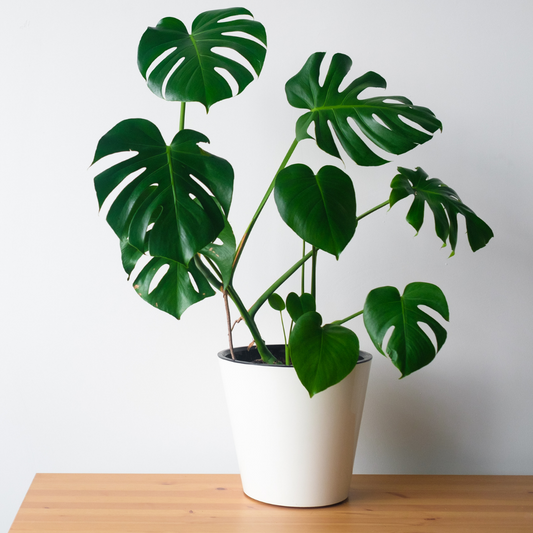
Monstera deliciosa can handle medium light, but it grows its biggest, most split leaves in bright, indirect light. When the days shorten, give it the best spot you have. Here is the short list.
- Move it closer to the window. A few feet can be the difference between a crisp shadow and a fuzzy one. Keep leaves from touching cold glass on chilly nights, and keep the plant away from heater vents.
- Rotate a quarter turn each week. Plants lean toward the light. A regular turn keeps growth even instead of lopsided.
- Wipe the leaves. Dust acts like a thin curtain, and when light is scarce you cannot afford to lose any. A damp cloth over each big leaf takes a minute.
- Clean the window. Dirty glass blocks more light than you would think.
- Do not repot now. A plant in low light is not ready for the extra work of settling into new soil.
Heated homes bring dry air too, and we covered that in the humidity drop nobody warns you about. Dry air and dim light often arrive together, so check the undersides of leaves too, using our spider mite sweep.
Watering follows the light
Here is the part that trips people up. Less light means slower growth, and slower growth means the plant drinks less. If you keep watering on the same schedule you used in July, the soil stays wet, and wet soil is where root trouble starts.
So switch from a schedule to a check. Push a finger two inches into the soil. If it is still damp, wait. When it feels dry that deep, water thoroughly and let the excess drain away. In summer that might be weekly. In dim months it can stretch to two or three weeks, depending on your pot and room.
The same logic applies to feeding. A plant that is barely growing cannot use extra nutrients, so most of us pause fertilizer in the dim months and start again when new growth returns.
Earn Leaves as your collection grows
Every plant you add earns you something back. When you shop, you earn Leaves points toward rewards, and you can join the rewards program to start collecting.
What is normal and what is a warning sign
Not every change means something is wrong. Knowing the difference saves a lot of worry.
- Normal: slower growth, a pause with no new leaves for weeks, and new leaves that come in a little smaller or with fewer splits.
- Normal: an older lower leaf yellowing now and then as the plant shifts its energy.
- Not normal: several leaves yellowing at once with soil that stays soggy. That points to too much water for the light you have.
- Not normal: long, pale, stretched stems with big gaps between leaves. The plant is reaching for light, so move it closer or add a grow light.
- Not normal: mushy, dark stems at the soil line. Stop watering and check the roots.
If you are unsure whether a yellow leaf is a one-off or a pattern, take a photo today and compare it in two weeks. Patterns show up faster than you would think.

Beyond Monstera: plants that take dim months in stride
If some of your rooms fail the shadow test, you can still keep them green. These are good fits for lower light, and they forgive the occasional missed check.
- ZZ plant. A tough, glossy plant that stores water in its rhizomes and does well in lower light. Shop the ZZ plant.
- Snake Plant Laurentii. Upright and architectural, with a reputation for putting up with dim corners. Shop Snake Plant Laurentii.
- Philodendron Cordatum Heartleaf. A trailing classic that grows happily in medium to lower light. Shop the Heartleaf Philodendron.
- Parlor Palm. A soft, feathery palm that suits a living room shelf away from the window. Shop the Parlor Palm.
- Golden Pothos. The reliable one, forgiving of low light and busy schedules. Shop Golden Pothos.
You can browse more in our low light plants collection. Every order is covered by our 30-Day Guarantee, so you can try a new spot or a new plant with confidence.
A plant that gives back
We partner with One Tree Planted to give back through tree planting, so the light you chase for your plants can help something grow outdoors too.
Ready to turn the dimmer months into a glow-up for your shelves? Start with a Monstera in your brightest window: see Monstera Deliciosa, browse our easy care plants, explore everything in live plants, or take the plant quiz to match a plant to your light.
Frequently asked questions
Do houseplants need less water when the clocks go back?
Usually, yes, but the clock is not the reason. Less light means slower growth and slower drinking, so soil stays wet longer. Check the soil a couple of inches down before you water instead of following the calendar.
Should I move my plants closer to the window in fall?
Often, yes. As the sun sits lower and days shorten, a spot that was bright in summer can turn dim. Move light-hungry plants closer to the glass, but keep leaves from pressing against cold panes on chilly nights.
Do I need a grow light for a Monstera?
Not always. Many Monsteras get through the dim months fine near a bright window, with slower growth. A grow light can help if your brightest window still gives a fuzzy, faint shadow at midday.
Why are new Monstera leaves smaller in fall and winter?
Leaf size follows the energy a plant can make. With less light, new leaves often come in smaller and with fewer splits. That is normal and usually reverses when light improves.
Is it normal for my plant to stop growing in fall?
Yes. Slowed or paused growth is a normal response to shorter days. Our guide on why plants stop growing in autumn explains why that is correct and what to do about it.
How do I know if my plant is getting enough light?
Try the midday shadow test. A crisp, sharp-edged shadow means bright light, a soft shadow means medium light, and a faint blur means low light. Also watch the plant: stretching stems and widely spaced leaves are signs it wants more.
Should I stop fertilizing in fall?
Most growers pause or sharply cut back, since a plant in low light cannot use the extra nutrients. Follow the label of whatever you use and resume when growth picks back up.