
Your plants have been in trouble since about the first week of September. The furnace has not come on yet. That is precisely the problem.
Almost every article on this subject calls dry air a winter issue, dated to the day you touch the thermostat. That framing is off by six weeks, and those weeks are where the damage accumulates.
The Damage Happens Before You Can See It
Here is the real timeline on a thin-leaved tropical. In early autumn the newest leaf comes in slightly smaller than the last. Nobody notices. Weeks later a second leaf stalls partway through unfurling, or opens with a papery browning edge. That is the first thing anyone registers, and by then the cause is a month old.
The older leaves stay fine, which is what makes this easy to misread. Mature foliage that hardened off in summer humidity holds up well. It is the tissue forming now that shows the stress, so the plant looks healthy while its growing tip takes the hit.
The baseline mechanics are covered in Humidity 101. This post is narrower: when the decline starts, and how to read it early.
Two Things Are Happening, and Only One of Them Is Your Furnace
First, the outdoor dew point falls. Cold air cannot hold much water. Long before anyone adjusts a thermostat, the air outside carries a fraction of what it held in August, and every time it exchanges into your house it dilutes the moisture indoors. In most of the country this begins in early September.
Then heating amplifies it. You pull in cold air holding almost no water, warm it to 70F, and the quantity of water has not changed while the air's capacity to hold it has roughly doubled. Relative humidity collapses as a matter of physics. Readings commonly fall below 30 percent once systems run regularly, and 15 to 25 percent is normal at the coldest point of the year.
The furnace is not the cause. It is the accelerant.
The Half of This That Does the Real Damage
People read dry-air symptoms as thirst, and water more. That is backwards, and it is how a humidity problem becomes a root one.
In dry air, water evaporates from the leaf faster than roots can resupply it. The plant is water stressed while the soil is still wet. Adding water does nothing for the leaf, which was never short of water in the pot. It was short of water in the air. All it does is keep soil saturated in a season when the plant is using less of it.
You can water a Calathea flawlessly and still get brown margins in a dry room. This is the mirror image of the September watering reset, seen from the soil side. Dry air plus an unchanged routine gives you soggy soil and a thirsty plant at once.

September Through January, Month by Month
| Month | What is happening outside | Typical indoor RH | What you will see on the plant | What to actually do |
|---|---|---|---|---|
| September | Nights cool off, outdoor dew point starts dropping, heating still off | 40 to 50 percent, drifting down | Nothing obvious. The newest leaf may open slightly smaller | Start measuring. Group moisture-loving plants before symptoms appear |
| October | First heating cycles, windows closed for the season | 30 to 40 percent | Crisp brown margins begin. Calathea, Maranta and ferns go first | Move sensitive plants off radiator windowsills and out of vent airflow |
| November | Heating running daily | 25 to 35 percent | Browning spreads. New leaves emerge small or fail to unfurl cleanly | Cluster plants, add pebble trays, and resist the urge to water more often |
| December | Peak heating, coldest outdoor dew points of the year | 20 to 30 percent | Older leaves fine. Newest growth clearly affected. Succulent-leaved plants show nothing at all | Hold the routine steady. Do not fertilise a plant that has stopped growing |
| January | Heating constant, driest indoor air of the year | 15 to 25 percent | Damage plateaus. The plants that were going to cope are coping | Wait it out. Growth resumes as light returns in February |
That last symptom row is worth sitting with. If your succulent-leaved plants look untroubled while your thin-leaved ones brown, that is not bad luck. It is a diagnosis: when the two groups diverge in the same room, humidity is the variable.
What to Actually Do
- Buy a hygrometer and put it where the plants live. Air near a cold window behaves nothing like air above a radiator. You want the reading from the shelf the plant stands on. Five dollars, and it removes the guesswork.
- Check the soil, never the leaves. Crisp tips are not a watering signal. Put a finger two inches into the pot and let that decide. If it comes out damp, the browning is an air problem.
- Cluster your thirstiest plants. Plants transpire, and a tight group measurably raises humidity in its own airspace. Free, and most of what a pebble tray does anyway.
- Move plants out of the heat path. Anything above a radiator or in a vent's line sits in the driest air in the house. Six feet sideways is often the whole fix.
- Trim the crisp edge, keep the leaf. Follow the leaf shape with clean scissors, leaving a thin brown margin. A trimmed leaf still photosynthesises. Removing it costs energy the plant cannot spare.
Deliberately not on that list: misting. The FAQ below explains why.

When to Stop Fighting the Air
Some versions of this problem no technique solves. If your home runs at 20 percent all winter, a Calathea will have a hard season every year. Matching the plant to the air you actually have is not settling, it is the highest-leverage decision here. A few honest options:
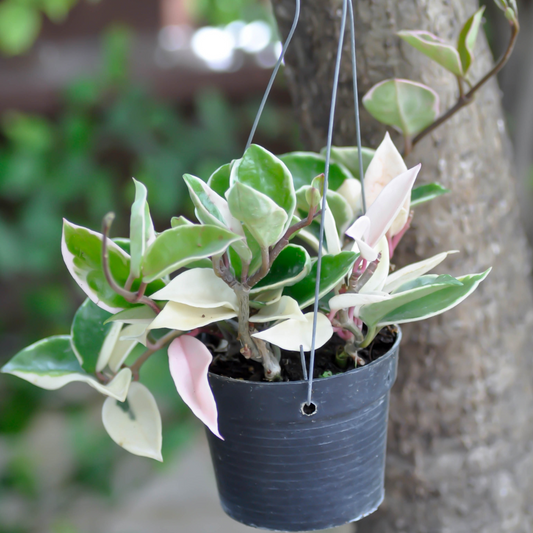
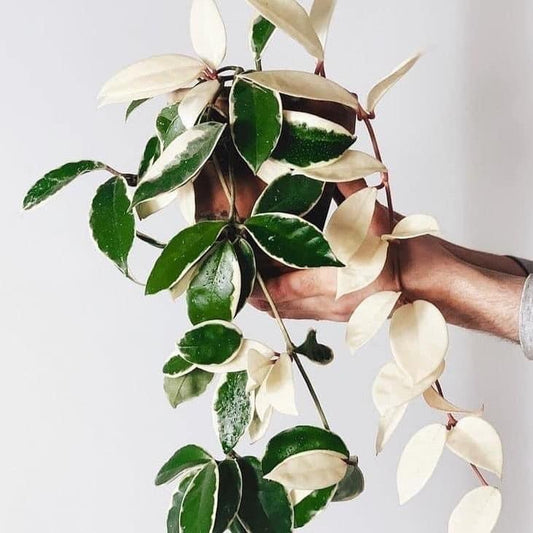
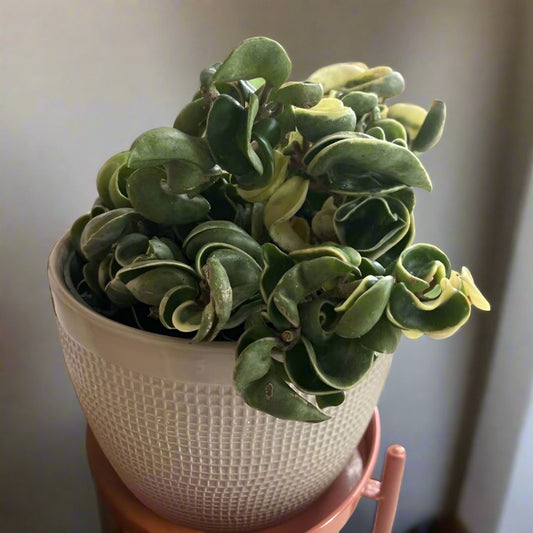
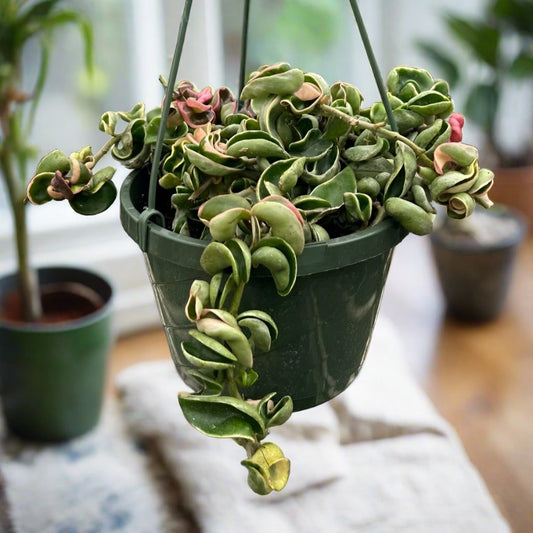
- Hoya 'Publicalyx', from $19.99. Thick, semi-succulent leaves that hold their own water. Unbothered by a dry room, and it flowers.
- Snake Plant 'Zeylanica', from $9.99. About as dry-air-proof as houseplants get. Snake plants are toxic to cats and dogs, so not a fit for every household.
- Pothos 'Golden', from $9.99. The forgiving middle ground. It will not thrive at 18 percent, but it will not sulk either.
- Calathea Lancifolia 'Rattlesnake', from $22.99. The opposite case, listed honestly. It punishes dry air, it rewards a humid corner, and Calathea is non-toxic to pets.
If dry air defines your home, the Easy Care range is built around plants that tolerate exactly this. If you would rather rise to the challenge, the Calathea collection and the snake plants sit at opposite ends of the same question. Everything ships greenhouse-direct with a heat pack when the weather calls for one, arrives covered by our 30-Day Guarantee, and orders over $149 ship free.
Frequently Asked Questions
Why do my houseplants get brown tips in the fall?
The air dries out weeks before you notice. Falling outdoor dew points dilute indoor moisture from early September, and heating then sharply lowers relative humidity. Water evaporates from leaves faster than roots can replace it, and the margins go first.
What humidity level do houseplants actually need?
There is no single correct number. Most tropical houseplants do well between 40 and 60 percent. Thin-leaved plants like Calathea, Maranta and ferns want the upper end. Succulent-leaved plants, snake plants and most Hoyas are comfortable well below it.
Does turning on the heat lower indoor humidity?
Yes, substantially. Heating does not remove water from the air. It increases how much the air can hold, roughly doubling it between freezing outdoor temperatures and a warm room. The same water in air with twice the capacity means relative humidity roughly halves.
Should I water my plants more when the air is dry?
No, and this is the costliest mistake of the season. Dry air causes water loss from leaves, not soil. The soil is often still wet when leaves show stress, so watering more adds root rot risk to a problem it cannot fix.
Do misting and pebble trays actually raise humidity?
Misting raises humidity at the leaf for minutes, not long enough to matter, and can encourage fungal leaf spotting. Pebble trays help slightly, in a small zone above the tray. Grouping plants works better, because the plants themselves are the humidity source.
When should I start worrying about humidity for my plants?
Early September, earlier than most advice suggests. The decline begins with outdoor dew points, not your thermostat. Wait for the furnace as your cue and you start six weeks after the plant did.
Which houseplants tolerate dry indoor air?
Anything with thick, waxy or succulent leaves. Snake plants, most Hoyas, ZZ plants, cacti, and to a lesser degree Pothos and Philodendron. The tell is leaf thickness, not plant family.
The most reliable move this month is not a gadget. It is knowing which of your plants are about to struggle and which are not. If you are adding to your collection heading into the dry months, browse all plants or start with the Easy Care range.