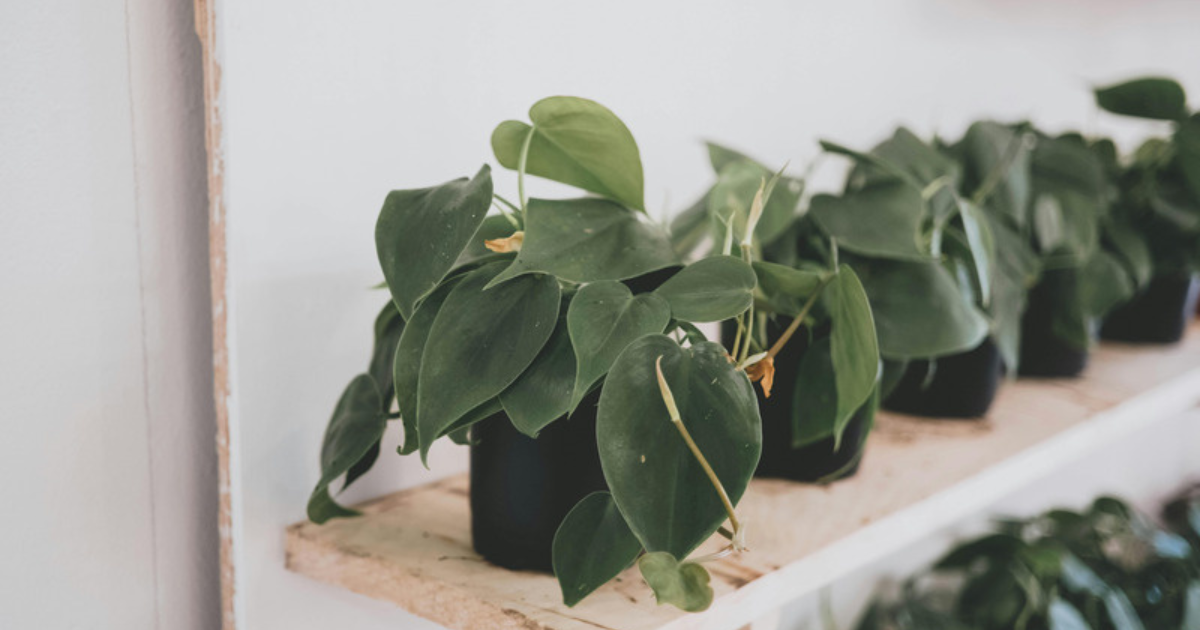
If you have ever killed a plant and quietly decided you just were not a plant person, the heartleaf philodendron is here to change your mind. This glossy, heart shaped vine is the plant that turns a black thumb green. It forgives a forgotten watering. It grows fast enough that you actually see progress week to week. And when you snip a piece and drop it into a glass of water, it grows roots, which feels a little like magic the first time you watch it happen.
Native to the rainforests of Central and South America, Philodendron hederaceum has been passed from windowsill to windowsill for generations. It is the plant a grandmother roots in a jam jar and hands to a grandchild moving into a first apartment. If you want one plant that quietly builds your confidence and keeps on giving, this is the one. You can find it ready to ship on our heartleaf philodendron page.
Quick answer
- Light: bright indirect, tolerates low light
- Water: when the top inch of soil feels dry
- Propagation: very easy, roots in plain water
- Pet safe: no, toxic to cats and dogs
- Difficulty: very easy, a true beginner plant
A Rainforest Heirloom
In the wild, the heartleaf philodendron is a climber. It scrambles up the trunks of rainforest trees, gripping the bark with slender aerial roots and reaching toward the dappled light of the canopy. Those forest floors are warm, humid, and shaded, which is exactly why this plant is so unbothered by the average living room. It evolved to make the most of low light and inconsistent conditions, so a spot a few feet from a window feels like home.
The name says it all. Each leaf unfurls in a perfect heart, deep green and lightly glossed, on a vine that never stops lengthening. Botanists once tangled it up with a close relative called Philodendron cordatum, and you will still see it sold under that name, but the plant most of us grow indoors is Philodendron hederaceum. What matters is the story it carries. For decades this has been the plant that gets shared, rooted, and re-gifted, moving through families and friend groups one cutting at a time. Buy one, and you are joining a very long tradition.
Why It Is the Confidence Plant
Most people do not fall out of love with plants because they stop caring. They give up because their first plant died and took their confidence with it. The heartleaf philodendron exists to break that cycle. It is forgiving enough to survive the learning curve, and expressive enough to teach you as you go. When it is thirsty, the leaves soften and tell you. Give it a drink, and it perks back up within hours. That fast, honest feedback is how a nervous beginner becomes a confident plant parent.
If this is genuinely your first houseplant, it pairs beautifully with a little planning. Our guide on how to choose the right plant for your home walks you through matching a plant to your actual light and lifestyle, so your first win is close to guaranteed. Start here, succeed here, and the rest of the plant habit tends to take care of itself.
Care, Kept Simple
Here is the honest truth: this plant asks very little. Give it bright indirect light and it will grow lush and full. Tuck it into a dimmer corner and it will keep going at a slower pace, which is why it is such a favorite for renters and low light nooks. The only light it dislikes is harsh direct sun, which can scorch those thin leaves. Water when the top inch of soil feels dry, aiming for lightly moist rather than soggy, and empty the saucer so the roots never sit in water. Normal room temperatures between 65 and 80 degrees and average household humidity are plenty. Feed it once a month through spring and summer and let it rest in winter.
That easygoing nature is why it lives on our easy-care collection and our low-light plants collection. If you can remember to check the soil with your finger once a week, you already know everything you need to keep this vine thriving for years.
Water Propagation: One Plant Becomes Many
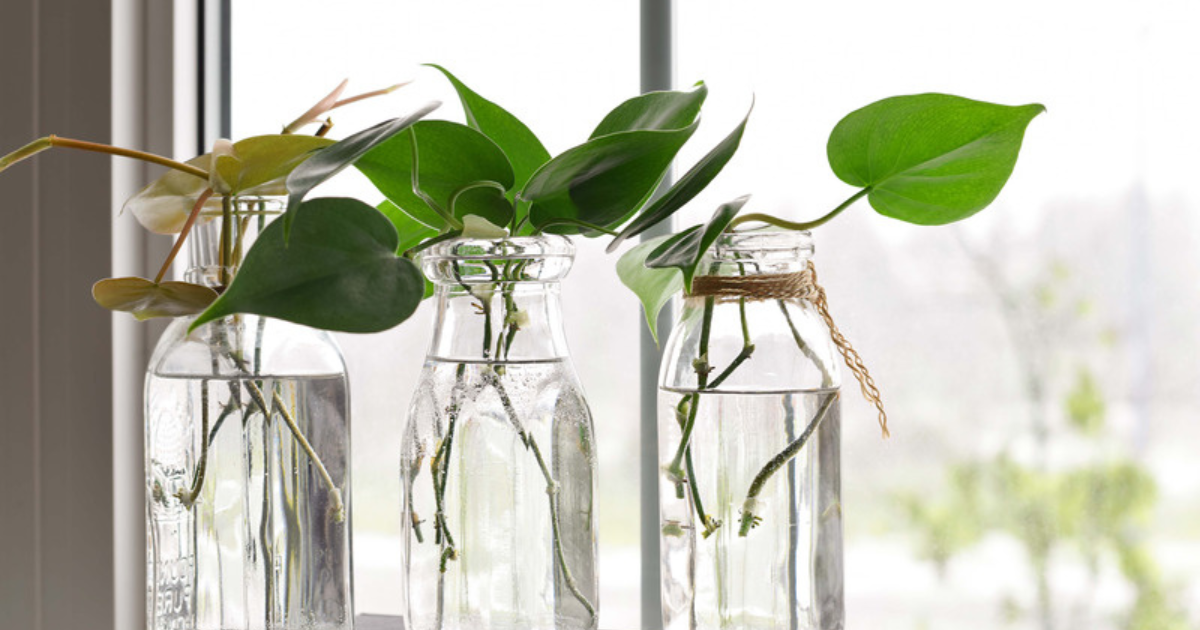
This is the part that makes people fall in love. The heartleaf philodendron is one of the easiest plants on earth to propagate, and watching a bare cutting sprout roots in a glass of water is the small thrill that hooks new plant people for life. Here is the whole process.
- Find a healthy vine with three or four leaves and locate a node, the little bump where a leaf meets the stem.
- With clean scissors, cut about a quarter inch below that node.
- Let the cut end air dry for a few hours so it seals and does not rot.
- Submerge the node in a glass of water, keep the leaves above the surface, and set it in bright indirect light.
- Refresh the water every couple of days. Roots usually appear in around two weeks, and once the side roots reach a quarter inch you can pot the cutting up in soil.
The emotional payoff is simple: one plant becomes many. A single vine can fill a windowsill with jars, each one a future gift or a new plant for another room. Easy to share, hard to kill, endlessly renewable. That is the heart of why this plant has traveled through so many hands.
Styling a Trailing Vine
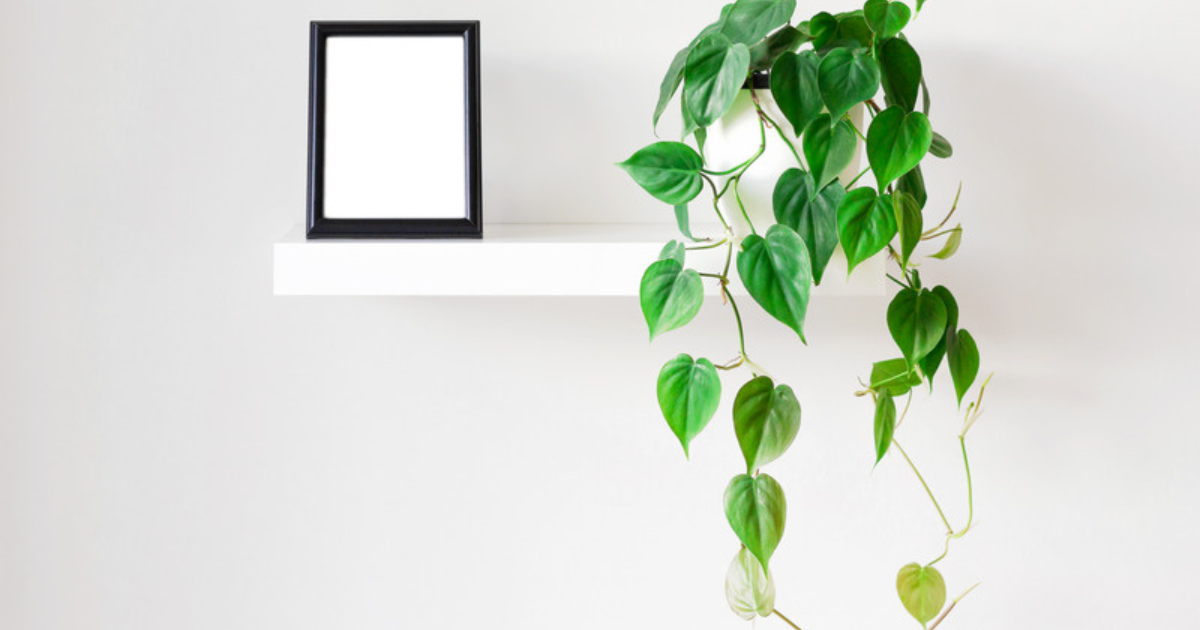
Left to grow, the heartleaf philodendron becomes a curtain of green. It is made for height. Set it on a high shelf or a bookcase and let the vines spill down the side, or hang it in a planter so the leaves cascade at eye level. It anchors a classic rule of three beautifully, pairing with a fuller plant like a Pothos N'Joy and something patterned like a Maranta for contrast. Because it thrives in lower light, it earns a place in the exact spots most plants sulk, like a dim hallway or a shelf away from the window.
If you love that layered, lived in look, our trailing and hanging plants collection is full of companions that drape and climb. For arranging them well, our post on building a stunning plant shelfie and our deeper dive into the art of indoor plant styling will help you turn a single vine into a whole corner of calm.
The Gift That Keeps Growing
Few plants make a better gift. It is affordable, nearly impossible to kill, and it carries a story. Hand someone a heartleaf philodendron and you are not giving them a thing that fades on the counter. You are giving them a living project that grows with them, and one they can eventually clip and pass along to someone else. It is the ideal housewarming plant, the perfect welcome to a first apartment, and a sentimental hand me down all at once. When it arrives healthy and glossy from our greenhouse, it makes the giver look thoughtful and the receiver feel genuinely cared for.
One Honest Note: Keep It Away From Curious Pets
Because we would rather tell you plainly than let you find out the hard way: the heartleaf philodendron is toxic to cats and dogs. Like many aroids, its leaves contain insoluble calcium oxalate crystals, which can cause mouth irritation, drooling, and vomiting if a pet chews on them, according to the ASPCA and the Pet Poison Helpline. It is not a plant to position at nibbling height in a home with a determined chewer. The good news is that its love of high shelves and hanging planters makes it easy to keep well out of reach, which lets everyone enjoy it safely.
Ready to start your own heirloom vine? Every heartleaf philodendron ships greenhouse-direct, packed with care and backed by our 30-Day Guarantee, with free shipping on orders over $149. Bring one home from our heartleaf philodendron page, browse the full range of living plants at plantswagshop.com, and watch how quickly one easy vine turns you into a plant person for good.
Frequently Asked Questions
Is the heartleaf philodendron safe for cats and dogs?
No. The heartleaf philodendron is toxic to cats and dogs. Its leaves contain insoluble calcium oxalate crystals that can cause mouth irritation, drooling, and vomiting if chewed. Keep it on a high shelf or in a hanging planter, well out of a curious pet's reach.
How much light does a heartleaf philodendron need?
Bright indirect light is ideal and produces the fullest growth, but this vine also tolerates low light at a slower pace, which makes it perfect for dim corners and renters. Avoid harsh direct sun, which can scorch the thin leaves.
How do you propagate a heartleaf philodendron?
Cut a quarter inch below a node on a vine with three or four leaves, let the cut heal for a few hours, then submerge the node in a glass of water in bright indirect light. Refresh the water every couple of days and roots will usually appear within about two weeks.
Why are my heartleaf philodendron leaves turning yellow?
Yellowing leaves are most often a sign of overwatering. Let the top inch of soil dry out before watering again, make sure the pot drains freely, and never let the roots sit in standing water. An occasional yellow older leaf, however, is just normal aging.