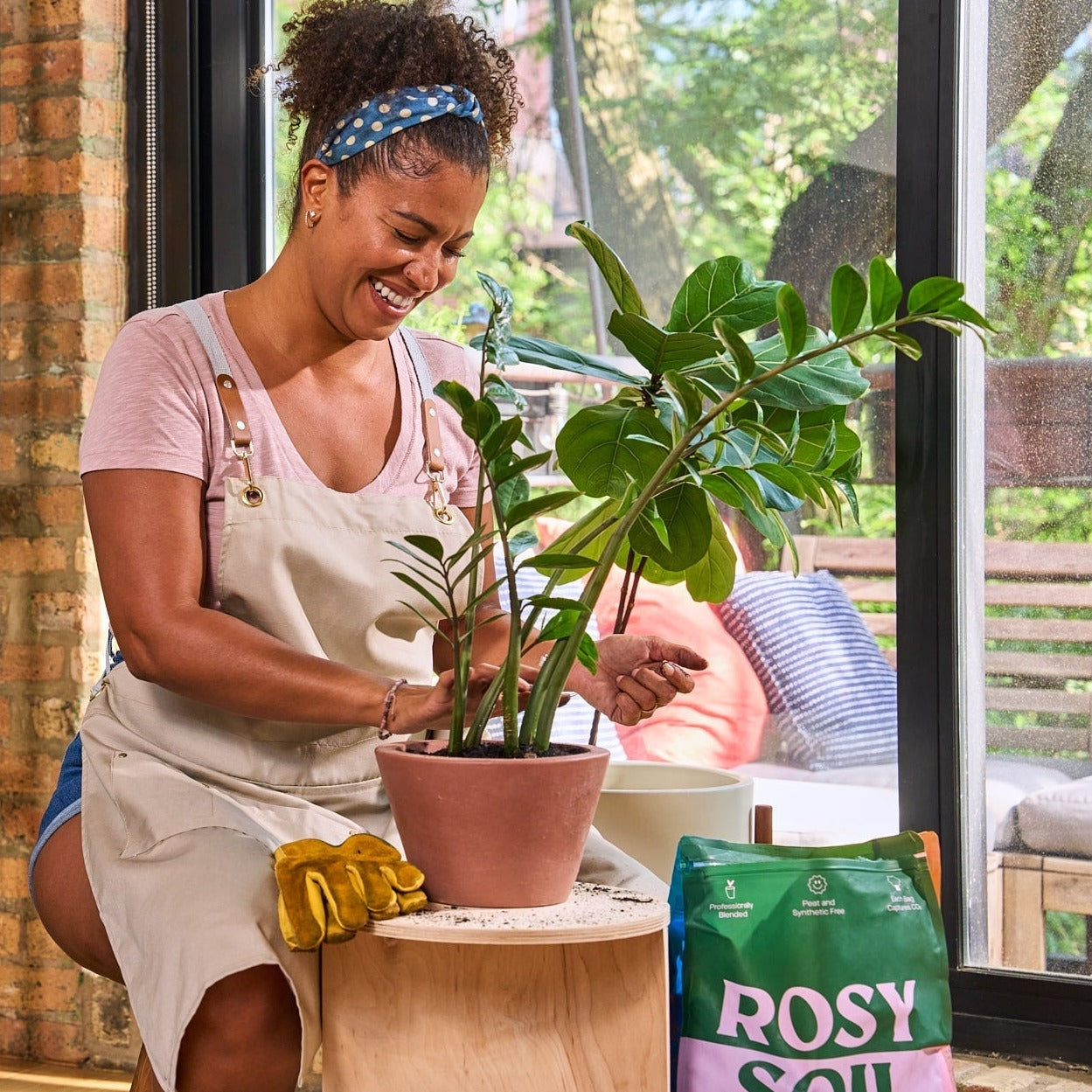

There's a persistent myth that a small apartment means a plant-free apartment. No room for a fiddle-leaf fig. No space for a trailing pothos. No chance of having that lush, green corner you keep saving to your phone.
The truth? Some of the most beautiful plant-filled rooms are also the smallest. The difference isn't square footage — it's strategy. Whether you're working with a studio, a one-bedroom, or just a single sun-starved corner, these seven approaches will transform the way you think about indoor plants for small apartments.
Ready to build your small-space plant collection?
Every plant arrives greenhouse-direct, healthy, and ready to thrive — backed by our 30-Day Guarantee.
1. The "One Big Plant" Rule — One Statement Plant Anchors a Small Room
Counterintuitive as it sounds, a single large plant often does more for a small room than five small ones. A snake plant standing tall in a bare corner doesn't fill the room — it anchors it. It creates a visual destination. The eye travels to it, the space feels considered, and everything else falls into place around it.
The mistake most people make is defaulting to small plants in small spaces. Small plants scattered across a small room create visual noise — dozens of competing focal points with no hierarchy. One generous plant in the right spot gives the room intention.
Can you use large plants in a small room?
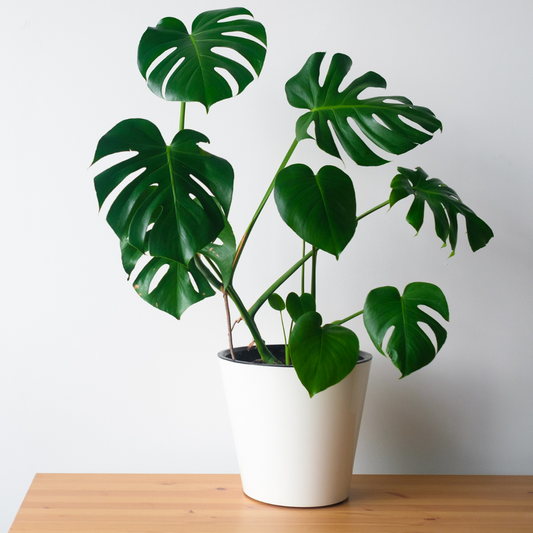
Absolutely — a tall snake plant, a ZZ plant, or a compact monstera in a corner actually makes a small room feel larger by drawing the eye upward and creating visual structure. The key is one statement plant, not several competing ones.
Look for upright growers that have presence without spread: snake plants, ZZ plants, peace lilies, or a compact Bird of Paradise. One well-placed large plant reads as intentional. Five small ones read as clutter.
2. Go Vertical — Use Shelves, Hanging Plants, Wall-Mounted Planters
Floor space is the most expensive real estate in a small apartment. Wall space is free. Vertical plant display ideas are your best friend when square footage is tight — and they create some of the most visually impressive plant moments in any home.
Floating shelves are the easiest entry point. A row of three shelves staggered up a wall can hold six to nine plants while using zero floor space. Add a wall-mounted planter or two, and you've built a living wall feature that any interior designer would appreciate.
How do you style plants vertically?
Use staggered floating shelves at varying heights, combine trailing plants at the top with compact upright varieties at mid-level, and let foliage overlap slightly for a lush layered look. Wall-mounted planters in a vertical column work beautifully in narrow spaces like hallways or beside windows.
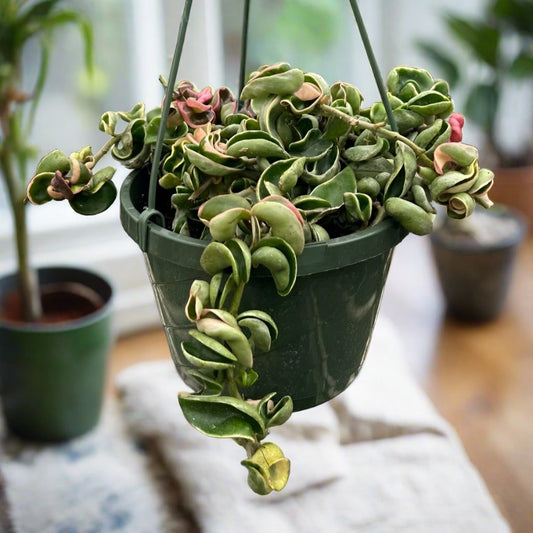
Trailing and hanging plants are perfect companions for vertical displays. A Silver Splash Pothos draped from a high shelf creates a curtain of foliage that fills vertical space beautifully. Heartleaf philodendrons, tradescantia, and string of pearls are equally stunning when given height to cascade from. Check out our guide to beautiful hanging plants for the home for more inspiration.
3. Window Sill as Free Real Estate — No Floor Space Needed
The window sill is the most overlooked surface in every apartment. It's built-in, it's lit, and it costs you nothing. A row of compact plants along a window sill makes a room feel alive without consuming an inch of floor or shelf space.
The best candidates for window sill living are compact growers that stay tidy: peperomias, small succulents, air plants, trailing pothos in small pots, and compact herbs. The rule of thumb — leave at least half the sill clear so you're framing the window, not blocking it.
Where should I put plants in a studio apartment?
Window sills are prime real estate for compact plants since they provide natural light without using floor or shelf space. In a studio, think in zones: window sill for compact growers, one high shelf for trailing plants, and one floor-level statement plant in a corner.
If your window faces north or gets limited light, choose low-light tolerant varieties — pothos, snake plants, and ZZ plants handle it well. For brighter windows, peperomias and small succulents will thrive.
4. Group in Odd Numbers — 3 or 5 Plants Look Intentional, 2 Looks Accidental

This is one of those design rules that sounds arbitrary until you see it in action. Two plants sitting side by side look like they ended up there by accident. Three plants grouped together look like a decision was made. The odd-number principle applies to almost everything in interior design, and plants are no exception.
When grouping plants on a shelf, tray, or table, aim for three or five. Vary the heights — one tall, one medium, one low. Vary the textures — one large-leafed, one fine-leafed, one trailing. The variety creates visual interest while the odd number creates cohesion.
How do you display plants in a small space without it looking cluttered?
Group plants in odd numbers on a tray or defined surface rather than scattering them individually around the room. A cluster of three plants on a tray reads as one intentional vignette; three plants placed randomly around a small room read as clutter.
The tray trick is particularly powerful: place three small plants on a round tray, and the tray becomes the visual boundary that holds the grouping together. It tells the eye where to look. This keeps the room feeling curated even with multiple plants.
5. Match Pot Color to Your Palette — Cohesion Makes Small Spaces Feel Curated, Not Cluttered
The plants aren't the only thing you're styling — the pots are part of the picture too. In a small space, visual clutter often comes not from too many plants but from too many competing pot colors and materials. When every pot is a different color, the eye has nowhere to rest.
The simplest fix is to stick to a palette of two or three pot tones that work with your room. Neutral tones — sage green, warm cream, terracotta — tend to recede visually, letting the foliage take center stage. Bold pots work too, but use them sparingly — one statement pot, the rest neutral.
For a cohesive, effortless look that pairs well with most interiors, terracotta and cream are hard to beat. They're warm, they're timeless, and they make almost every plant variety look better. Browse the easy-care collection to find low-maintenance plants that look great in any pot style.
6. Low-Light Corners Are Not Dead Zones — Snake Plants, ZZ Plants, Pothos Thrive There
Every apartment has at least one dark corner that feels like dead space. The shadowy spot beside the sofa. The wall opposite the only window. The narrow hallway that leads to the bathroom. Most people write these off as plant-free zones.
They're not. They're opportunities waiting for the right plant.
Snake plants, ZZ plants, and pothos are genuinely adapted to low-light conditions — not just tolerant of them, but capable of thriving. A tall snake plant jade in a dark corner becomes a vertical sculpture. A ZZ plant with its glossy, architectural leaves adds life to a spot that would otherwise hold nothing. A trailing pothos on a high shelf will drape down even without direct sun.
The key is matching the right plant to the actual light level. Check out the top 5 easy houseplants for tried-and-true picks that handle everything from bright indirect to deep shade.
7. The Floating Shelf Vignette Formula — Tall + Trailing + Round
If you want one reliable framework for styling a plant shelf that always looks good, this is it: tall plant in the back, trailing plant at the edge, round-leafed compact plant in the middle. Three plants, three silhouettes, zero guesswork.
The tall plant provides structure — a snake plant, a small dracaena, or an upright pothos in a tall pot. The trailing plant adds movement and softness — a pothos, a heartleaf philodendron, or a string of pearls draped over the shelf edge. The round-leafed compact plant fills the center and creates contrast — a peperomia, a pilea, or a small calathea.
What trailing plants are good for high shelves?
Pothos varieties are the most forgiving and effective trailing plants for high shelves — they grow quickly, tolerate low light, and create long, lush drapes of foliage. Heartleaf philodendrons, tradescantia, and string of pearls are also excellent choices for creating movement and volume on shelves.
This formula works on a single floating shelf, a bookcase, a fireplace mantle, or any horizontal surface that needs life. Vary the pot shapes and materials slightly — one ceramic, one terracotta, one woven basket — and the shelf becomes a layered, editorial vignette that looks completely intentional. Explore our full range of trailing and hanging plants to find your perfect shelf companions.
Small Space, Big Plant Energy
Small-space plant styling isn't about having fewer plants — it's about making each one count. Go vertical. Lead with one statement plant. Group with intention. Let your window sill work for you. Match your pots to your palette. Fill those low-light corners. Build your first floating shelf vignette.
None of these moves require a large space, an expensive renovation, or even a green thumb. They require a little thought — and the right plants to work with.
Every plant at plantswagshop.com arrives greenhouse-direct — healthy, rooted, and ready to thrive from day one. Whether you're building your first shelf vignette or finally filling that low-light corner, we have the plants to make it happen. All orders over $149 ship free, and every plant is backed by our 30-Day Guarantee.
Find your perfect small-space plant.
Greenhouse-direct plants, free shipping on orders $149+, 30-Day Guarantee on every order.
New to plants? The easy-care collection is the best place to start — every plant in it is forgiving, adaptable, and proven to do well in the kinds of imperfect conditions most apartments actually have.