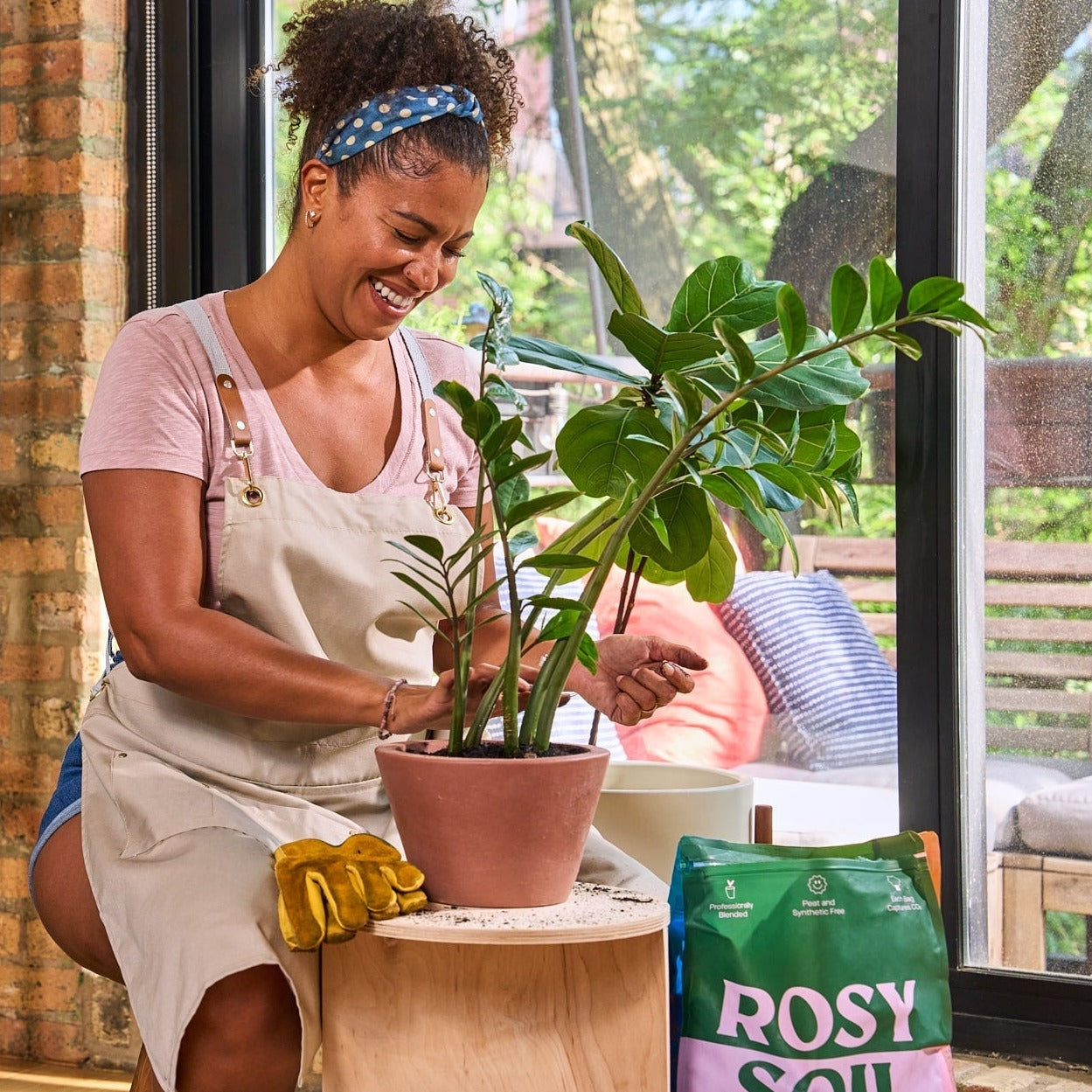
You have a number in your head. Maybe it is three. Maybe it is closer to a dozen. It is the count of plants you have carried home, watched decline over a few weeks, and quietly carried back out to the bin. That number is the reason you are hesitating right now, and it has nothing to do with shipping. You are not worried about the plant. You are worried about you.
Most shops answer that hesitation with reassurance. We would rather answer it with evidence, which means starting by admitting that the evidence most shops reach for cannot actually do the job.

Week one reviews cannot answer the question you are asking
Look at when people actually write reviews. Almost all of them land in the first few days, while the box is still by the door and the plant is still a novelty. Those reviews are useful, and there are plenty of them. They tell you the plant travelled well, that it matched its photograph, that it turned up larger than expected.
What they cannot tell you is whether that plant was still alive nine months later.
That is the honest gap, and it is worth naming out loud. A five star review written on day two proves a plant survived a journey. It does not prove the plant survived you. If your specific fear is what happens once the thing becomes your responsibility, arrival reviews are simply the wrong instrument, and we are not going to dress them up as something they are not. If arrival really is your worry rather than longevity, that is a different question, and there is a separate piece on what happens between the greenhouse and your door.
The evidence that does answer it
There is one thing a customer does that no review can fake, and it takes months to happen. They come back and order another plant.
Nobody places a second order with a shop whose first plant died on them. A repeat purchase is a verdict delivered quietly, months after the fact, with money attached. Reviews are what people say. Reorders are what people do.
So here are the numbers, with the base stated plainly, because a small figure presented honestly is worth more than a large one presented vaguely.
Across the trailing twelve months there have been 181 customers. Of those, 29 came back and ordered again. That is a returning customer rate of roughly 16 percent, or about one in six, at an average order of around 51 dollars.
Read that carefully, because it is easy to over read. It is not a survival rate. We do not know the fate of every plant that has left the greenhouse, and any shop claiming a precise figure there is guessing. What we do know is that 29 households looked at the plants already sitting on their shelves and decided, unprompted, to add another one. Twenty nine second decisions, made at leisure, by people who had already found out what they were like as plant owners.
One review from this past May is worth mentioning for a reason that has nothing to do with its star rating. The customer spends most of it describing the condition the plant arrived in, which is ordinary enough, then mentions almost in passing that she is already putting together her next order. That closing line is the useful part. It is a reorder announcing itself, in the customer's own words, before it has even happened.

What the twelve month survivors have in common
Three things, and not one of them is talent.
They started with a plant that wanted to live
This sounds like settling. It is not. It is strategy. Confidence is built on a first success, and a first success is far likelier with a species that tolerates dim corners and long gaps between waterings.
The Snake Plant Cylindrica starts at $17.99 in the 4 inch pot and is close to indifferent to being forgotten. Aloe Vera starts at $17.99 and genuinely prefers to be left alone; it stores its own water and resents help. Peperomia 'Ginny' is $9.99 in the 3 inch pot, which makes it the lowest stakes way in the whole catalogue to find out whether you are actually bad at this or simply out of practice.
If your rooms are dimmer than you would like, and most rented rooms are dimmer than they look, start in low light plants rather than fighting the room. Choosing around your conditions is the single highest leverage decision you will make, and you make it before the plant ever arrives.
They checked instead of scheduled
The people whose plants are still alive a year later are not more attentive. They are less rigid. A watering schedule is a promise made to a calendar, not to a plant, and rooms change: light shifts through the year, radiators come on, soil in a cool room can stay wet for a fortnight.
The habit that replaces the schedule takes four seconds. Put a finger two inches into the soil. Dry, water it. Damp, walk away and try again in a few days. That is the entire method, and it quietly resolves most beginner failures on its own.
They chose plants that talk back
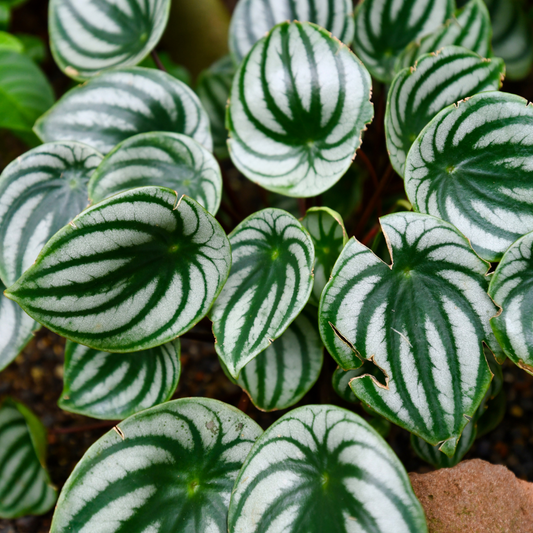
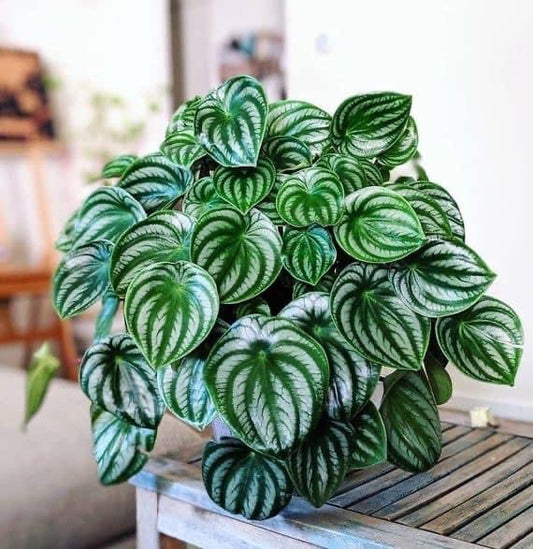
A plant that shows you something within weeks teaches you faster than one that sits still for a season. Syngonium 'Merry' at $19.99 unfurls new leaves quickly enough that you can tell whether your care is working while you still remember what you did. Peperomia Watermelon at $22.99 is compact, forgiving and visibly perky or visibly sulky, with very little in between. The plant that folds its leaves up every evening makes the same argument more theatrically: feedback you can see is feedback you can act on.
The mistake that does most of the damage
Here is the part that tends to land as a relief. The leading killer of beginner houseplants is not neglect. It is overwatering.
If you have been telling yourself you are too forgetful, too busy or too absent to keep a plant alive, the research points the other way. Most beginner plants are lost to attention, not to the lack of it: watering because it is Sunday, watering because the leaves looked sad, watering because doing something feels better than doing nothing. Roots sitting in wet soil cannot breathe, and a plant drowning slowly looks a great deal like a plant that is thirsty, which is how the cycle keeps going.
That is good news, because it makes the problem a specific correctable behaviour rather than a personality trait. You are not missing a knack that everyone else was born with. You have been doing slightly too much, and doing less is easier than doing more.
A reasonable place to start
If the last few plants have gone badly, do not start with something demanding to prove a point. Start with something forgiving, put it where the light already is, check the soil before you water it, and let one plant stay alive long enough to change your mind about yourself. That is what the twenty nine repeat customers have in common, and it is not a high bar.
Everything ships greenhouse-direct rather than sitting in a warehouse, every order is covered by the 30-Day Guarantee, and shipping is free over $149. Browse the full range of live plants at plantswagshop.com, or start where most of the twelve month survivors started, in easy care.

Frequently asked questions
Why do my houseplants keep dying?
For most beginners the cause is overwatering rather than neglect. Roots sitting in permanently wet soil cannot take up oxygen, and the resulting droop looks almost identical to thirst, so the usual response makes it worse. The second most common cause is a mismatch between the plant and the room, most often putting a light hungry species in a corner that never gets direct sun.
What is the easiest houseplant for someone who kills everything?
Snake plants, aloe and the smaller peperomias are the most forgiving starting points. They tolerate low light, they store water, and they survive being forgotten for two or three weeks at a time. Starting cheap and small also lowers the stakes; a $9.99 plant is a much easier thing to learn on than a rare specimen.
How often should I actually water my houseplants?
There is no correct interval, which is why schedules fail. Check the soil instead. Push a finger about two inches down: if it comes out dry, water thoroughly until it runs from the drainage holes; if it feels damp, wait and check again in a few days. The same plant will need water far more often in a warm bright July than in a cool dim November.
Is it normal for a new plant to drop leaves?
Yes, and it is one of the most common reasons beginners give up too early. A plant moving from greenhouse conditions into a home is adjusting to different light, humidity and airflow, and shedding one or two lower or older leaves in the first few weeks is a normal part of that. What is not normal is rapid yellowing across many leaves at once, or mushy stems, both of which point to too much water.
How do I tell whether I am overwatering or underwatering?
Look at the soil and the texture of the leaf, not just the droop. Underwatered plants have dry soil and leaves that feel thin, crisp or papery at the edges. Overwatered plants have soil that is still damp days later, leaves that feel soft or limp, yellowing that starts low on the plant, and sometimes a sour smell from the pot. When in doubt, wait: a thirsty plant recovers within hours of a drink, while a drowning one needs the soil to dry out.