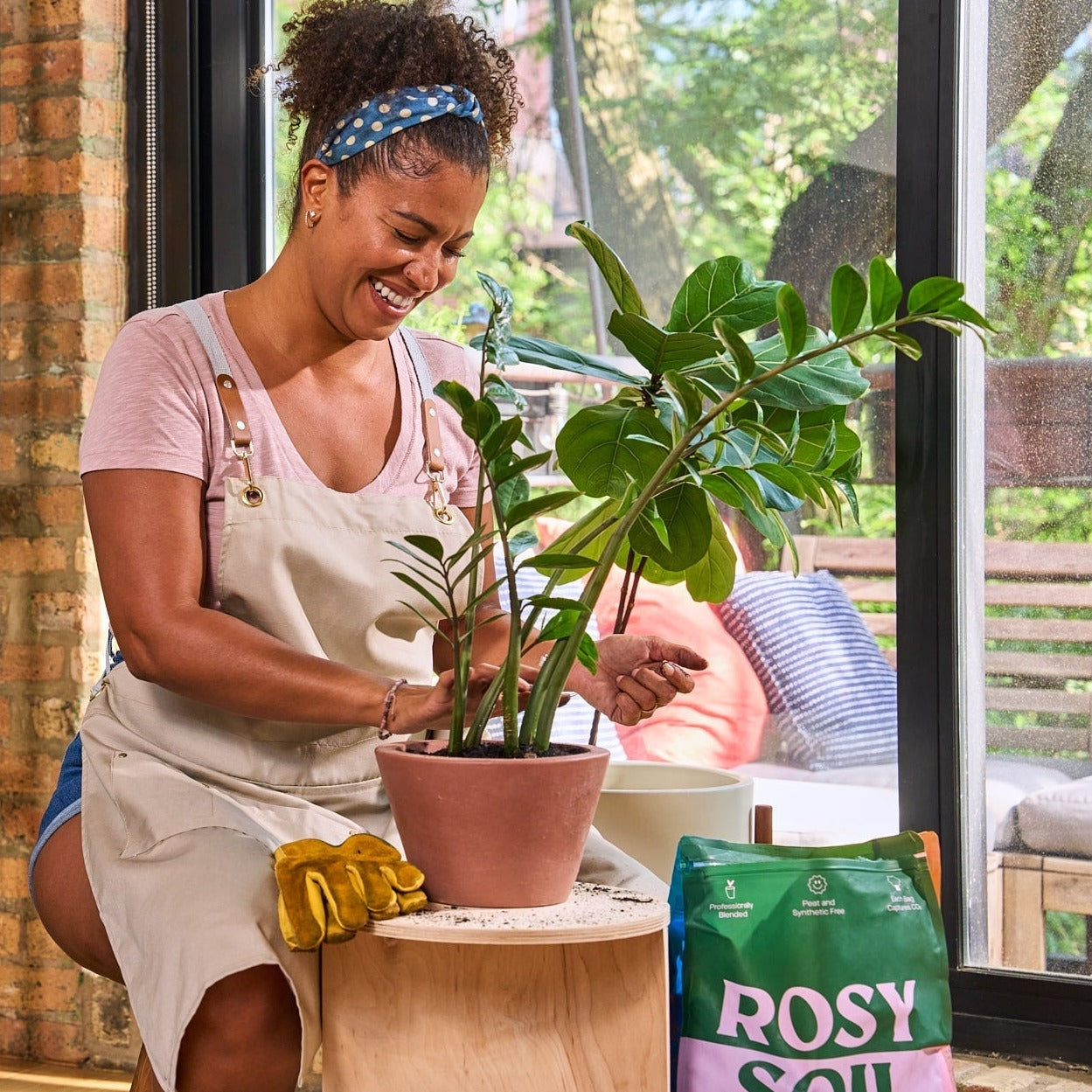
Your plants have spent three months growing hard. Roots have filled their pots, stems have stretched toward the window, and somewhere in the middle of a heat wave you probably stopped keeping track of any of it. August is the month that quietly decides how the next six months go, and most of what is worth doing has to happen in the next three weeks.
Quick answer: August is the closing edge of the repotting window, not the opening of it. Do the disruptive work now while your plants are still in active growth, then taper everything as the light drops in September.
- Repot only if roots are circling the pot or escaping the drainage hole, and finish before September 1.
- Prune lightly and structurally. Save the hard cutback for spring.
- Feed once more in August, then stop until March.
- Run a pest check before anything moves closer to another plant.

Is August too late to repot a houseplant?
No. August is late, but it is not too late. A houseplant needs active growth to heal from root disturbance, and most indoor tropicals stay in active growth until day length drops under roughly 12 hours, which happens in the second half of September across most of the United States. Repot in the first three weeks of August and the plant gets four to six weeks of genuine growing weather to push new roots into fresh soil before it slows down.
The advice you will see everywhere at this time of year is to repot in the fall to get your plants ready for winter. That is backwards. Winter is when a plant has the least energy available to recover from anything. If you miss the August window, the right move is to wait until March, not to split the difference in October. A slightly root-bound plant coasting through winter is in far better shape than a freshly disturbed one.
Why does the late summer window close so fast?
Light closes it, not temperature. Indoor light intensity through the same unchanged window can fall by 30 to 50 percent between mid August and early November, because the sun tracks lower and the day gets shorter at both ends. Your thermostat will read the same 70 degrees in November that it read in August, which is exactly why the change sneaks up on people.
Growth follows light, so a plant that was pushing a new leaf every ten days in July will be pushing one every five or six weeks by October. Root repair runs on the same budget. That is the whole reason August works and October does not. If you want the full picture of how light behaves room by room, our room-by-room light guide maps it out.
The five step late summer reset
This is a checklist you can run across an entire collection in a single afternoon. Work through it in order, because the pest check protects everything you do afterward.
- Audit everything, 15 minutes. Move every plant into one spot with good light. Lift each pot. A pot that feels suspiciously light for its size is either bone dry or almost entirely root. Note anything with roots visible at the drainage hole, yellowing lower leaves, or soil that has pulled away from the sides.
- Repot only what earns it. Roots circling the inside of the pot, roots pushing out of the drainage hole, or water running straight through in under five seconds are the three signals worth acting on. Go up one pot size only, about 1 to 2 inches wider. A plant swimming in an oversized pot sits in wet soil for weeks, which is the fastest route to root rot heading into low light season. The step by step mechanics are in our guide to repotting without killing the plant.
- Thin, do not chop. Remove spent flowers, dead or damaged leaves, and any leggy stem you want gone by cutting it back to its point of origin rather than shortening it partway. Take no more than about 20 percent of the plant in one session.
- Run a pest check. Turn over the leaves. Look along the leaf axils and the underside of the midrib. Late summer is peak season for spider mites, and warm dry indoor air keeps them going long after the weather cools. Our guide on spotting and stopping spider mites covers what the early damage actually looks like.
- Feed once, then stop. Give one balanced feeding in the first half of August. After that, hold off until growth restarts in early spring. Feeding a plant that has stopped growing just loads salts into the soil.

Do I need fresh soil, or can I reuse what is already in the pot?
Use fresh mix. Potting soil is not dirt that lasts forever. Over a season or two the organic matter breaks down, the structure collapses, and the air pockets that roots need disappear. Reused mix from a plant that struggled can also carry fungus gnat larvae or pathogens straight into the new pot.
At repot time we work a scoop of Organic Soil and Root Boost into the fresh mix. It is a soil amendment built around beneficial microbes rather than a straight fertilizer, so it supports root establishment at exactly the moment the roots have been disturbed, without pushing a flush of tender new top growth into a season that cannot support it. If you want the wider logic on feeding rates and timing, our post on feeding houseplants without overloading them is the companion piece.
How should watering and feeding change as summer ends?
Everything slows down, and your habits have to slow with it. The single most common way people lose plants between September and January is watering on the same schedule they used in July. Use this as a rough guide, then check the soil rather than the calendar.
| Task | August | September to October | November onward |
|---|---|---|---|
| Watering | Normal summer rhythm, often every 7 to 10 days | Stretch intervals by 3 to 5 days | Roughly half the summer frequency, top 2 inches dry |
| Fertilizing | One final balanced feeding | Stop | None until March |
| Repotting | Yes, before September 1 | Emergencies only | Wait for spring |
| Pruning | Light thinning only | Dead growth only | Dead growth only |
| Humidity | Ambient is usually fine | Watch as heating starts | Group plants or add a humidifier |
Indoor heating is the part people forget. Once the furnace runs, relative humidity in most homes falls into the 20 to 30 percent range, well under the 50 to 60 percent that tropical foliage prefers. Our humidity guide explains which plants actually feel it and which shrug it off.

When should you postpone the reset?
Skip or delay the repot if any of these three things are true. Each one means the plant is already spending energy it does not have.
- Active pest infestation. Treat first, repot later. Moving an infested plant into fresh soil spreads the problem and stresses the plant twice. A preventative product like Organic Bio Protectant is worth keeping on hand for the rest of the collection while you treat.
- The plant just arrived. Give any new plant two to four weeks to acclimate before you disturb its roots. Every plant that leaves our greenhouse ships greenhouse-direct in the pot it has been growing in, and that root ball is the one stable thing it has during transit.
- It is actively flowering or pushing a new leaf. Let it finish. Disturbing roots mid push usually costs you the bloom or the leaf.
One more thing worth saying plainly: if a plant looks rough right now, late summer leaf drop is often normal rather than a crisis. Plants shed the leaves they grew under peak summer light because those leaves are no longer worth the energy to maintain. Lower and interior leaves go first. If new growth is still appearing at the tips, the plant is editing itself, not dying.
Where to start if your collection needs more than a reset
Sometimes the audit tells you the real problem is not care, it is fit. A plant that has struggled in the same spot for three seasons is usually in the wrong light, not the wrong hands. If a corner has defeated everything you have put in it, the fix is a plant matched to that corner: something from our low-light collection for a north-facing room, or the easy care collection if you want forgiving rather than fussy. Households with curious cats or dogs can start with pet friendly houseplants and skip the worry entirely.
Late August is genuinely one of the better times to add a plant, because it arrives with a few weeks of growing weather left to settle in before the light drops. Every order is covered by our 30-Day Guarantee. Browse the full range at Shop All Plants and pick for the light you actually have, not the light you wish you had.
Frequently asked questions
Is August too late to repot a houseplant?
August is the last reliable month to repot a houseplant in the northern hemisphere. Repotting in the first three weeks of August leaves four to six weeks of active growth for roots to establish in fresh soil. After September 1 it is better to wait until March, because a plant in low light does not have the energy to recover from root disturbance.
How do I know if my plant actually needs a bigger pot?
A houseplant needs a bigger pot when roots circle the inside of the container, push out through the drainage hole, or when water runs straight through in under five seconds. Go up only 1 to 2 inches in diameter. An oversized pot holds water far longer than the roots can use it, which causes root rot rather than faster growth.
Should I stop fertilizing my houseplants in late summer?
Give one final balanced feeding in the first half of August, then stop until growth restarts in early spring. Once day length falls below about 12 hours, most indoor tropicals slow dramatically and cannot use the nutrients. Continued feeding builds up mineral salts in the soil, which burns roots and shows up as browning leaf tips.
Can I prune my houseplants in August?
Light structural pruning in August is fine, but a hard cutback is not. Remove dead or damaged growth and take leggy stems back to their point of origin rather than shortening them partway, and keep the total under about 20 percent of the plant. Cutting a plant back hard in August forces tender new growth straight into the low light season, when it cannot harden off.
Do I need to change my watering schedule as summer ends?
Yes. Stretch watering intervals by three to five days through September and October, then water roughly half as often as you did in summer once heating season starts. Check the soil instead of the calendar: for most tropical foliage plants, water when the top 2 inches are dry. Watering on a July schedule in November is the most common cause of winter plant loss.
Should I bring my houseplants back inside before fall?
Bring houseplants that summered outdoors back in once nighttime temperatures start dipping below 55 degrees Fahrenheit, which is usually well before first frost. Inspect every plant thoroughly for pests first, hose down the foliage, and check under the pot rim and in the drainage holes. Move them in over a week or two rather than all at once so the light change is gradual.
Why is my plant suddenly dropping leaves in late summer?
Late summer leaf drop is usually a normal response to declining light rather than a sign of illness. Plants shed leaves grown under peak summer intensity because those leaves cost more energy to maintain than they now produce, and lower and interior leaves go first. If new growth is still appearing at the tips, the plant is adjusting rather than failing.
Do I need fresh soil, or can I reuse what is in the pot?
Use fresh potting mix at every repot. Old mix breaks down over one to two seasons, loses the air pockets roots depend on, and can carry fungus gnat larvae or soil pathogens into the new pot. Working a soil amendment with beneficial microbes into fresh mix at repot time supports root establishment without pushing tender new top growth.