
Cut flowers have a very good Wednesday and a very sad Sunday. By the time the leftovers are gone, the centerpiece is dropping petals into the gravy boat. A living centerpiece plays a different game: it looks like a design choice at dinner, and on Friday it goes back to the windowsill and keeps growing for years.
Why plants beat cut flowers on the table
We've styled a lot of tables with foliage, and the pattern is always the same. Leaves hold their color under warm light, they don't shed on the tablecloth, and they bring the harvest palette without trying too hard: burgundy veining, copper undersides, silver stripes, deep green. Plants also give you something cut stems can't, which is a reason to talk. People lean in to ask why the leaves are folding.
The trick is to treat the table like a small landscape instead of one big arrangement. Keep everything low enough to talk across, mix two or three textures, and use odd numbers. A cluster of three small plants looks deliberate; a single plant in the middle looks like it wandered in from the hallway.
The 20-minute build
You don't need floral foam, a florist, or a free afternoon. Here's the setup we keep coming back to:
- Leave each plant in its nursery pot and slip the pot into a cachepot, a ceramic bowl or a wooden tray. The nursery pot drains; the decorative one just hides it.
- Pick a base: a long wooden board, a runner, or a shallow tray lined with a saucer so no water reaches your table.
- Group three plants in different heights. Raise one on a stack of books or a cake stand, and let a trailing leaf or two overlap the edge.
- Add texture around them, such as pinecones, dried citrus, a few smooth stones or a layer of moss on the tray only, not on the soil.
- Step back and check the sightline. If you can't see your guest's face across the table, lower something.
One firm rule: candlelight and foliage don't mix. Keep open flames at least a hand's width from any leaf, and use unscented or battery candles if you want the glow without the worry.
Find the centerpiece that fits your dining room
Not sure which plants will cope with the light in your dining room? Take the 1-minute plant quiz, tell us about your light, your space and your pets, and we will point you to plants that suit them.
Give the plants a day to settle first
Here's a tip that saves a lot of heartache: don't unbox and style on the same afternoon. Plants that have traveled need a day or two to adjust to your light before they become the centerpiece. Set them near a bright window, check that the soil is lightly damp and not soggy, and trim any leaf that was bruised in transit. Then move them to the table on the morning of the dinner. They'll look fresher, and you'll have time to fix anything that doesn't sit right.
Meet the five plants
Maranta Red Prayer is the one that earns the conversation. Burgundy veining on the leaves, and at dusk they fold upward like praying hands, so the table looks quietly alive by candlelight. It likes steady moisture, which a dining room handles fine for a few days.
Calathea Dottie has near-black leaves edged in pink, and it looks striking at a place setting. Use one per pair of seats if you want a repeating rhythm down a long table.
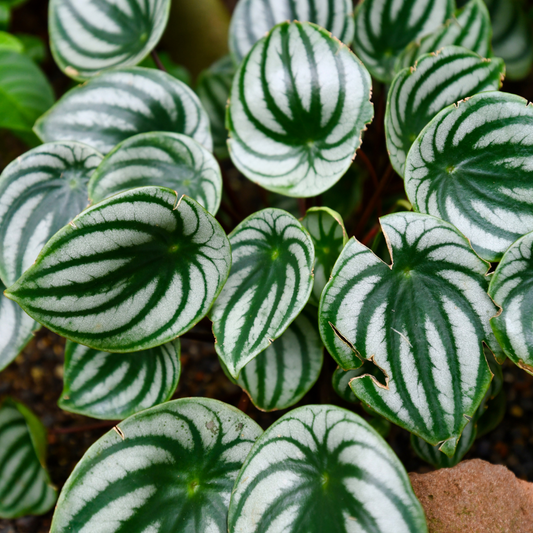
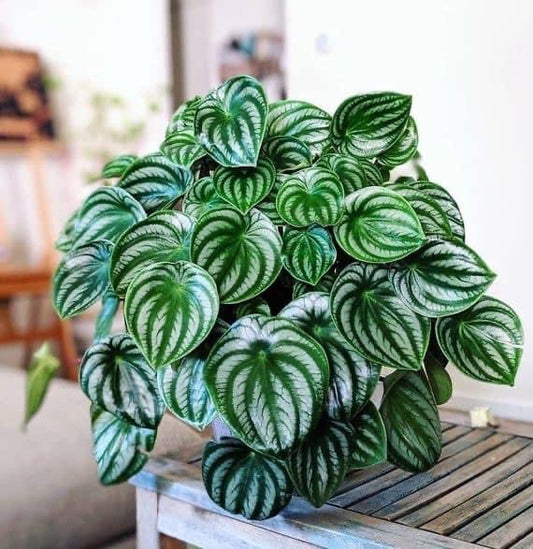
Peperomia Watermelon brings silver stripes that catch the light, in a tidy, low shape. It's the plant to tuck near the candles' glow, not the flame.
Calathea Roseopicta Medallion is the statement piece: rounded painted leaves with copper-pink undersides. Give it the center spot and let the others orbit it.
Parlor Palm adds soft green height and a feathery edge, and it tolerates low light, so it earns a spot even in a dim dining room.

Three palettes, pick one
Burgundy Harvest: Maranta Red Prayer and Calathea Dottie around a Calathea Medallion. This is the richest of the three, built from rust, plum and copper tones. Add dried orange slices and a wooden tray.
Silver and Cream: Peperomia Watermelon with a Parlor Palm behind it, in white or cream cachepots. It's the calm option, and it pairs well with linen and pale candles.
Green Calm: Parlor Palm, Calathea Medallion and a Peperomia Watermelon in matching ceramic. A quieter take that lets your food be the color on the table.
Rewards worth knowing about
When you shop with us you earn Leaves points toward rewards once you join the rewards program, so a centerpiece you keep for years can earn something back too.
A quick note on the table itself: leave the plants out for the dinner, not for a week. Calathea and maranta like steady moisture and gentle light, and the dining room is a good short-term home but rarely a good permanent one. Think of the centerpiece as a long weekend away from the windowsill.
Keep it pet-safe
If dogs and cats share your dining room, the table is only half the picture: the floor matters just as much. The five plants above are generally listed as non-toxic to cats and dogs, which is why we chose them. Confirm each one on the ASPCA list before you set it down, because lists get updated, and keep pets from chewing any plant even when it's safe. More pet-friendly ideas live in our pet-friendly plant collection, and our pet-safe shelf guide shows how to style a whole shelf around the same idea.
After dinner: moving the plants back
This is the part cut flowers can't offer. On Friday, lift each nursery pot out of its cachepot and let it drain fully. Pull off any decorative moss that sits on the soil, since it holds water against the stem. Then return the plants to their normal light; the dining table is a temporary stage, not a home.
Don't repot in November. The plants are heading into slower growth, and a fresh pot adds stress they don't need. If you'd like a refresher on how often to water now that days are shorter, our winter watering cheat sheet covers it by plant type.

Gifting the centerpiece
If you're a guest rather than the host, the same plants make a lovely thank-you. We cover that in our guide to Thanksgiving hostess plants, including what to bring and when to order.
Ready to build yours? Browse the holiday collection, the easy-care plants, or all live plants, and look to the checkout page for delivery timing rather than counting days yourself. Plants arrive with the 30-Day Guarantee, so read the terms before you order, and if you're still unsure which ones suit your room, the plant quiz takes about a minute.
Giving back
We partner with One Tree Planted to give back through tree planting, so your houseplants can do a little good beyond your own home.
Frequently asked questions
What plants can I use as a Thanksgiving centerpiece?
Low, compact foliage plants work best because guests can see over them. Maranta Red Prayer, Calathea Dottie, Peperomia Watermelon, Calathea Medallion and Parlor Palm all stay under eye level in 3 to 4 inch pots, and they keep growing as houseplants after the holiday.
Are houseplants safe on the table around pets?
The five plants in this post are generally listed as non-toxic to cats and dogs, but confirm each one on the ASPCA plant list before you set it down, and keep any plant out of reach of a determined chewer. Pet-safe is not the same as pet-proof, so a tray and a little distance still help.
Can I plant a centerpiece in a pumpkin?
Only with a liner and drainage. Roots sitting in a hollow pumpkin rot quickly, so keep each plant in its nursery pot and slip the pot inside. Lift it out after dinner and let it drain.