There is a moment, usually late afternoon, when the light comes in low and one plant on the shelf stops looking green. The leaves go lavender at the edge, then silver down the middle, then a pink so saturated it looks like someone painted it. You did not add a throw pillow. You did not repaint. The room simply picked up a color it did not have that morning.
That is what Tradescantia 'Nanouk' does. Most styling advice treats foliage as a shape to fill a gap, a green blob to soften a corner. Nanouk refuses the job. Its striping of purple, pink, silver and green shifts with the light it receives, which means it is doing color work that a cushion cannot, and it keeps doing it as the day moves. Build the corner around that, instead of adding the plant to a room you already finished, and the whole thing reads differently.

Start With the Plant, Not the Cushions
Interior color usually gets decided in fabric. You choose a rug, a chair, two pillows, and everything after that has to obey. The problem is that fabric is fixed. It looks the same at 8am and 8pm, and after four months your eye stops registering it at all.
A living accent works the other way around. Nanouk grown in bright indirect light pushes hard toward magenta and purple. The same plant two feet further back, in softer light, mellows into sage and dusty rose. Nothing about the room changed. The plant just responded, and your palette moved with it.
So the sequence flips. Pick the position that gets good light. Put the color plant there. Then choose everything else, plants included, to support it. Our earlier piece on the three plants, one corner styling formula covers how to get the heights and shapes right in a grouping. This one is about what happens when you let color lead instead of composition.
Building the Palette Around a Pink Trailing Plant
Six supporting players, all of which we grow and ship greenhouse-direct. Read them as a palette, not a shopping list. You want one anchor, one echo, one absorber, one texture break and one neutral. Take the rest as you have room.
Tradescantia 'Nanouk', from $18.99. The anchor. Thick, almost succulent leaves striped in purple, pink and silver, and it trails fast enough that a small pot fills a shelf edge in a season. Give it your brightest indirect spot, because dim light is what turns the pink back to plain green. Start here.
Tradescantia Callisia 'Pink Panther', from $19.99. The echo. Smaller leaves, softer pink, same family resemblance. Set it one shelf below the anchor so the color repeats at a lower volume instead of competing at the same pitch. Repetition is what makes a palette read as intentional. See it here.
Philodendron Micans 'Velvet', from $19.99. The absorber. Matte bronze and purple leaves with a nap like velvet, so where Nanouk bounces light back at you, Micans swallows it. That contrast is the reason the pink looks bright instead of loud. Trail it from the opposite side of the shelf. Find it here.

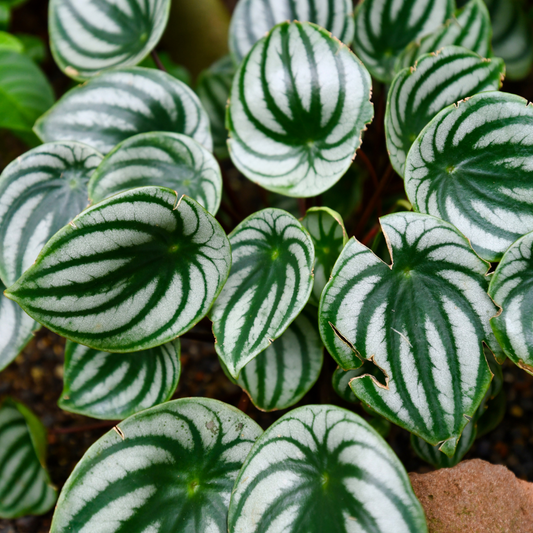
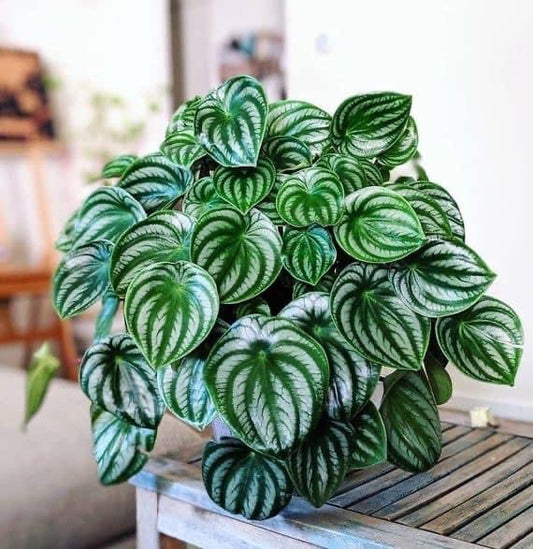
Peperomia Prostrata 'String of Turtles', from $40.99. The texture break. Tiny patterned discs on thread-fine stems, close to the scale of a piece of jewelry. After three broad-striped trailers the eye needs somewhere small to land. A shallow pot at the front edge of the shelf is the right home. Take a look.
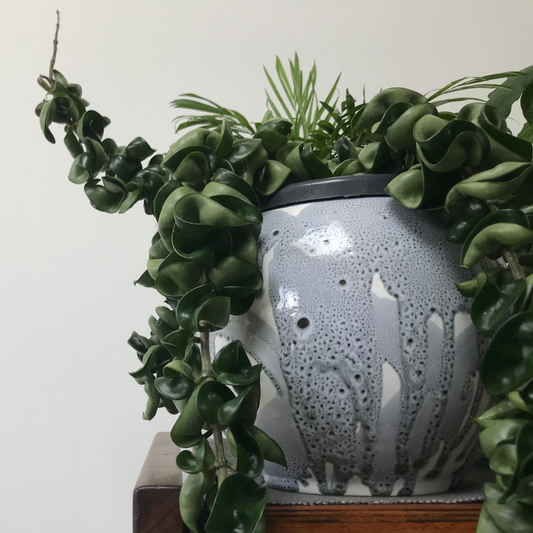
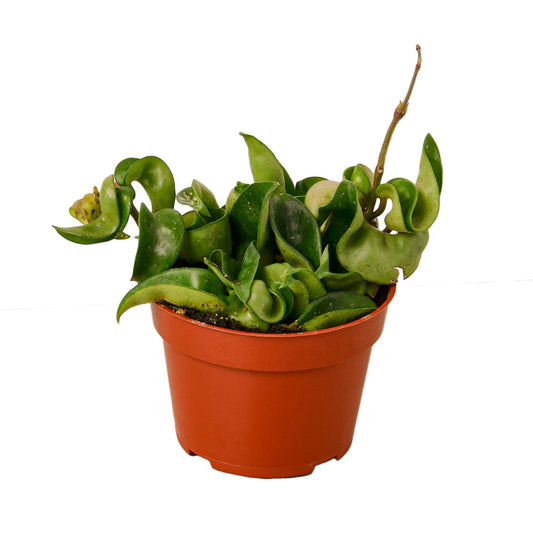
Pothos Manjula, from $22.99. The neutral. Cream and green swirl with no pink in it at all, which is exactly the point. Every palette needs a place to rest, and Manjula stops the three pink-leaning plants from reading as a theme party. Put it between the anchor and the echo. Browse it here.
Tradescantia Spathacea, from $19.99. The vertical counterweight. Stiff upright blades, green on top and deep purple underneath, so it carries the same color story in a completely different posture. When everything else in a grouping trails downward, one plant standing up straight is what keeps the arrangement from sliding off the shelf visually. See the plant.
Tradescantia Zebrina, from $20.99. The optional seventh. Silver and purple banding, more metallic than Nanouk and considerably faster growing. Add it only if your corner is wide, because it will happily take over a shelf that was meant to be shared. Check availability.
Light Is the Dial That Sets the Color
This is the part most people skip, and it is the only part that determines whether you get the plant you saw in the photo. Color in Nanouk and its relatives is a light response. Bright indirect light produces deep magenta striping and tight spacing between leaves. Low light produces long stretched stems, wide gaps and washed-out green. Same plant, same pot, entirely different object.

Practically, that means within about six feet of an east or north window, or set back a few feet from a bright south or west one where the sun never hits the leaves directly. If the pink fades over a few weeks, the plant is telling you it moved too far from the window, not that it needs more water. Move it forward a foot and give it a month.
The other thing worth knowing early: these plants get leggy, and legginess is normal rather than a failure. Pinch the growing tips back by a couple of inches every few weeks and the plant branches instead of stretching. Those cuttings root in water in about a week, which is how a single pot becomes the whole shelf by winter without you spending anything more.
How to Start This Weekend
Pick the spot first, and be honest about the light rather than hopeful about it. Buy the anchor alone and live with it for two weeks so you can see what your particular window does to the color, because the answer varies more between homes than any care guide will admit. Then add the echo and the neutral, which is the point where a single plant starts reading as a styled corner. Add texture and the vertical last, once you know how much room the trailers actually need.
If your space is a desk, a windowsill or a single floating shelf, the same logic scales down cleanly, and the small space collection is built for exactly that footprint. For the wider trailing options, including the ones with enough reach to run down a bookcase side, the trailing and hanging collection is the place to browse. If you want the arrangement logic before you buy anything, our guide to building a plant shelfie pairs well with this one.
One Honest Note on Pets
Tradescantia is worth a caveat. The ASPCA lists inch plants in this genus as toxic to cats and dogs, with skin irritation from the sap as the reported effect, and the sap can irritate human skin too if you propagate a lot of cuttings bare-handed. That is not a reason to avoid the plant, but it is a reason to hang it high, keep trimmings off the floor and rinse your hands after pruning. If you would rather not manage that at all, the pet-friendly collection is filtered for non-toxic species and there are trailing options inside it that will do a similar job in a lower key.
Every plant leaves the greenhouse packed for the trip and covered by our 30-Day Guarantee. Build the corner you actually want, and start it with the pink plant that sets the palette.
Questions People Ask
What does it cost to build this corner?
The anchor starts at $18.99, and a three-plant version with the echo and the neutral lands near $62 before shipping. The full six-plant grouping runs closer to $145. Most people build it over two or three orders rather than all at once, which also spreads out the acclimation.
Is Tradescantia 'Nanouk' hard to keep alive?
No. It is one of the more forgiving trailers we ship, tolerant of missed waterings thanks to those thick leaves, and it recovers from a hard prune quickly. The common mistakes are too little light, which costs you the color, and too much water, which rots the stems. Let the top inch of soil dry, then water thoroughly.
Will it really stay pink?
Only if the light holds. The pink is produced by pigment the plant makes in response to bright indirect light, so color intensity tracks your window through the year. Expect it to deepen through spring and summer and soften in midwinter, and expect a noticeable difference between a plant two feet from the glass and one across the room.
How fast does it fill in?
Fast. A 4 inch pot in good light typically puts out six to twelve inches of trailing growth in a season, and pinching the tips doubles the number of stems each time. Root the pinched cuttings back into the same pot and you get a full, dense plant rather than a few long strands.