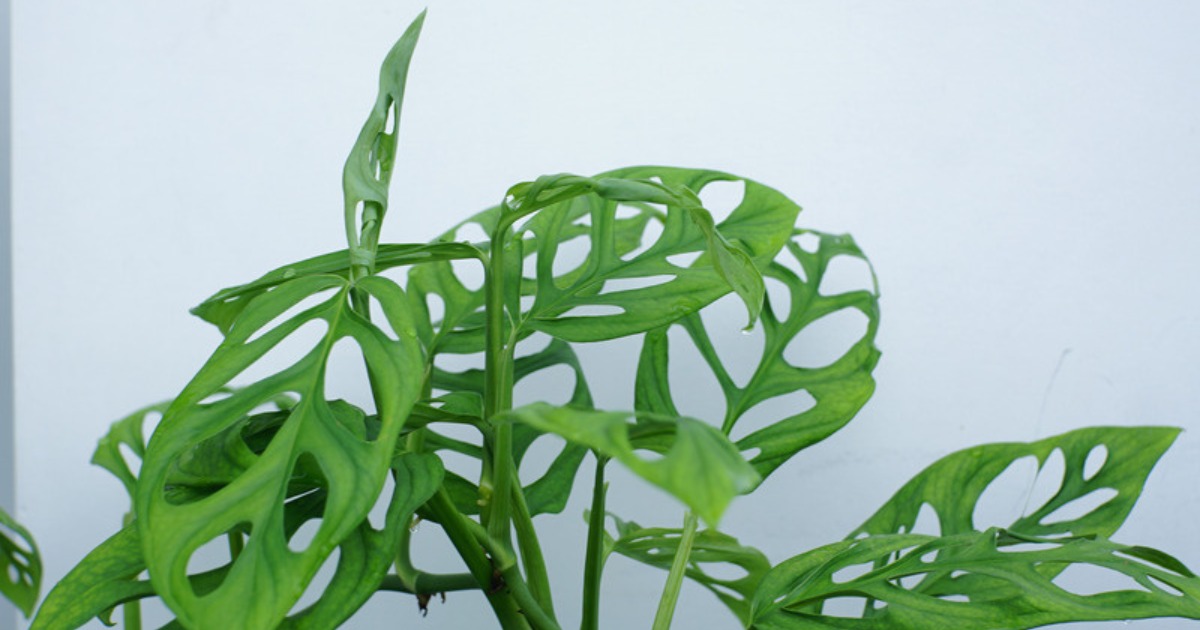
Most houseplants ask for patience. You water, you wait, and weeks later you squint at a stem wondering if anything is actually happening. Monstera Adansonii does not make you wonder. In summer, this vine pushes out a new leaf every couple of weeks, and each one unfurls with its holes already formed, like living lace opening in slow motion. If you have ever stared at a slow plant asking yourself whether it is alive, Adansonii answers you weekly. It is momentum you can watch.
That is the real reason this plant has quietly become the vine collectors recommend to their friends first. It looks like a rare find, grows like a weed, and fits on a bookshelf. Here is the full story of the Swiss cheese vine, from the rainforests it climbed first to the trellis it can climb in your living room.
A Vine Built for the Rainforest Floor (and Your Bookshelf)
Monstera Adansonii is a hemiepiphyte, a plant that starts life on the ground and climbs its way up. In its native range, which stretches through the rainforests of Brazil, Peru, and Ecuador and up through Mexico and the Caribbean, it scrambles up host trees using aerial roots, chasing brighter light through the canopy. The species is named for Michel Adanson, an 18th century French naturalist, though most plant people know it by its nicknames: Swiss cheese vine, five holes plant, monkey mask.
Those famous holes, called fenestrations, are not decoration. They are a rainforest adaptation that lets light and wind pass through the leaf instead of tearing it. What evolved as survival engineering now reads as sculpture. Few plants carry their origin story this visibly.
The Monstera That Actually Fits Your Apartment
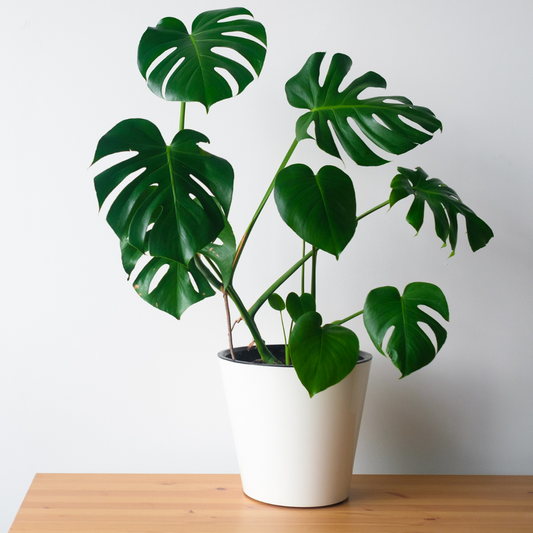
There is a persistent myth that all Monsteras need a huge empty corner and years of patience. The famous Monstera Deliciosa comes by that reputation fairly, with statement leaves that can span two feet and a footprint to match. Adansonii flips the script. Its leaves stay hand-sized, its habit is a slender vine rather than a spreading giant, and it is perfectly happy trailing off a shelf or climbing a small pole.
Same dramatic fenestrations, a fraction of the space. It also grows noticeably faster than its big cousin, several feet in a single season under good light. If you have admired the Monstera look but live in a real apartment with real square footage, this is the one built for you. Browse it alongside other compact picks in our desk and small space collection.
The Care Basics, Kept Brief
Adansonii reads as a collector plant but cares like a beginner plant. Give it bright indirect light, and water when the top half to three quarters of the mix has dried out, which works out to roughly weekly in summer. It likes the same temperatures you do, 65 to 85 degrees, and it will reward you for humidity above 60 percent with bigger, faster leaves. Plant it in a chunky aroid mix with bark and perlite so the roots can breathe.
Summer is its active growing season, so a light feeding every four to six weeks keeps the engine running. A gentle organic plant food is all it needs. That is the whole care manual. Everything else is just watching it move.
One Plant Becomes Many
Adansonii is one of the easiest aroids to propagate, which changes your relationship with it. Snip a stem just below a node, drop the cutting in a glass of water, and visible roots appear in two to four weeks. Pot the rooted cutting and you have a second plant. Do this a few times a year and one shelf plant quietly becomes housewarming gifts, trade material for other collectors, and backups of your favorite vine.
July and August are the best propagation weeks of the entire year, when warmth and long days push root growth into overdrive. A cutting started now is a rooted gift plant by early fall. If you have never propagated anything before, this is the plant to learn on. The nodes are easy to spot, the cuttings are forgiving, and the roots grow fast enough to keep a beginner hooked. There is something quietly satisfying about giving someone a plant you grew from your own.
Three Ways to Style It
The styling world has caught on to something plant people have known for years: plant supports are design objects now. Trellises, poles, and hangers are showing up in interior shoots as intentional decor rather than plant hardware, and Adansonii is the plant that makes all three looks work.
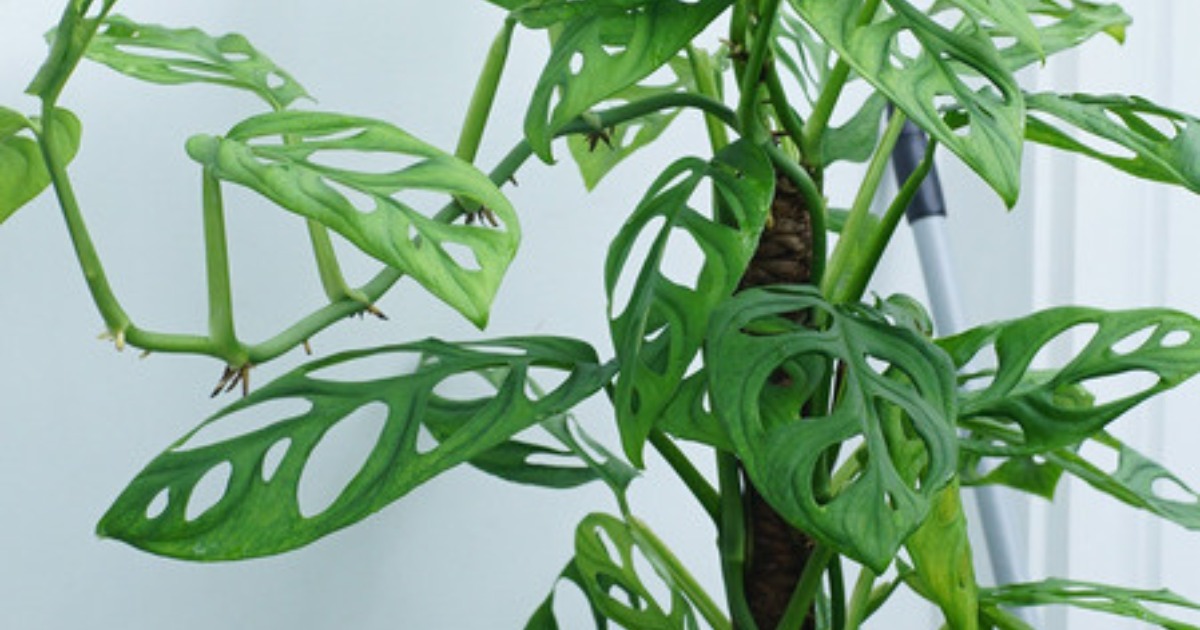
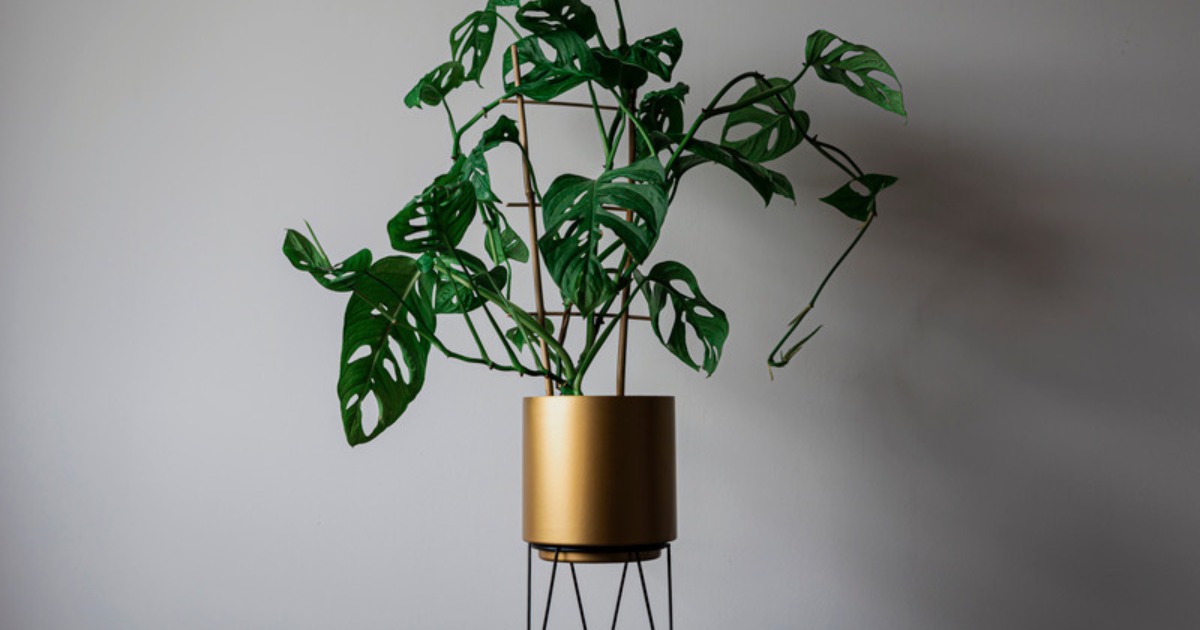
Let it trail and it becomes a waterfall of patterned leaves spilling off a shelf or floating in a hanging planter, right at home among our trailing and hanging plants. Train it up a moss pole and the leaves grow larger with each node, building a lush tropical column that fits in a corner too small for furniture. Or pin it to a wall trellis and let it become living art, a green line drawing that fills blank wall space the way a print never quite can. It suits airy boho rooms and moody maximalist spaces alike; if your taste runs toward the latter, our dark academia styling guide shows how vines like this one anchor the look.
The Gift That Performs
Most gift plants are static. Adansonii is a show. Its fast, visible growth makes it one of the most satisfying first plants you can hand someone, because the recipient gets proof within weeks that they are doing it right. A new leaf is instant positive feedback, and this vine hands it out generously.
It reads as a rare find without demanding rare plant skills, which makes it a safe pick for new plant parents and a welcome one for collectors. For birthdays, housewarmings, and thank yous, you will find it and other crowd pleasers in our plant gifts collection. And to be clear about the word rare: Adansonii is no longer hard to find, and we would rather tell you that than sell you scarcity. If you want plants that are true collector pieces, that is what our rare plants collection is for.
A Note for Pet Parents
Monstera Adansonii is toxic to cats and dogs. Like most aroids it contains calcium oxalate crystals, which cause drooling, oral irritation, and vomiting if chewed. It is rarely dangerous, but it is unpleasant. The fix is placement: this plant loves hanging planters and high shelves anyway, so keeping it out of reach costs you nothing stylistically. If your pets treat every plant as a salad bar, choose from our pet friendly plants instead, where every option is verified non-toxic.
From the Greenhouse to Your Shelf
A vine this energetic deserves to arrive that way. Every Monstera Adansonii we send ships greenhouse-direct, packed by hand and moving from the bench where it grew to your door without a warehouse in between. It is covered by our 30-Day Guarantee, so if your plant arrives unhappy, we make it right. Orders over $149 ship free, which happens to be easy to reach once you see what pairs well with it.
If Adansonii is your first vine, it will not be your last. The Heartleaf Philodendron makes a perfect low-effort companion, and our easy care collection is full of plants that match its forgiving nature. Ready to watch something grow? Browse All Plants and give your shelf its lace.
Monstera Adansonii Questions, Answered
Why doesn't my Monstera Adansonii have holes?
Young leaves and low light are the usual reasons. Juvenile foliage often emerges with few or no fenestrations, and a vine kept in dim conditions will keep producing plain leaves. Move it into bright indirect light and let it mature; new growth should arrive with the signature perforations.
What is the difference between Monstera Adansonii and Deliciosa?
Size and habit. Deliciosa grows into a large floor plant with broad split leaves that can span two feet. Adansonii stays a slender vine with hand-sized leaves whose holes are fully enclosed rather than split at the edges. Adansonii also grows faster and suits shelves, hangers, and small spaces far better.
How fast does Monstera Adansonii grow?
Fast. In bright indirect light during the warm months, a healthy plant can add several feet of vine in a single season, often producing a new leaf every one to two weeks at its summer peak. Growth slows naturally through winter.
Should Adansonii climb or hang?
Both work, and the choice is aesthetic. Left to hang, it produces a full cascade of smaller leaves. Given a moss pole or trellis to climb, it mimics its natural habit and rewards you with noticeably larger leaves at each new node.
Is Monstera Adansonii toxic to cats and dogs?
Yes. It contains calcium oxalate crystals that cause drooling, mouth irritation, and vomiting if chewed. Keep it hanging or on high shelves away from curious pets, or choose a verified non-toxic plant from a pet friendly collection instead.